
The production of a new 75 m² vacuum freeze dryer has recently been completed, marking another important delivery for the food processing industry. Designed for medium- to large-scale food production, this industrial freeze-drying system is suitable for a wide range of products, including pet food, fruits, vegetables, seafood, meat, coffee, and other high-value food ingredients.
With increasing demand for natural, convenient, and long-shelf-life foods, freeze-drying technology has become an important solution for modern food manufacturers. A professional vacuum freeze dryer can remove moisture from products under low-temperature and vacuum conditions while helping maintain their original shape, flavor, color, aroma, and nutritional characteristics.
The completed 75 m² system has undergone production, assembly, inspection, and testing before shipment. It will be delivered to the customer's facility for installation and commissioning, supporting the customer's future food processing and production expansion.
I. 75 m² Vacuum Freeze Dryer for Industrial Food Production
Large Drying Area for Higher Production Capacity
The 75 m² vacuum freeze dryer is designed for customers who require stable and continuous industrial production. Compared with small laboratory or pilot-scale freeze dryers, this system provides a significantly larger drying area and is suitable for commercial food processing applications.
The drying chamber is manufactured using food-grade stainless steel materials, providing a hygienic and durable processing environment. The equipment is designed with a robust structure to support long-term operation in food production facilities.
The large drying area allows manufacturers to process larger quantities of products in each production cycle. Depending on the product characteristics, loading method, moisture content, and required final moisture level, the actual production capacity can vary.
Stable Vacuum Freeze-Drying Process
The basic principle of freeze drying is to first freeze the product and then remove ice through sublimation under vacuum conditions.
During the process, the product is placed inside the drying chamber and frozen to a suitable temperature. After the vacuum system creates a low-pressure environment, the ice inside the product gradually changes directly from solid to vapor.
This process helps reduce thermal damage compared with conventional high-temperature drying methods.
The result is a lightweight and shelf-stable product that can often be rehydrated quickly while retaining many of its original characteristics.
II. Production Process of the 75 m² Freeze Drying Machine
Professional Manufacturing and Assembly
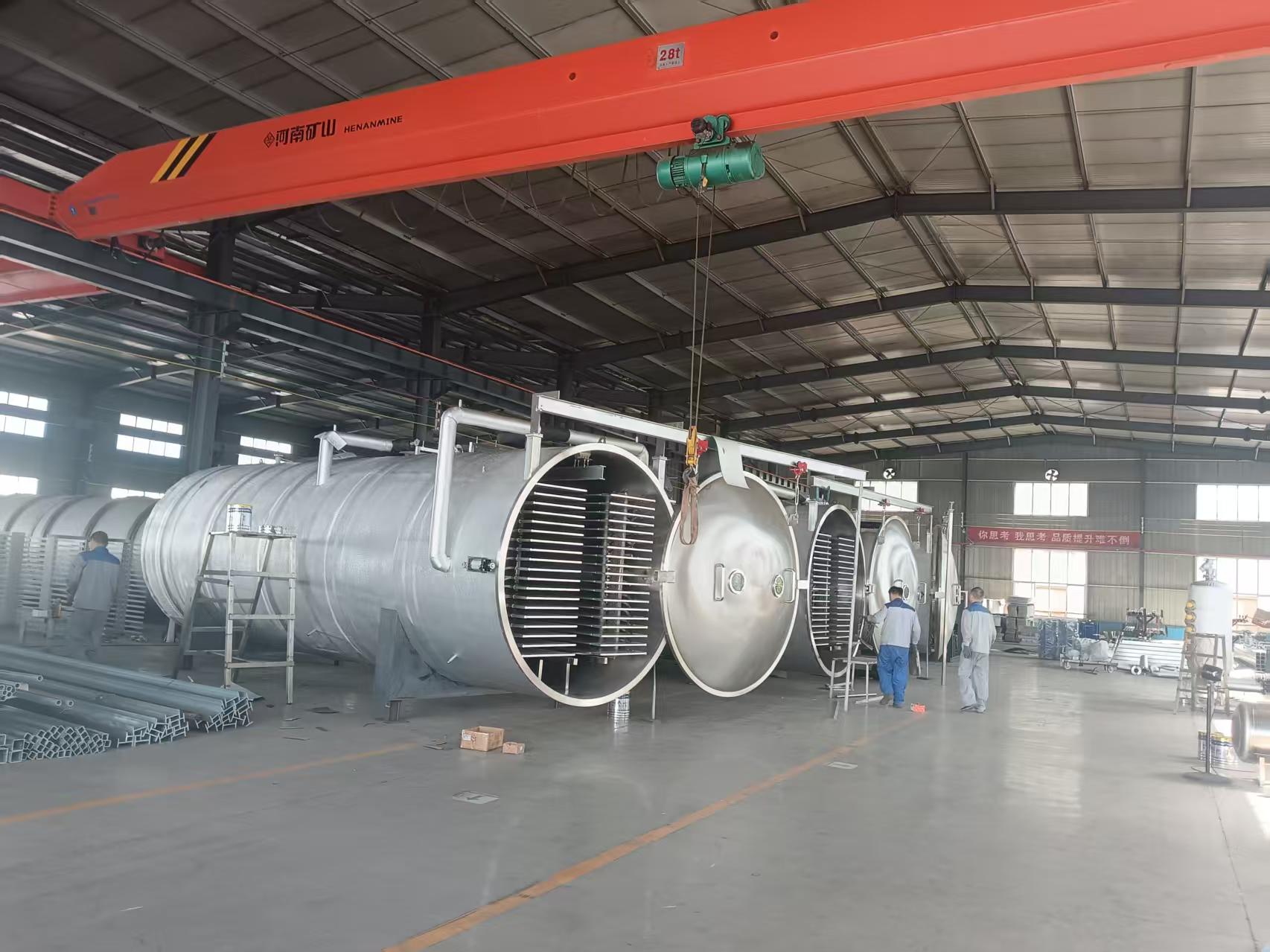
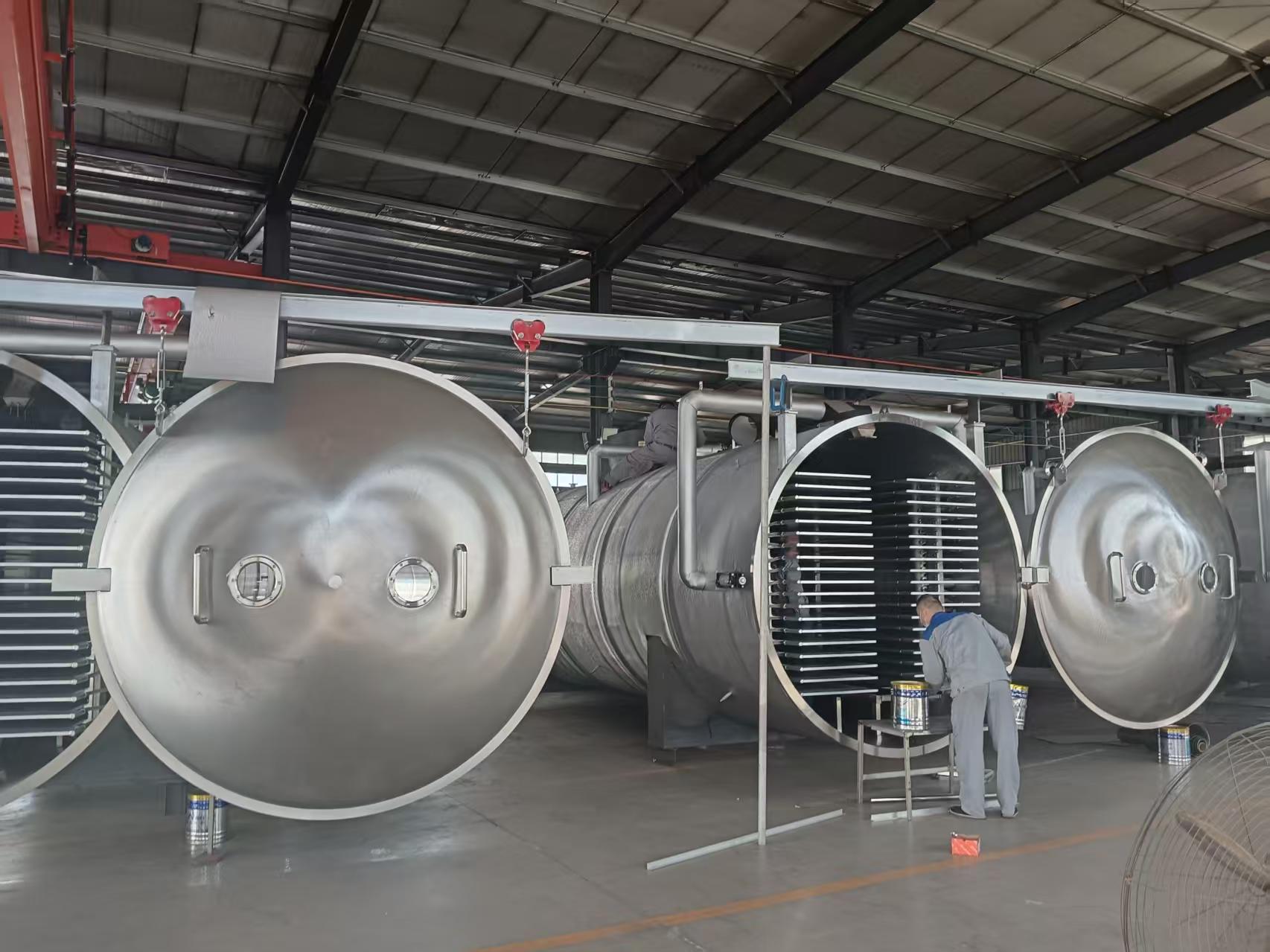
The production of an industrial freeze drying machine involves multiple manufacturing stages. These include stainless steel fabrication, chamber production, refrigeration system assembly, vacuum system installation, electrical control integration, piping installation, and final equipment testing.
For a large 75 m² system, accurate manufacturing and professional assembly are particularly important because the equipment contains multiple integrated systems that must operate together.
The main components typically include:
·Freeze-drying chamber
·Stainless steel product trays
·Refrigeration system
·Vacuum system
·Condenser system
·Heating system
·Automatic control system
·Temperature monitoring system
·Vacuum monitoring system
·Electrical control cabinet
Each system works together to complete the freezing, vacuum drying, sublimation, and final drying stages.
Food-Grade Stainless Steel Construction
For food processing applications, hygiene and easy cleaning are important considerations.
The main product-contact areas of the freeze dryer are manufactured using food-grade stainless steel. The smooth internal surfaces help reduce material accumulation and make cleaning and maintenance more convenient.
The stainless steel construction also provides good corrosion resistance and durability, making the equipment suitable for long-term use in food processing environments.
III. Freeze Drying Applications in Pet Food
Growing Demand for Freeze-Dried Pet Food
One of the important applications of industrial freeze-drying technology is pet food production.
Freeze-dried pet food has become increasingly popular because it can provide convenient storage and preparation while preserving many of the characteristics of fresh ingredients.
Common raw materials include chicken breast, beef, fish, liver, duck, quail, and other meat-based ingredients.
A vacuum freeze dryer can process these products at relatively low temperatures, helping preserve their natural appearance, aroma, and texture.
Freeze-Dried Meat and Fish for Pets
For pet food manufacturers, product appearance is often an important part of the final product.
Freeze drying can produce lightweight pieces with a porous structure. When water is added, the product can absorb moisture relatively quickly.
For example, chicken breast can be cut into uniform pieces before entering the freeze-drying process. After freezing and vacuum drying, the final product becomes lightweight and suitable for packaging, transportation, and storage.
The same technology can also be applied to beef cubes, fish pieces, duck, quail, and mixed pet food ingredients.
For manufacturers producing premium freeze-dried pet food, a larger industrial freeze dryer can provide the processing capacity required for commercial production.
IV. Applications for Fruits and Vegetables
Preserving Fruit Characteristics
Fruits are another important application for freeze-drying technology.
Products such as mango, strawberry, blueberry, banana, pineapple, apple, lemon, and other fruits can be processed using vacuum freeze drying.
Before entering the machine, fruits are normally washed, sorted, cut, and prepared according to the final product requirements.
The freeze-drying process can help maintain the natural shape and color of many fruit products while significantly reducing their moisture content.
Freeze-dried fruits are widely used as snacks, food ingredients, breakfast toppings, bakery ingredients, beverage ingredients, and instant food components.
Vegetable Freeze Drying
Vegetables can also be processed using an industrial freeze dryer.
Common examples include peas, corn, carrots, mushrooms, spinach, broccoli, onions, and mixed vegetables.
The process can help extend the storage life of vegetables while reducing transportation weight. Freeze-dried vegetables can also be used in instant soups, ready-to-eat foods, seasoning products, camping food, and other food applications.
For food manufacturers, freeze drying provides an alternative method for producing premium dried fruit and vegetable products without relying on traditional high-temperature drying.
V. Freeze-Dried Seafood and Meat Applications
Seafood Processing
Seafood products can benefit from controlled freeze-drying technology.
Fish, shrimp, scallops, squid, crab, and other seafood products can be prepared and frozen before entering the vacuum drying stage.
Because seafood can be sensitive to temperature and oxidation, controlled processing conditions are important for maintaining product quality.
An industrial freeze dryer can be integrated into a larger seafood processing line, allowing manufacturers to produce lightweight, shelf-stable seafood products for retail, food ingredients, and specialized markets.
Meat and Food Ingredients
In addition to seafood, freeze drying can also be used for different meat products.
Depending on the customer's production process, raw materials can be cut into cubes, slices, strips, or other shapes before freezing and drying.
The final product can be packaged in different sizes according to market requirements.
This flexibility makes the freeze drying machine suitable for food manufacturers producing multiple product categories with the same core drying technology.
VI. 75 m² Industrial Freeze Dryer Completed for Shipment
Factory Inspection Before Delivery
After the main production work was completed, the 75 m² vacuum freeze dryer entered the final inspection stage.
The equipment was assembled and checked to ensure that the major systems were properly integrated. Electrical components, vacuum equipment, refrigeration equipment, control systems, valves, pipelines, and other key components were inspected before shipment.
The equipment appearance and stainless steel surfaces were also checked to ensure that the machine was ready for delivery.
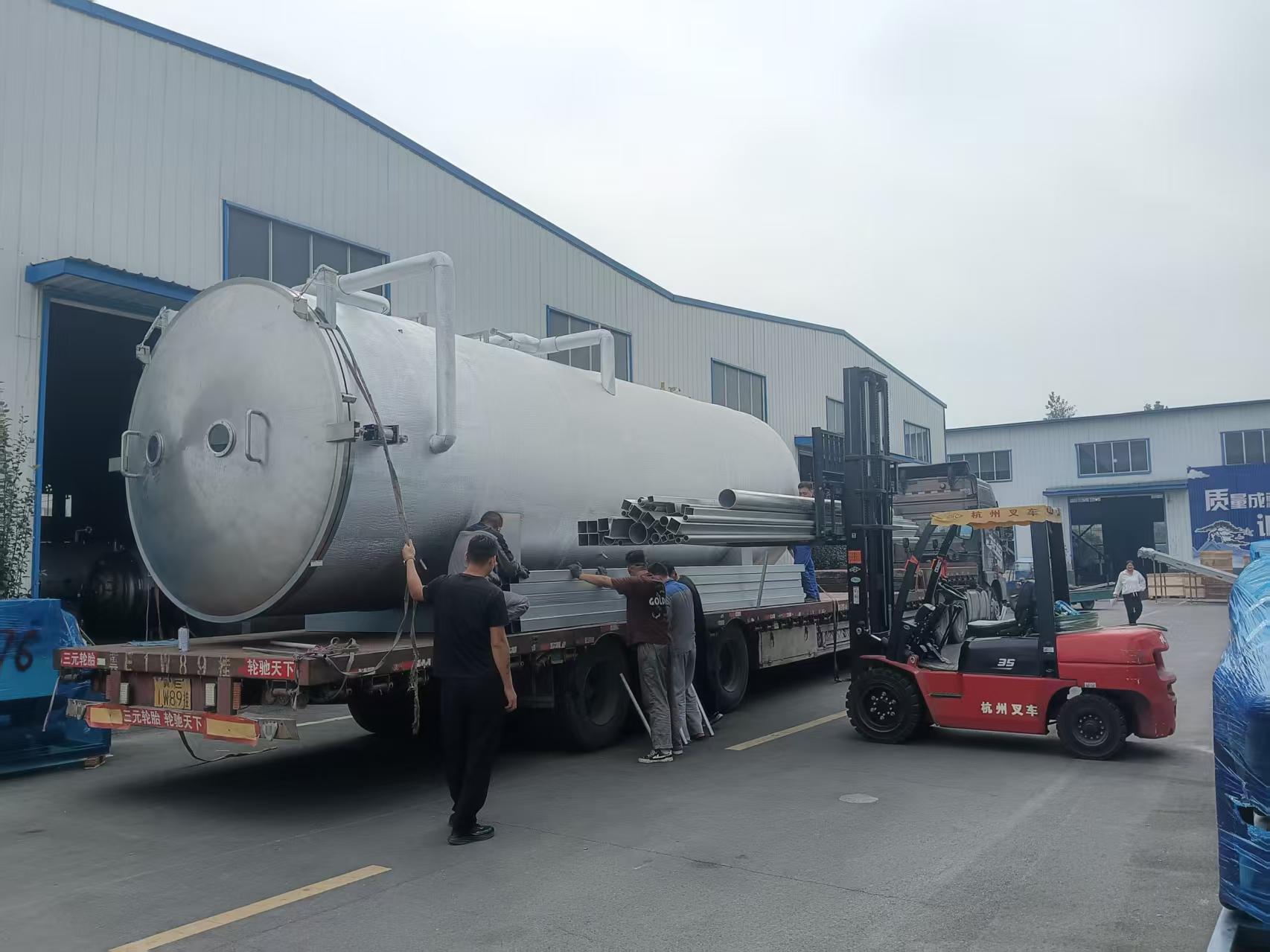
Professional Packing and Transportation
Large industrial equipment requires careful preparation before international transportation.
After final inspection, the freeze dryer is prepared for loading according to its structure and transportation requirements. Components are properly protected to reduce the risk of damage during handling and transportation.
For international customers, the equipment can be prepared for container shipping or other suitable logistics solutions.
The shipment represents not only the delivery of a machine but also the beginning of the customer's installation and production project.
VII. Why Choose an Industrial Freeze Dryer?
High-Value Food Processing
Freeze drying is particularly suitable for products where appearance, flavor, nutritional characteristics, and product value are important.
Compared with conventional drying methods, vacuum freeze drying operates under low-temperature and vacuum conditions, making it suitable for many heat-sensitive food products.
Flexible Product Applications
One industrial freeze dryer can potentially be used for different product categories, depending on the equipment configuration and validated processing parameters.
This flexibility allows food manufacturers to explore multiple product lines, including:
·Freeze-dried pet food
·Freeze-dried fruits
·Freeze-dried vegetables
·Freeze-dried seafood
·Freeze-dried meat
·Freeze-dried coffee
·Freeze-dried ingredients
·Instant food ingredients
Manufacturers can therefore use the same core freeze-drying technology for different market opportunities.
VIII. From Manufacturing to Customer Production
The completion and shipment of this 75 m² vacuum freeze dryer demonstrate the complete process from equipment manufacturing to international delivery.
For every industrial freeze-drying project, the final equipment configuration should be determined according to the customer's product type, processing capacity, raw material characteristics, loading method, drying requirements, factory conditions, and expected production schedule.
A professional equipment supplier can help customers evaluate these factors and develop a suitable freeze-drying solution.
After delivery, installation and commissioning are also important stages before commercial production begins. Operators need to understand the control system, vacuum system, refrigeration system, loading procedures, cleaning requirements, and basic maintenance procedures.
Proper operation and regular maintenance can help the equipment achieve stable performance over its service life.
IX. Conclusion
The newly completed 75 m² vacuum freeze dryer is designed to provide an efficient solution for commercial food processing. From pet food and fruits to vegetables, seafood, meat, and other food ingredients, freeze-drying technology offers manufacturers a flexible way to develop high-value dried food products.
The successful completion of production, inspection, and shipment represents an important step toward the customer's new production project.
As demand for premium dried foods continues to grow worldwide, industrial freeze-drying technology is expected to remain an important part of modern food processing.
For companies looking for a reliable freeze drying machine or a customized industrial freeze dryer, equipment selection should always be based on the specific product, required capacity, drying characteristics, and production environment.
The 75 m² system is now ready for its next stage—installation, commissioning, and commercial production at the customer's facility.
Author: Huarantengye Mike Gao
Contact: +86 18606368033