
The Pre-fryer as a "Scriptwriter for Texture": The 38 Seconds That Seal the Fate of a Frozen French Fry
A complete production line for frozen French fries consists of a series of machines: a stone-removing elevator, a peeler-washer, a manual inspection station, a cutter, a starch-rinsing unit, a blanching/color-preservation unit, a fryer, a cooler, a vibration-based short-strip remover, an air-dryer, and an IQF (Individual Quick Freezing) tunnel. Among these eleven pieces of equipment, the fryer occupies a unique position: it is neither the stage where the fries are fully "cooked" nor where they are "frozen." Yet, it is the single point in the entire line where all the variables accumulated during the preceding stages are "locked in"—permanently set. Whether the fries turn out crispy on the outside and fluffy on the inside, or soft and hollow—whether they emerge golden and firm, or dull and collapsed—is essentially determined the moment they exit the fryer’s oil bath.
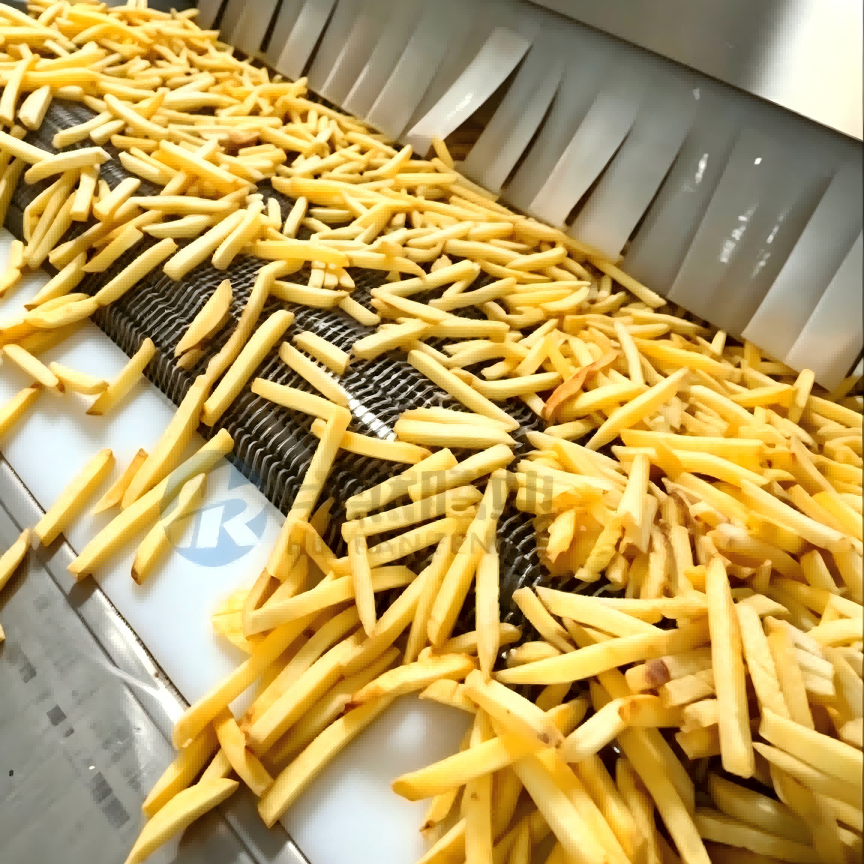
Before the Fryer: Nine Machines Clearing the Way for Those 38 Seconds
The stone-removing elevator and the peeler-washer determine the "cleanliness" of the raw material entering the cutter. If a single stone slips through the removal stage, it could chip the cutting blades, causing downtime that disrupts the rhythm of the entire production line. In the peeling stage, if material loss is not strictly controlled, far more than just the outer skin is stripped away. Steam peeling keeps the loss of potato flesh to a single-digit percentage and limits the "cooked layer" (the zone affected by heat) to a matter of millimeters; in essence, this "saves" raw material for the fryer—the final yield of the pre-fried fries is effectively defined as early as the peeling stage.
The manual inspection station and the cutter address another dimension of variables: consistency. While optical sorting systems can handle color and shape, the detection of early-stage defects or internal "black heart" (bruising/necrosis) still relies on the human eye. Meanwhile, the cutter—utilizing water-jet or precision mechanical cutting—achieves a cross-sectional accuracy within fractions of a millimeter, ensuring smooth surfaces with minimal "feathering" (fraying or ragged edges). The precision of the cutting process is critical, and the reason lies within the fryer: when potato strips have uniform cross-sectional dimensions, they undergo a consistent thermal experience in the oil bath, ensuring that their oil absorption and dehydration rates fall within a narrow, predictable range. If the cutting machine produces strips with high variability in thickness, the fryer’s parameters—set based on an "average" value—will inevitably lead to suboptimal results: thicker strips may remain undercooked, while thinner ones become overcooked.
Starch removal and blanching serve as a form of "chemical cleanup." If free surface starch is not removed prior to blanching, it will gelatinize and carbonize in the oil, accelerating the degradation of the frying oil and causing the potato strips to stick together. Blanching serves a dual purpose: it deactivates polyphenol oxidase to prevent browning, while simultaneously inducing a controlled degree of internal starch gelatinization and reducing the content of reducing sugars. Insufficient blanching leaves residual enzymes active during frozen storage, causing the strips to darken over time; excessive blanching, conversely, softens the surface tissue, preventing the formation of a sufficiently robust structural "crust" during the pre-frying stage. By maintaining a precise, repeatable temperature range, the blanching and color-preservation equipment ensures that the potato strips enter the fryer in a stable state, allowing the fryer to effectively "set" their structure during that critical 38-second process.
Pre-frying is not the same as "cooking through"—it is a delicate balancing act involving oil temperature, duration, and the rate of dehydration.
In a production line for frozen French fries, the fryer is technically known as a "par-fryer." Its role is not to cook the fries to an edible state, but rather to accomplish three specific objectives: to establish a structural, crispy outer layer, to remove a precise proportion of the internal moisture, and to impart the signature light-golden hue. The final flavor profile is developed during the second, or "finish," fry—performed by the consumer or in a restaurant kitchen—with the pre-frying stage serving to ensure that the product begins this final heating phase in an optimal condition. Process research defines a clear operational window: after hot-air drying, French fries are pre-fried at approximately 180°C for 38 seconds. Following flash-freezing and a final frying stage, the finished product achieves a moisture content of 37.5%–38.5% and an oil content of 14.34%–14.85%—resulting in a texture that is crispy on the outside and soft on the inside. Other processing methods may set pre-frying temperatures between 170°C and 190°C with durations spanning several tens of seconds, aiming for a dehydration rate of roughly 20%–25%. These parameters are interconnected: if the oil temperature is too high or the duration too long, a crust forms too rapidly, trapping moisture inside; this leads to a burnt exterior and a hard, undercooked core upon final preparation. Conversely, if the temperature is too low or the duration too short, the surface structure fails to develop adequately, causing excessive oil absorption—resulting in a greasy mouthfeel and a lack of structural integrity in the crust. In essence, a pre-fryer does not merely "fry"; it facilitates a simultaneous process of dehydration, crust formation, and coloration.
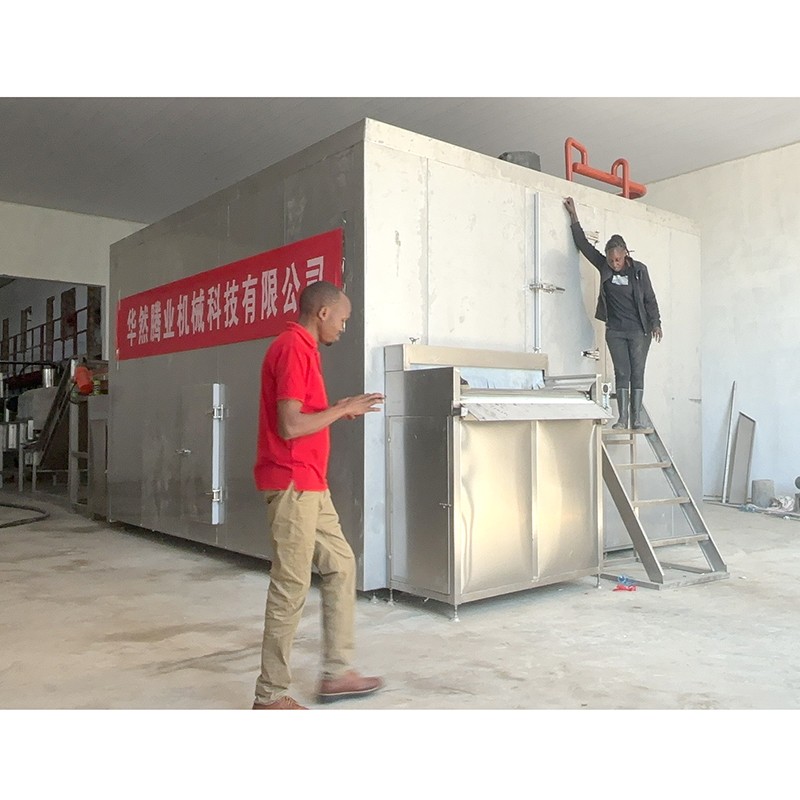
The technical sophistication of a continuous fryer is primarily reflected in its temperature uniformity. As French fries move continuously through the oil bath, any significant temperature differential between the front and back of the tank means that fries in the same batch are effectively subjected to different pre-frying conditions. Modern, state-of-the-art equipment utilizes intelligent PID temperature control, multi-point temperature sensing, and circulating oil pumps to keep oil temperature fluctuations within ±2°C and maintain a temperature variance across the tank of around 2°C. This level of precision is not merely for the sake of "impressive specifications"—it directly determines the consistency of oil absorption and coloration within a given batch. External circulation heating systems and variable-frequency conveyor drives serve the same objective: ensuring that every single fry experiences the same duration in the oil and is exposed to the exact same temperature.
Oil management represents another—less visible, yet critically important—battleground in the operation of pre-fryers. As French fries pass through the fryer, starch and small fragments continuously slough off into the oil. If these residues are not removed in real-time, they will carbonize at high temperatures, accelerating oil oxidation, shortening the interval between oil changes, and imparting a dark color and off-flavors to the product. Continuous fryers equipped with automatic oil filtration, oil-water circulation, or dynamic sediment-removal systems essentially maintain a stable frying medium; if the degradation of the oil spirals out of control, all the effort invested in earlier stages to ensure "clean raw material" is effectively nullified.
Post-Frying: De-oiling, Cooling, and Quick-Freezing—Locking in the Results of Pre-Frying
When French fries emerge from the fryer, their surfaces are coated with a layer of free oil. The subsequent de-oiling process—typically using vibration or air knives—is not intended to remove *all* the oil, but rather to reduce the surface oil to a level that prevents the fries from becoming greasy or sticking together. If de-oiling is insufficient, the fries will become sticky and clump together during cooling and quick-freezing; if it is too aggressive, the mechanical force can damage the surface structure and compromise the integrity of the crispy outer layer. In advanced production lines, vibration-based de-oiling and air-cooling are often integrated into a single conveying stage: as the oil is drained, the fries begin to cool down from their high pre-frying temperature, preparing them for the quick-freezing process.
While the sequence of cooling units and vibration-based "short-piece" removal equipment may vary depending on the specific process design, the underlying logic remains consistent. Cooling brings the fries down from their residual post-frying temperature, halting any lingering thermal effects and preventing the fries from continuing to "cook" in their own residual heat during subsequent transport. Meanwhile, vibration-based sorting uses high-frequency motion to separate short pieces and fragments from the main product flow, ensuring that the length distribution of the fries entering the quick-freezer meets contractual specifications. For production lines supplying international restaurant chains or European retail channels, length consistency is a mandatory entry requirement rather than an optional bonus; consequently, vibration-based sorting is not merely an "add-on," but a critical threshold that determines whether a product can gain access to its target market. The air-drying machine handles the final moisture-related step before the quick-freezing process. After cooling and de-oiling, French fries may still have residual free water on their surfaces. If this moisture enters the quick-freezer, it will form an ice film during the initial freezing stage, causing the fries to stick together into solid, inseparable blocks—while also increasing the defrosting load on the evaporator. The air-drying machine uses a circulating airflow with controlled temperature and humidity to remove surface moisture, ensuring the fries enter the freezing stage with a "dry surface, moist interior" profile. More sophisticated designs integrate air-drying with moisture distribution, preventing localized moisture accumulation that could otherwise lead to concentrated ice crystal zones—which would damage the surface structure carefully established during the pre-frying phase.
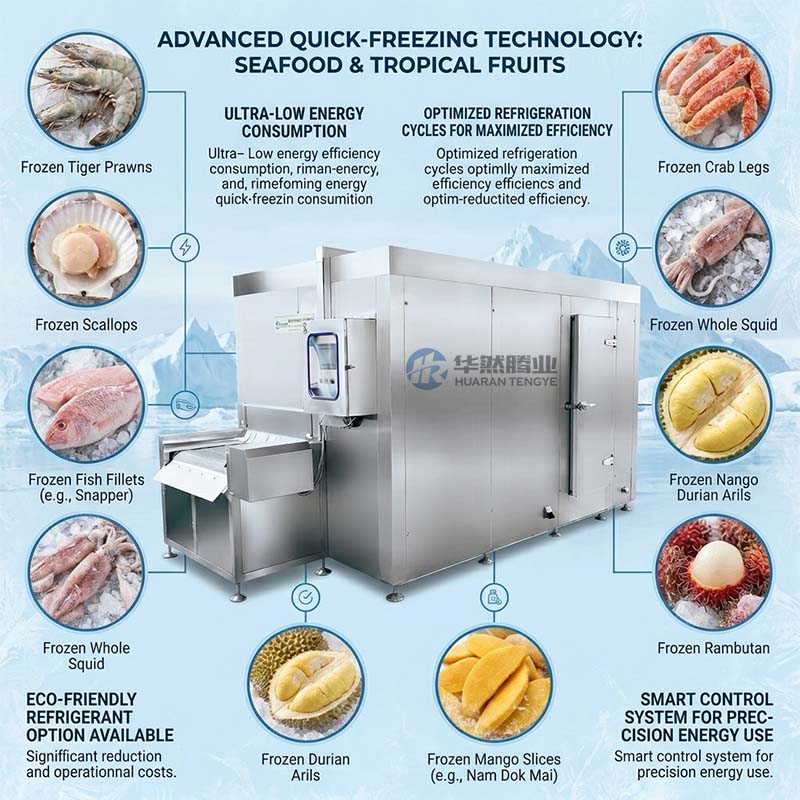
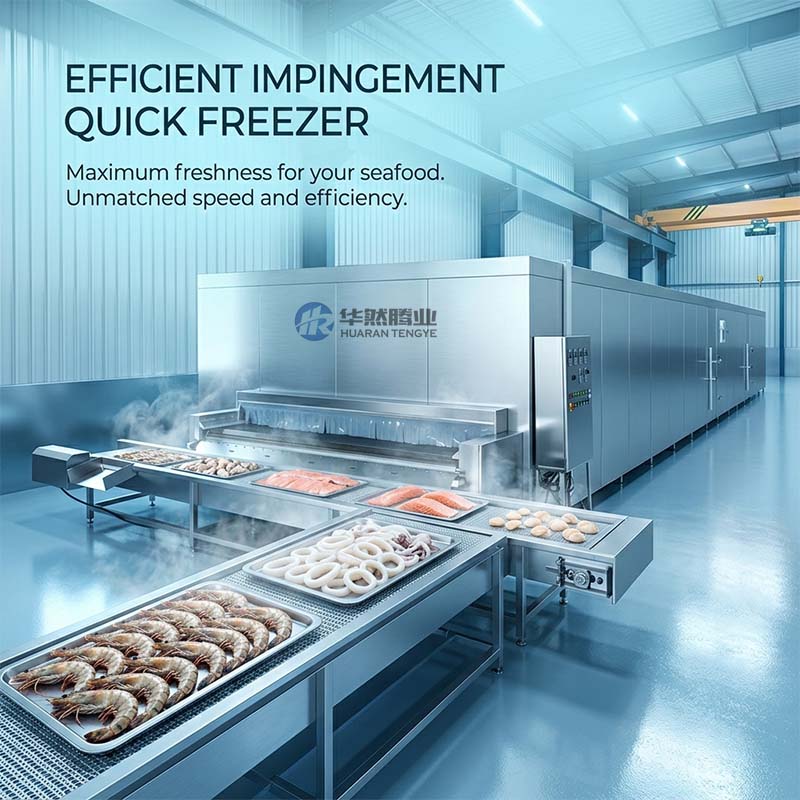
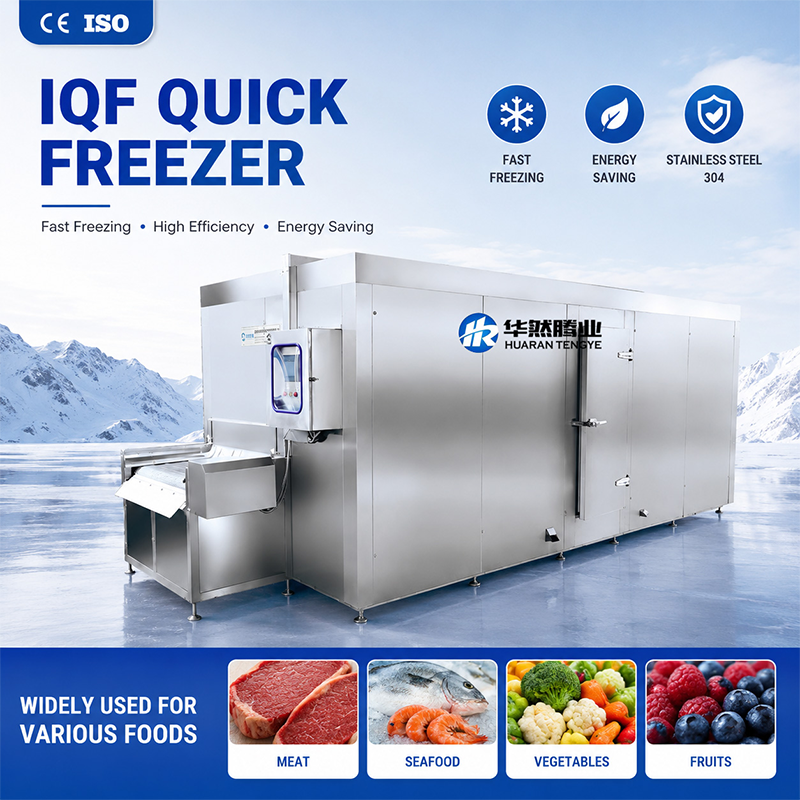
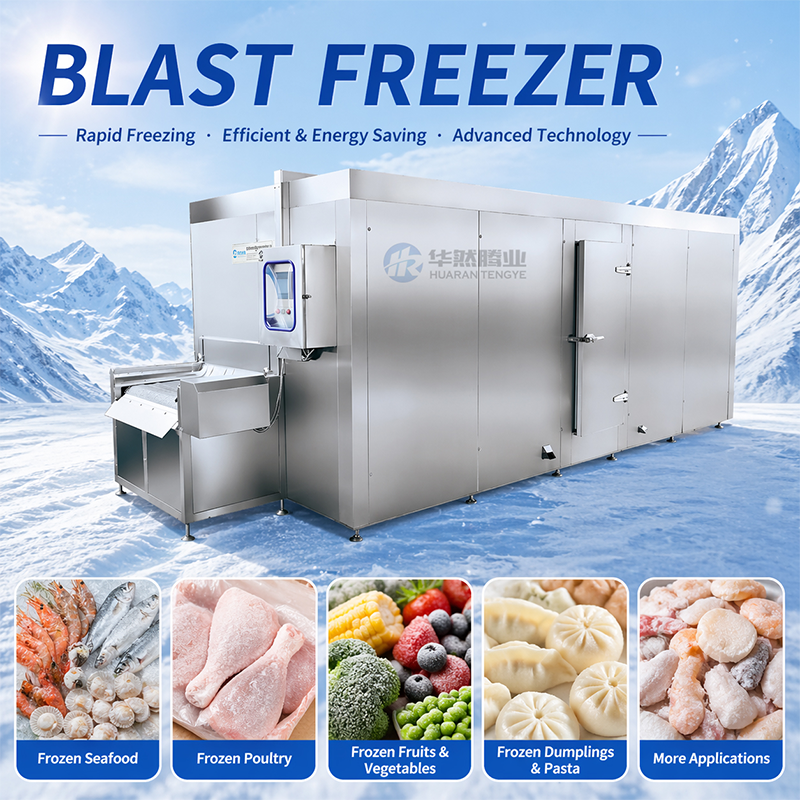
The quick-freezer marks the final phase-change point in the entire production line; it does not "create" quality, but rather "locks in" the quality already established by the pre-fryer. Fluidized quick-freezing keeps the fries suspended as they move forward, allowing cold air to fully envelop each individual piece. The rapid freezing process creates tiny ice crystals, which minimizes damage to the cellular structure. However, if the pre-frying stage results in excessive oil absorption or a loose surface structure—or if inadequate air-drying leaves behind excess moisture—the quick-freezer will simply "freeze in" these defects, which will then be exposed when the consumer fries the product.
Competition across the entire production line is shifting from a focus on "individual machine parameters" to the "synergy between parameters."
Examining each of the eleven pieces of equipment, the progress made in domestic machinery is clear: steam peeling has reduced product loss to single digits; water-jet cutting has achieved precision down to a fraction of a millimeter; blanching processes now feature tightly controlled temperature windows for consistent, repeatable results; and pre-fryers have brought oil temperature fluctuations within a range of ±2°C.
The complete production line solution from Huarantengye Machinery incorporates independent, zone-based temperature control for the four core processes—blanching, air-drying, frying, and quick-freezing. A PLC system automatically adjusts processing duration and temperature based on the potatoes' maturity, moisture content, and the required specifications of the final product. European-standard production lines utilize a PLC-based control architecture that integrates temperature, airflow velocity, conveyor speed, and processing duration, ensuring a high degree of consistency in quality across batches. The underlying logic is interconnected: fluctuations in the starch and reducing sugar content of the raw material necessitate adjustments to blanching temperature and time. These changes, in turn, alter the moisture content and surface characteristics of the product entering the fryer, requiring corresponding, synchronized adjustments to pre-frying temperature or duration. Furthermore, subsequent processes—such as de-oiling intensity, air-drying airflow, and the air velocities within the individual stages of the quick-freezer—must all be recalibrated to align with these changes. Having individual pieces of high-performance equipment does not guarantee that an entire production line "speaks the same language." The quality ceiling of a production line is no longer determined by its most advanced machine, but rather by the pair of machines with the tightest parameter coupling. In the context of a frozen French fry line, the core of this coupling lies in the "invisible link" between the blanching unit and the pre-fryer.
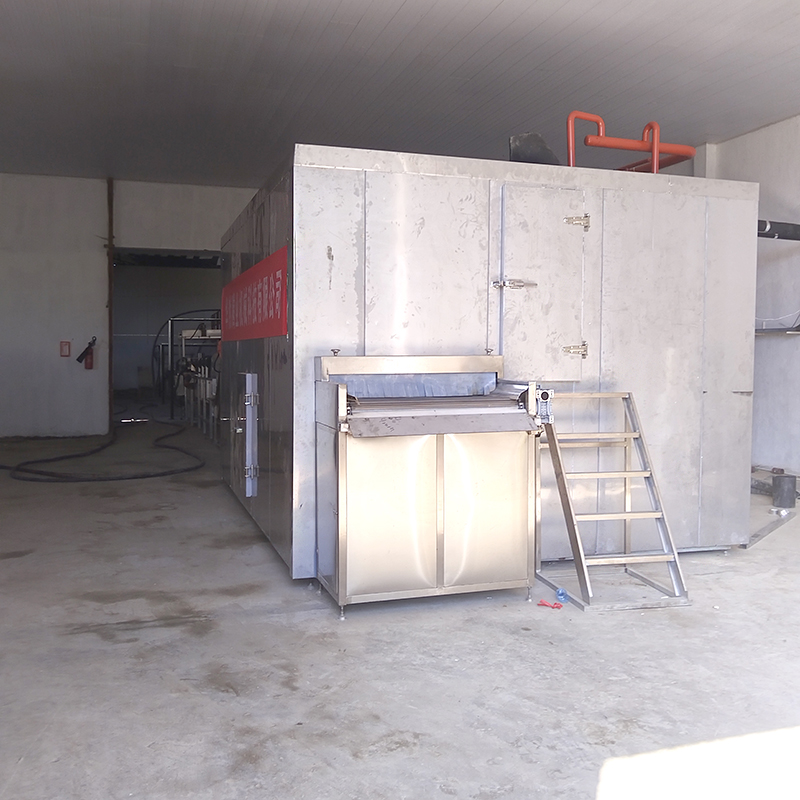
From workshops in Shandong and Inner Mongolia to production lines currently in operation or undergoing commissioning in Saudi Arabia, Kyrgyzstan, and Egypt, the global footprint of Chinese-made frozen French fry processing equipment is expanding. Yet, a more telling indicator of industrial maturity than export tonnage is the deep technical expertise embedded in the fine-tuned details: the ±2°C variance in blanching water temperature, the precise 38-second duration in the pre-fryer, the frequency of de-oiling vibrations, and the humidity gradients within the air-drying section. The journey of a potato from the initial stone-removal elevator to the exit of the quick-freezer is relatively brief. However, any temperature fluctuation or timing deviation—even by a single second—during those 38 seconds in the pre-fryer is "locked in" by the quick-freezing process. Ultimately, when the fries are deep-fried for a second time (for 180 seconds) in a restaurant kitchen, these subtle variations are revealed—unfiltered—to the consumer’s palate. While equipment lists may be public, the specific parameter ranges remain proprietary; the true quality of the final product resides in the narrow space between the two.
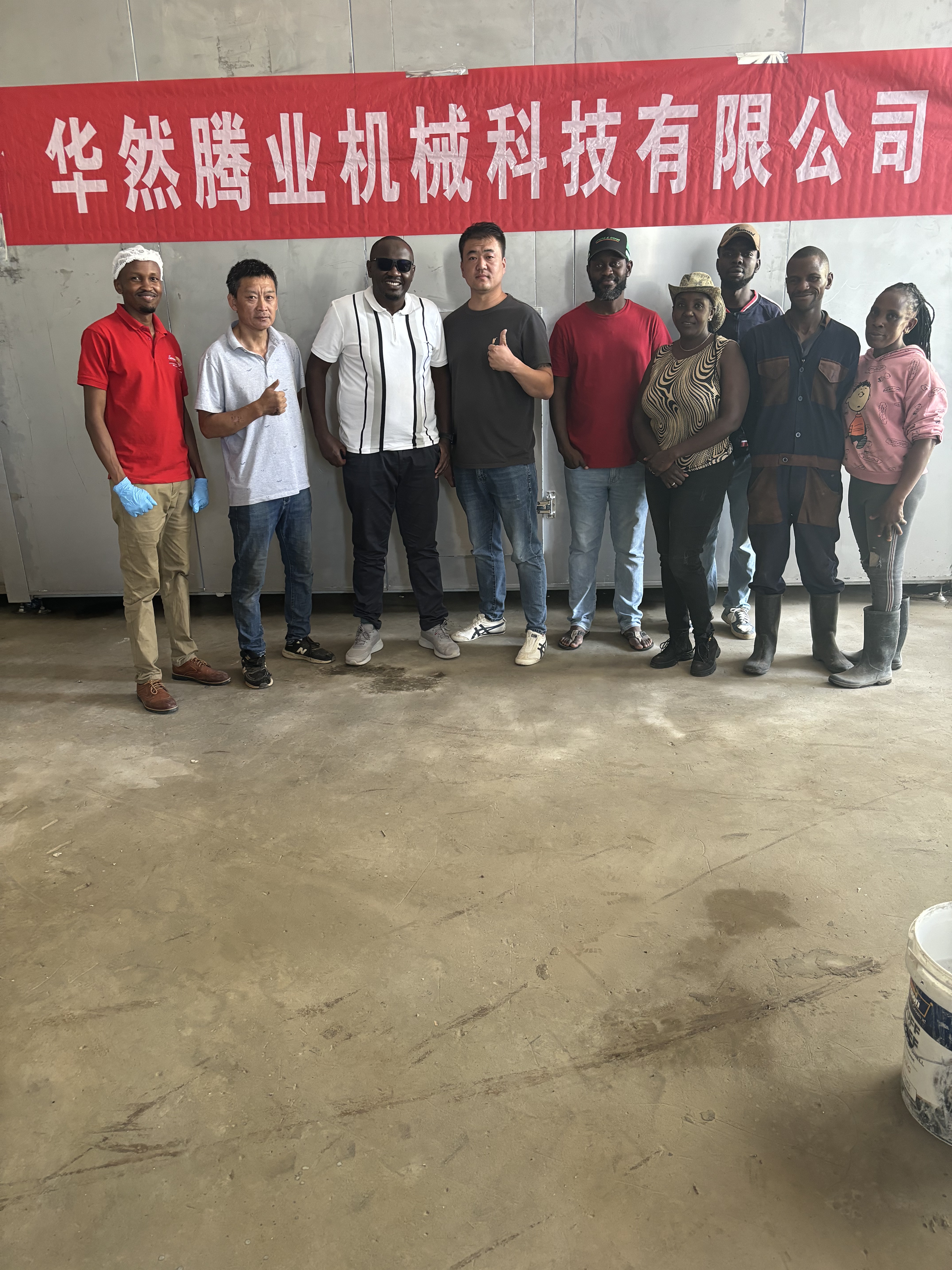
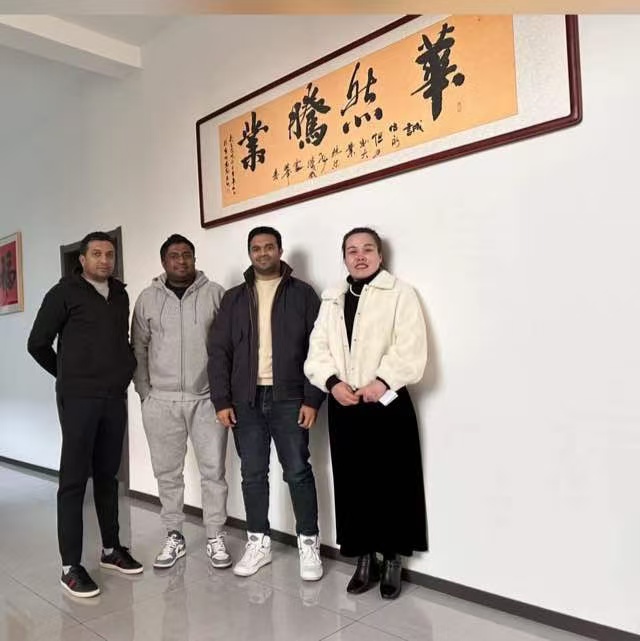
A frozen French fry production line supplied by our company, Zhucheng Huaran Tengye, to a client in Nigeria has successfully completed all commissioning phases and is now in stable, full-scale operation. The client expressed great satisfaction with the operating status of the entire production line, the quality of the products, and the on-site service provided by our technical team.
About the Author
Lily Shi
Sales Manager & Food Processing Consultant
Lily specializes in industrial freezing and cooling solutions for french fry production. With deep technical knowledge in french fry quick-freezing equipment, she helps global buyers optimize production capacity through custom-engineered freezing tunnels.
Connect with Lily on
[LinkedIn+8615165610022] | [WhatsApp+8615165610022] | [Email -lily@tunnelfreezer-hrty.com]