




Introduction: Why IQF Strawberry Processing Demands Precision Equipment
The global demand for individually quick frozen (IQF) strawberries has grown exponentially, driven by their widespread use in smoothies, desserts, yogurt products, and bakery applications. Unlike traditional block freezing, IQF technology freezes each strawberry separately, preserving its cellular structure, natural color, and nutritional integrity. This premium quality, however, cannot be achieved without a carefully engineered processing line that combines gentle handling with thorough cleaning and precise freezing.
A German food processing company recently commissioned a complete 5 tons per hour IQF strawberry production line, designed to meet the stringent quality standards of the European market. The line integrates six key pieces of equipment: a bubble washing machine with brush rollers, a testing and rinsing washer for leaf removal, a high-pressure spray washing machine, a manual sorting conveyor, a vibrating distributor, and a fluidized bed IQF freezer. This article explores each stage of this processing line, examining how the equipment works and why it is essential for producing premium frozen strawberries.
The Complete IQF Strawberry Processing Line: An Overview
The processing of frozen strawberries follows a logical sequence from raw material intake to finished frozen product. Each machine in the line addresses a specific challenge posed by the delicate nature of strawberries. These fruits are soft, high in moisture, and highly susceptible to mechanical damage, making gentle handling a non-negotiable requirement throughout the process.
The line begins with bubble washing and brush cleaning, where dirt and foreign materials are removed through a combination of air agitation and mechanical brushing. The next stage, testing and rinsing, specifically targets leaf removal, a critical step since strawberry leaves and stems can be difficult to separate through standard washing alone. High-pressure spray washing follows, ensuring any remaining surface contaminants are eliminated. Before freezing, manual sorting allows trained operators to remove defective or unripe berries, while a vibrating distributor ensures uniform product spreading. The journey culminates in the fluidized bed IQF freezer, where individual strawberries are rapidly frozen to preserve their quality.
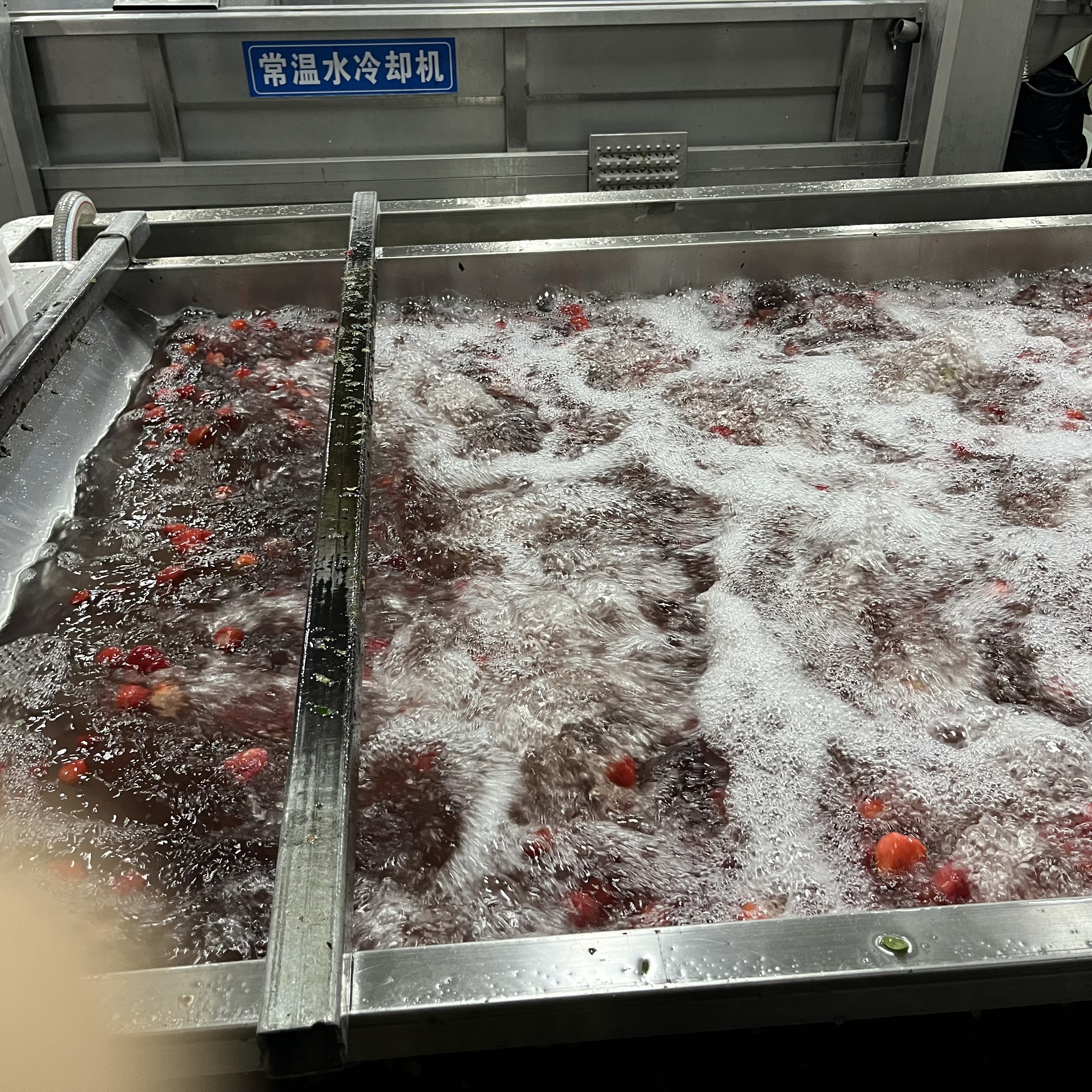
Bubble Washing Machine with Brush Rollers: The First Line of Defense
The first piece of equipment in the strawberry processing line is the bubble washing machine with integrated brush rollers. This machine serves a dual purpose: removing surface dirt and debris through bubble agitation, and tackling stubborn contaminants such as hair, lint, and fibrous materials that may be present from harvesting and transportation.
The working principle of the bubble washing machine relies on a high-pressure air blower that generates abundant bubbles from the bottom of the water tank. As these bubbles rise and burst against the strawberry surfaces, they create a gentle yet effective scrubbing action that loosens soil, sand, and agricultural residue. The turbulence also causes the strawberries to tumble and roll in the water, ensuring all surfaces receive adequate cleaning attention without the bruising that might occur with more aggressive mechanical methods.
What distinguishes this machine from standard bubble washers is the brush roller system. Located strategically within the washing tank, these rotating brush rollers are designed to capture and remove hair, animal fur, and fine fibrous materials that can cling to strawberry surfaces. The brush rollers operate with adjustable pressure, allowing processors to fine-tune the cleaning intensity based on the condition of the incoming fruit. The bristles are typically made from food-grade materials that will not damage the delicate strawberry skin.
The combination of bubble agitation and brush action addresses a unique challenge in strawberry processing. While strawberries grown in open fields are generally free from excessive hair contamination, the risk of foreign fibers from packaging materials, field debris, or processing environments makes this cleaning stage essential for meeting food safety standards.
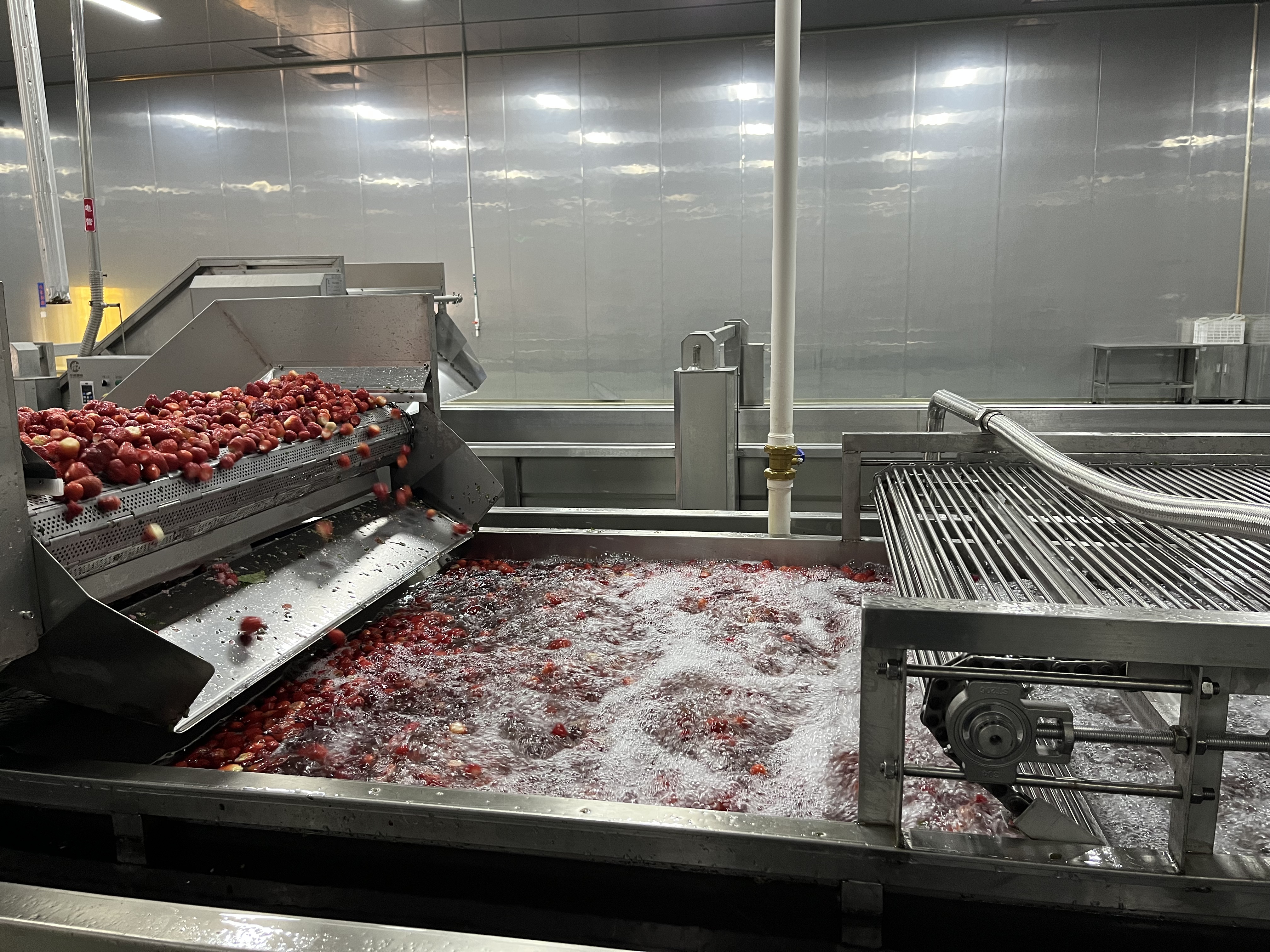
Testing and Rinsing Washer: Effective Leaf and Stem Removal
Following the initial bubble wash, strawberries proceed to the testing and rinsing washer, a specialized machine designed primarily for leaf and stem removal. This stage recognizes that strawberries often arrive at processing facilities with their calyxes, leaves, and stems still attached, and these plant materials must be separated before freezing.
The testing and rinsing washer employs a combination of water flow dynamics and mechanical separation to achieve its purpose. As strawberries enter the machine, they are subjected to a directed water current that causes leaves and lightweight plant debris to float while the denser berries sink or remain suspended at different depths. This density-based separation allows the machine to effectively isolate the edible fruit portions from unwanted vegetative matter.
The rinsing aspect of this machine serves a complementary function. After the leaf separation process, strawberries pass through a rinse zone where clean water sprays remove any loosened debris and residual soil. This ensures that no leaf fragments or stem pieces remain attached to the fruit before it advances to the final cleaning stage.
For processors dealing with strawberries harvested by machine, this equipment is particularly valuable. Mechanical harvesting can introduce higher levels of plant debris compared to hand-picking, making efficient leaf separation a critical quality control point. The testing and rinsing washer reduces the labor burden on downstream sorting stations by pre-removing a significant portion of extraneous plant material.
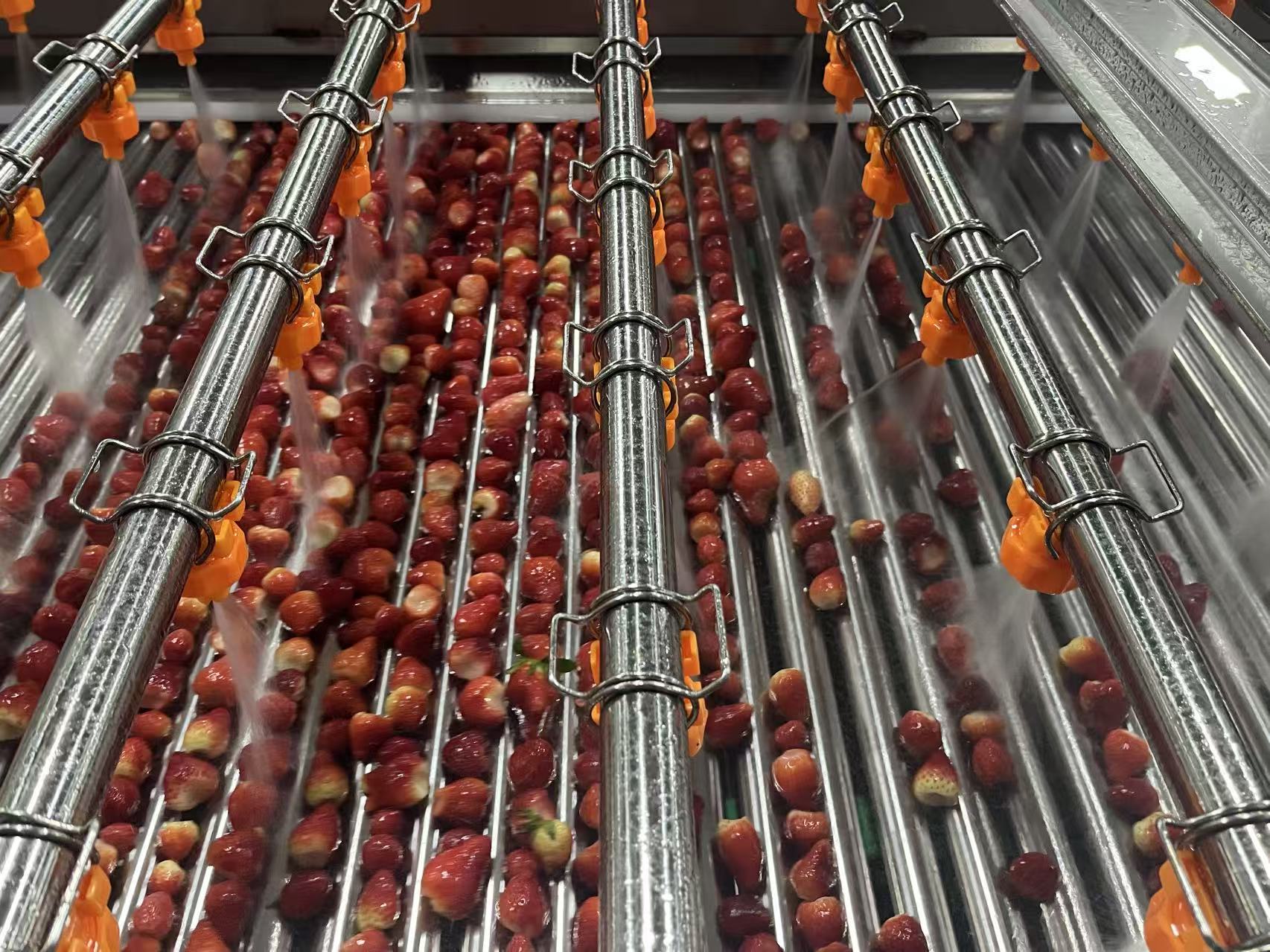
High-Pressure Spray Washing Machine: Achieving Maximum Cleanliness
The third cleaning stage employs a high-pressure spray washing machine, designed to deliver the final and most intensive cleaning action before strawberries move to the sorting phase. While the bubble washer and testing rinsing machine remove the bulk of contaminants, the high-pressure spray washer ensures that even trace amounts of dirt, pesticide residue, and microbial contaminants are effectively eliminated.
This machine features a series of spray nozzles arranged above and sometimes below a conveyor belt that carries strawberries through the washing chamber. The nozzles produce a fan-shaped spray pattern that covers the entire width of the conveyor, ensuring that every strawberry receives direct impingement from the water jets. The pressure can be adjusted to suit the fragility of the product; for strawberries, moderate pressure is typically employed to achieve cleaning without causing surface damage.
The water used in this stage is often sourced from a clean water supply or from a recirculating system with filtration, ensuring that the final rinse does not reintroduce contaminants. Some systems incorporate UV or ozone treatment to enhance microbial reduction, providing an additional layer of food safety assurance. Temperature control may also be integrated, with chilled water helping to maintain strawberry firmness and slow enzymatic degradation during processing.
The cumulative effect of the three-stage washing process—bubble agitation with brushes, testing and rinsing for leaf removal, and high-pressure spray finishing—produces strawberries that meet the stringent cleanliness standards required for export to European markets. Each stage targets specific contaminant types, and together they form a comprehensive cleaning protocol that cannot be achieved by any single machine.
Manual Sorting Conveyor: Quality Control by Human Expertise
After completing the washing stages, strawberries move onto a manual sorting conveyor, where human operators perform visual inspection and quality control. Despite advances in automated sorting technologies such as optical cameras and machine learning systems, manual sorting remains indispensable for IQF strawberry lines, particularly for high-value export products where defect tolerance is extremely low.
The manual sorting conveyor is typically a wide, slow-moving belt that provides ample workspace for multiple operators positioned along both sides. Each operator scans the passing strawberries for defects including:
Mold or fungal growth, which can spread rapidly if contaminated berries enter the freezer
Physical damage such as bruises, cuts, or crushing
Unripe or overripe berries that fail to meet color and firmness specifications
Remaining foreign materials such as stems, leaves, or non-plant debris
Insect damage or contamination
Operators remove defective items by hand, depositing them into waste chutes or collection bins positioned conveniently at their workstations. The conveyor speed is calibrated to allow sufficient inspection time while maintaining the required throughput of 5 tons per hour. Adequate lighting, typically cool white LED or fluorescent fixtures, is installed above the sorting line to ensure that defects are clearly visible.
For German and other European markets, the manual sorting stage is particularly critical because regulatory standards for food safety and quality are exceptionally high. The presence of even a small percentage of defective berries can result in rejection of entire shipments, making this human quality control step a vital investment in product marketability.
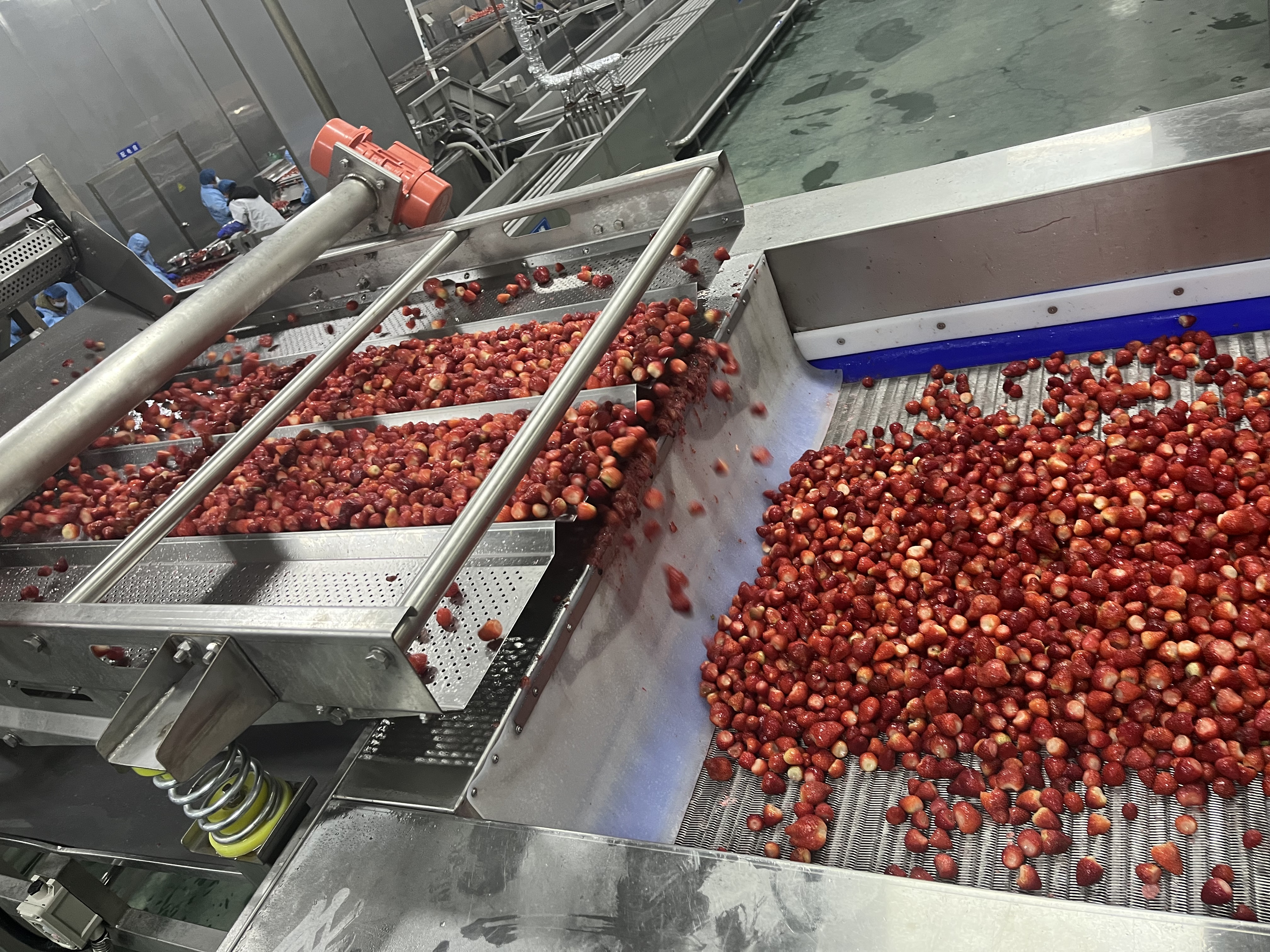
Vibrating Distributor: Ensuring Uniform Feeding for Optimal Freezing
As strawberries exit the sorting station, they approach the fluidized bed IQF freezer. The transition from the sorting conveyor to the freezer inlet is mediated by a vibrating distributor, a machine whose importance to final product quality cannot be overstated.
The vibrating distributor serves a single but critical function: it spreads the strawberries into a uniform, single-layer thickness across the width of the freezer's infeed belt. Without this even distribution, strawberries would enter the freezer in clumps and clusters, leading to several quality problems. Clustered berries would freeze together into blocks rather than as individual pieces, defeating the purpose of IQF processing. Uneven layers would also cause inconsistent freezing, with some berries over-frozen and others inadequately chilled.
The vibrating distributor achieves uniform spreading through a combination of vibration frequency and amplitude, carefully tuned to the size and flow characteristics of strawberries. The vibration energy causes the berries to spread laterally as they move forward, filling gaps and leveling peaks in the product stream. The machine's design typically includes an adjustable gate or damper at the inlet to regulate the flow rate, and variable vibration controls to adapt to different product conditions.
The positioning of the vibrating distributor directly before the freezer also helps to remove excess surface moisture through the shaking action, which is beneficial because excessive water on strawberry surfaces can lead to ice crystal formation and clumping during freezing.
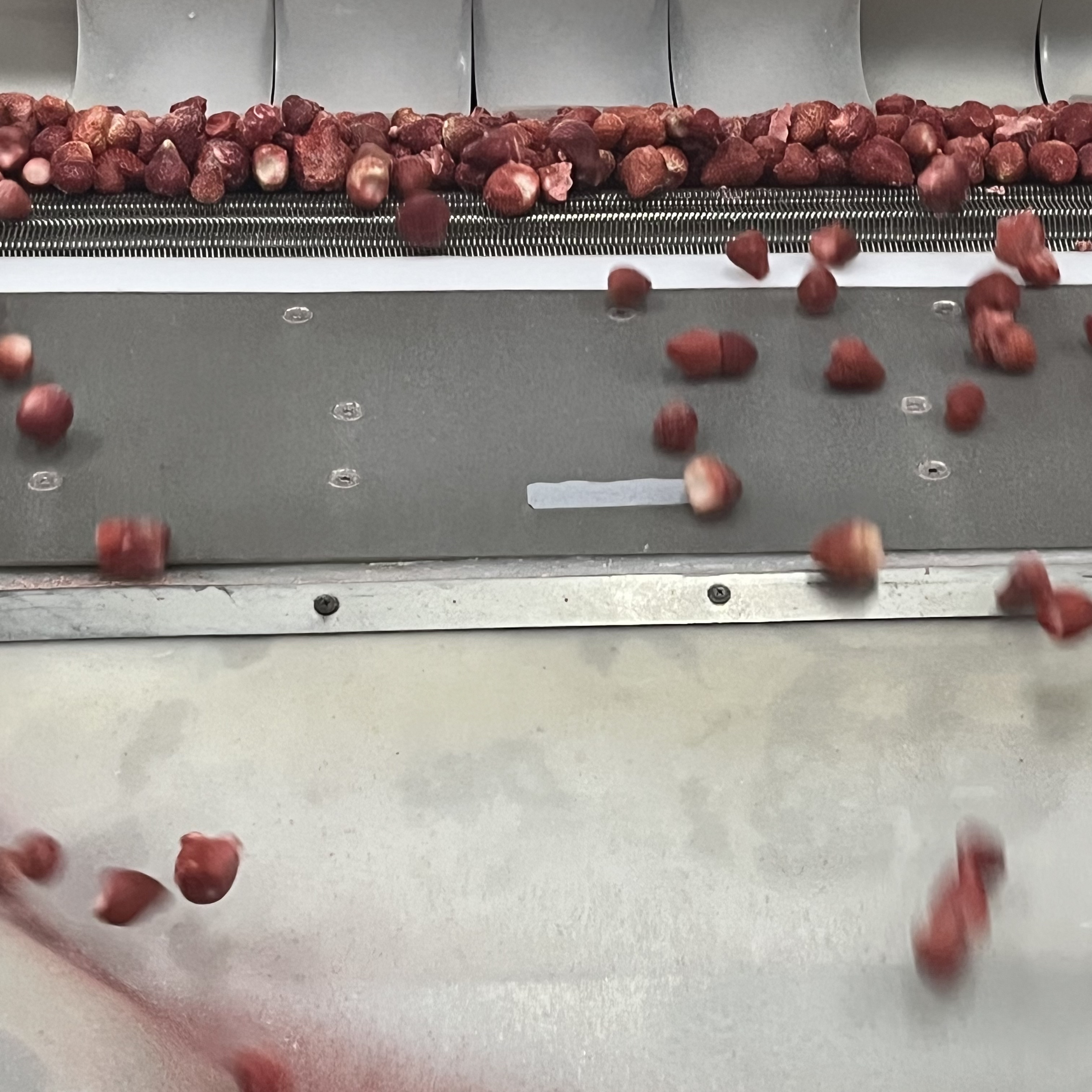
Fluidized Bed IQF Freezer: The Heart of the Strawberry Processing Line
The final and most technologically sophisticated piece of equipment in the line is the fluidized bed IQF freezer, where strawberries undergo rapid individual quick freezing. This machine represents the culmination of all preceding preparation steps and determines the final quality attributes of the frozen product.
How Fluidized Bed Freezing Works
The fluidized bed freezer operates on a principle of upward-flowing cold air that lifts and suspends individual strawberry pieces. As strawberries enter the freezer on a stainless steel mesh conveyor belt, they pass through a zone where high-velocity air at temperatures between -35°C and -40°C is directed upward from below the belt. The air velocity is carefully calibrated to match the weight and aerodynamic properties of strawberry pieces; too little velocity and the berries remain static on the belt, too much and they are blown uncontrollably.
When the air velocity reaches the appropriate level, the strawberries become fluidized—they behave like a boiling liquid, tumbling and floating in the cold air stream. This state of suspension is crucial because it ensures that every surface of each strawberry is directly exposed to the freezing medium. The berries are frozen individually rather than as a solid mass, and the rapid heat transfer produces small ice crystals that preserve cellular structure and texture.
The Two-Stage Freezing Process
Modern fluidized bed freezers for strawberries often employ a two-stage freezing approach. In the first stage, the product is fully fluidized, and the intense cold air rapidly freezes the surface of each berry, forming a frozen crust. This surface freezing is essential for preventing the berries from sticking together as they move through the freezer. The rapid crust formation also minimizes moisture loss from the strawberry interior.
In the second stage, the air velocity is reduced so that the product settles onto the belt without full fluidization. Deep freezing continues here, completing the process of bringing the strawberry core temperature down to -18°C or below. The two-stage design offers a balance between the excellent heat transfer of fluidization and the mechanical simplicity of a static belt, while reducing the risk of product damage from prolonged vigorous agitation.
Why Fluidized Bed Freezing Excels for Strawberries
Strawberries are ideally suited to fluidized bed freezing because of their small size, relatively uniform shape, and low density. These characteristics allow the air stream to lift and separate the berries effectively. The short freezing time—typically 10 to 15 minutes for small fruit pieces—means that ice crystal formation is minimized, and the final product retains a texture and appearance remarkably close to fresh strawberries.
The design of the freezer also incorporates a vibration mechanism beneath the mesh belt, which agitates the product to prevent adhesion to the belt surface and to each other. This vibration works in concert with the airflow to maintain product separation throughout the freezing process.
For processors exporting to Germany and other European markets, fluidized bed IQF freezing offers another significant advantage: the ability to produce free-flowing frozen strawberries that can be portioned and repackaged without clumping. This characteristic is essential for retail and food service applications where berries must be usable individually.
