
Same Principle, Different Scale
A Home Freeze Dryer and a Commercial Freeze Dryer both remove water by freezing the product and sublimating ice under vacuum. The fundamental science is the same, but the engineering objectives are very different.
Home users generally prioritize convenience, compact dimensions, simple controls, and manageable batch sizes. Food processors need higher throughput, repeatable cycles, sanitation, process documentation, equipment durability, and integration with other production equipment.
Understanding this distinction is essential before investing in a Freeze Dryer.
Capacity Is the First Difference
The most obvious difference is production capacity.
A Home Freeze Dryer is intended for relatively small batches. Its tray area and refrigeration system are sized for household or small-business use.
A Commercial Freeze Dryer can be engineered for significantly larger production volumes. Instead of considering only the number of trays, commercial buyers need to calculate kilograms processed per batch, cycle duration, loading density, product moisture, and annual production requirements.
For example, a processor running two batches per day must consider not only nominal capacity but also freezing, drying, unloading, cleaning, and maintenance time.
Control Systems
A Home Freeze Dryer usually emphasizes automated operation. Users select a program and allow the equipment to complete most of the cycle automatically.
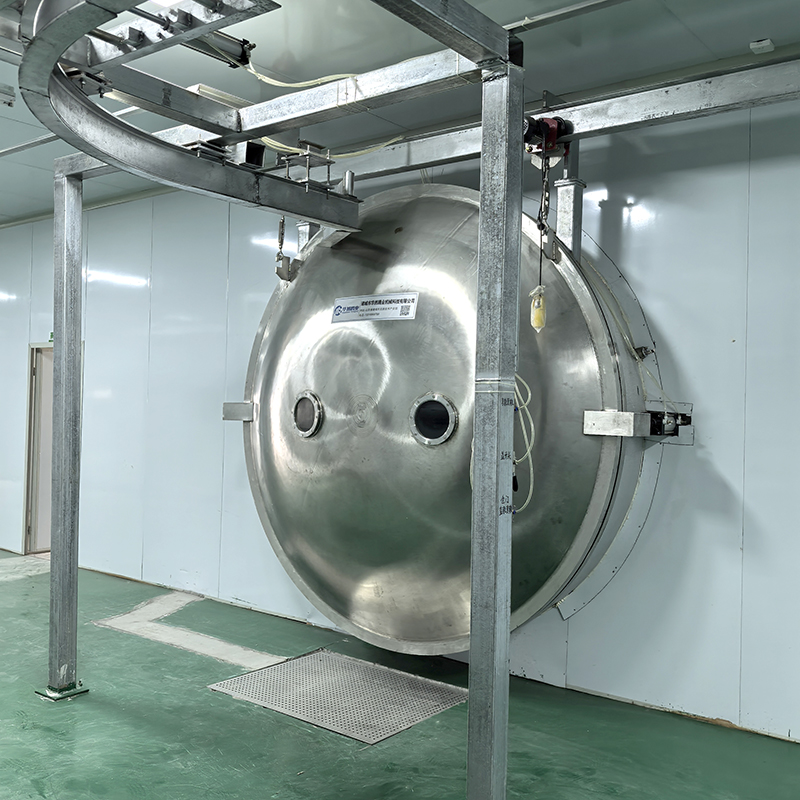
Commercial systems require more sophisticated process management. Temperature, vacuum, condenser conditions, shelf heating, alarms, and recipe parameters may need to be monitored throughout production.
A Vacuum Freeze Dryer used commercially may also incorporate data recording and programmable controls to help operators maintain repeatable processing conditions.
This becomes especially important when a company processes several products. Strawberries may require a very different cycle from cooked meat, coffee, or prepared meals.
Construction and Hygiene
Commercial food processing demands hygienic construction. Smooth surfaces, appropriate stainless-steel materials, accessible components, drainage, and cleanable chamber designs all affect daily operation.
A Food Freeze Dryer for industrial use must also fit the factory's sanitation procedures.
The design should account for cleaning frequency, product contact surfaces, water management, maintenance access, and production workflow.
A home machine may not require the same level of integration because it typically handles smaller quantities and has a simpler operating environment.
Energy and Production Economics
Freeze drying is energy intensive compared with many conventional preservation methods. Recent scientific reviews identify energy consumption, operating cost, processing time, and maintenance as important challenges in industrial freeze drying.
Therefore, selecting a Commercial Freeze Dryer requires an economic calculation.
A processor should examine:
Batch capacity
Drying-cycle duration
Refrigeration efficiency
Vacuum-pump requirements
Heating power
Labor requirements
Cleaning time
Maintenance intervals
Expected annual operating hours
A lower purchase price does not necessarily mean a lower total cost of ownership.
Product Quality
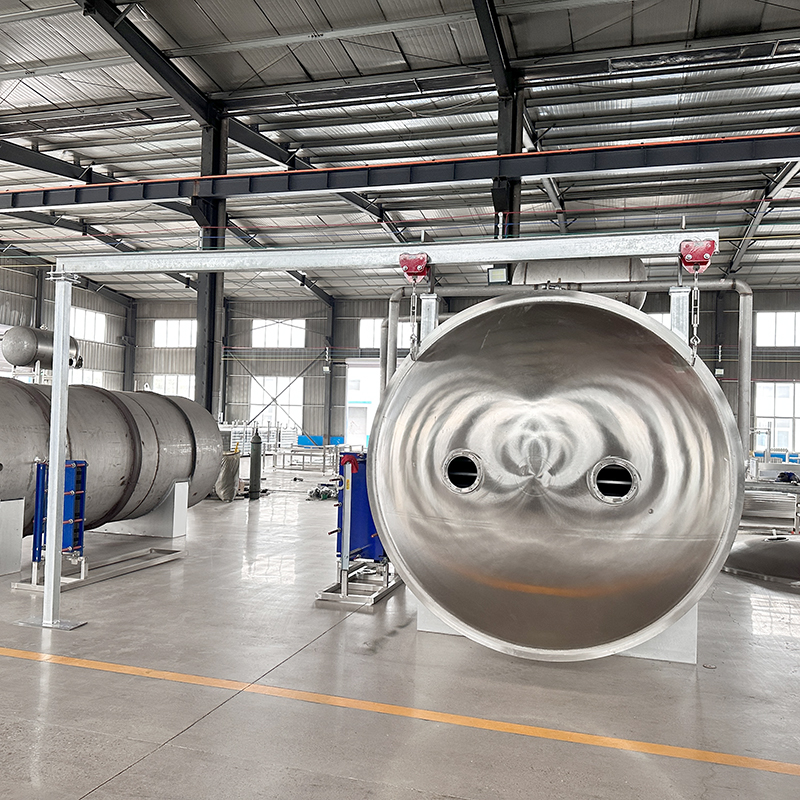
A major reason companies choose a Vacuum Freeze Dryer is its ability to remove moisture without exposing the food to the same drying conditions used in conventional hot-air processes.
Research literature reports that freeze drying can better preserve sensory and structural characteristics in many high-value foods, although actual results depend on the food, pretreatment, freezing rate, pressure, temperature, and drying cycle.
This makes process development essential.
Factory Experience Matters
Zhucheng Huaran Tengye Machinery Technology Co., Ltd. reports more than 19 years of manufacturing experience and a 17,000 m² production facility. Its workforce includes more than 100 professional employees.
The company provides equipment for laboratory, small-scale, medium-scale, and industrial production applications. Its manufacturing process covers equipment design, production, assembly, testing, and delivery.
This range is useful for buyers who may start with pilot production and later increase capacity.
The company also reports exports to more than 100 countries and regions, indicating experience with international project requirements.
Which Machine Should You Choose?
Choose a Home Freeze Dryer when the required throughput is limited and ease of operation is the priority.
Choose a Commercial Freeze Dryer when the business requires repeatable production, larger batch capacity, professional sanitation, stronger automation, and integration with a food-processing operation.
In either case, a properly engineered Freeze Dryer should be selected according to the actual food, required capacity, target moisture, cycle requirements, available utilities, and expected production schedule.
For industrial applications, the Food Freeze Dryer should be treated as a core production asset rather than simply another piece of kitchen equipment.