




Understanding the Freeze Drying Process
Food preservation is no longer limited to traditional drying, canning, or freezing. Modern freeze-drying technology provides another option for processors seeking lightweight, stable products with good rehydration performance. A Freeze Dryer works by freezing food and then removing ice under vacuum through sublimation.
The basic principle is straightforward, but the engineering behind reliable freeze drying is considerably more sophisticated. A typical system must coordinate refrigeration, vacuum generation, shelf heating, vapor condensation, temperature monitoring, and automatic controls.
A Food Freeze Dryer therefore functions as an integrated processing system rather than simply a drying cabinet.
According to the U.S. Department of Agriculture, freeze drying places frozen food inside a vacuum environment where ice changes directly from solid to vapor. Properly packaged freeze-dried food can become shelf stable.
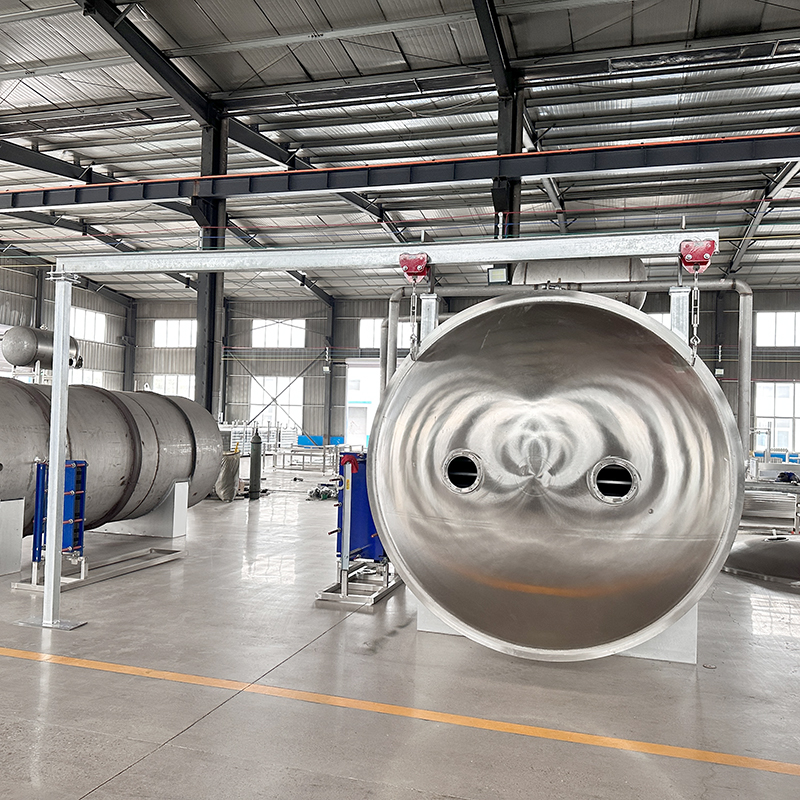
Three Main Stages
The first stage is freezing. Food is cooled sufficiently for its water to form ice. The freezing rate influences ice-crystal size, which can affect the final structure of the dried product.
The second stage is primary drying. The chamber pressure is reduced, and controlled heat is introduced. Under suitable conditions, ice sublimates directly into water vapor instead of becoming liquid.
The third stage is secondary drying. Remaining bound moisture is removed to achieve the desired final condition.
A Vacuum Freeze Dryer is specifically designed to maintain the low-pressure environment required for sublimation. The refrigeration system captures water vapor on a cold condenser, while the vacuum system removes non-condensable gases.
Clemson University Extension notes that freeze-drying can remove up to 98% of the water from food under appropriate conditions.
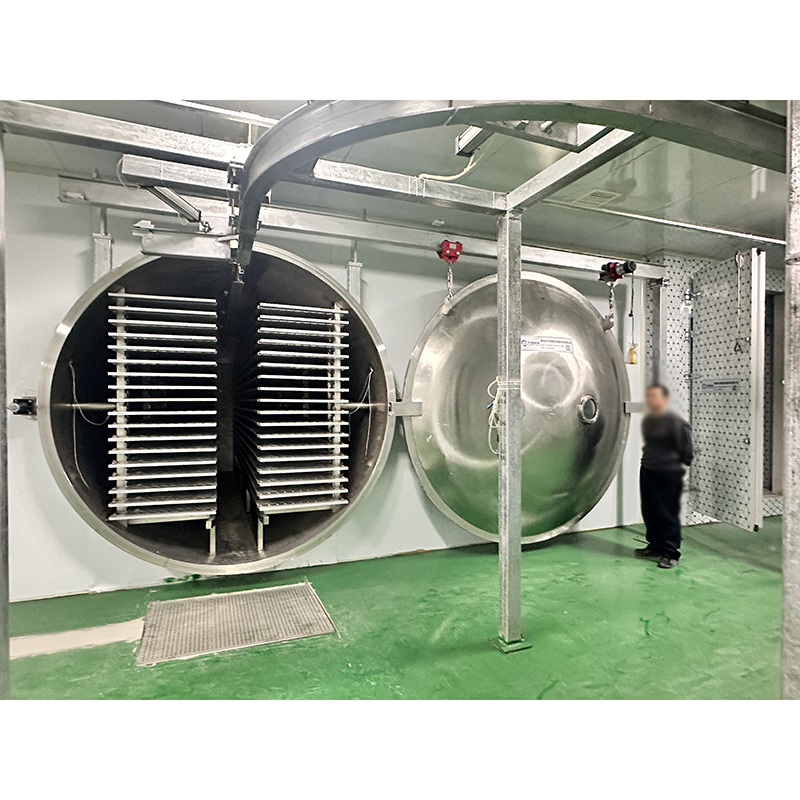
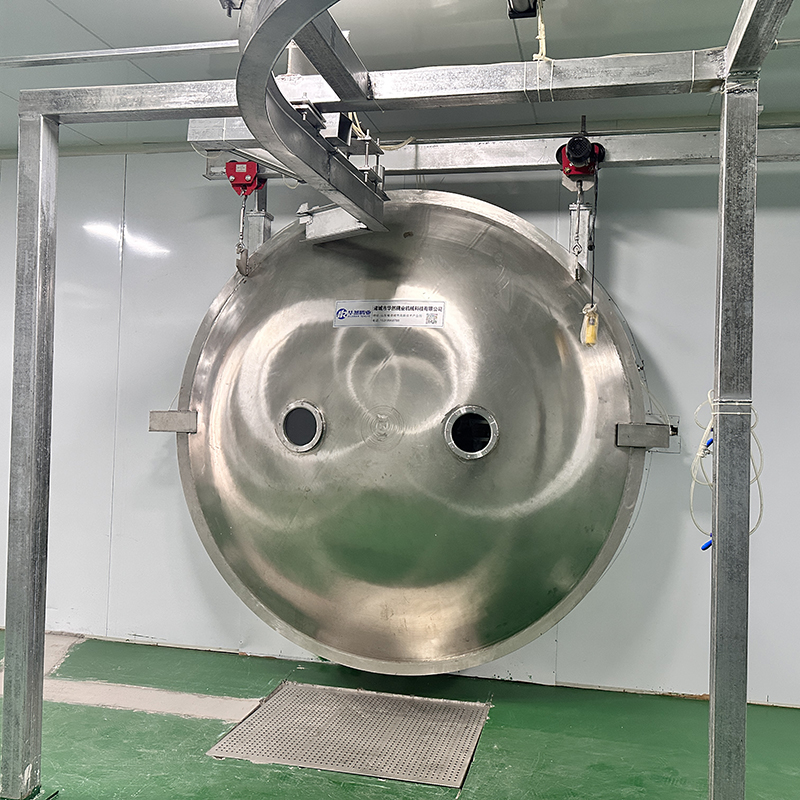
Why Vacuum Control Matters
Vacuum stability has a direct influence on drying consistency. If pressure fluctuates significantly, vapor movement can become uneven and the product may experience unwanted temperature changes.
For a commercial processor, this means the vacuum system must work together with refrigeration and shelf-temperature control. A modern Commercial Freeze Dryer typically uses sensors and programmed control logic to coordinate these functions throughout the cycle.
The engineering challenge is especially important for products with different moisture levels. Strawberries, vegetables, meat, coffee, and prepared meals do not respond identically to the same drying program.
Home and Industrial Applications
A Home Freeze Dryer is generally designed for smaller batches and simplified operation. It can be useful for households, farms, specialty food businesses, and small-scale product development.
A Commercial Freeze Dryer, by contrast, is designed around production capacity, sanitation, repeatability, energy management, and process control.
Between these applications are pilot-scale systems used for developing recipes and validating drying parameters before larger production.
The basic technology remains the same, but chamber size, condenser capacity, refrigeration power, tray area, vacuum-system performance, and automation can vary substantially.
Choosing a Food Freeze Dryer
When selecting a Food Freeze Dryer, buyers should look beyond nominal machine size. Important factors include usable tray area, condenser capacity, ultimate vacuum level, freezing temperature, heating uniformity, control accuracy, cleaning requirements, electrical standards, and after-sales support.
The food itself is equally important. High-sugar, high-fat, dense, or sticky products may require specially developed cycles.
This is why process testing is valuable before purchasing equipment. A machine that performs well for fruit may require different operating parameters for meat or coffee.
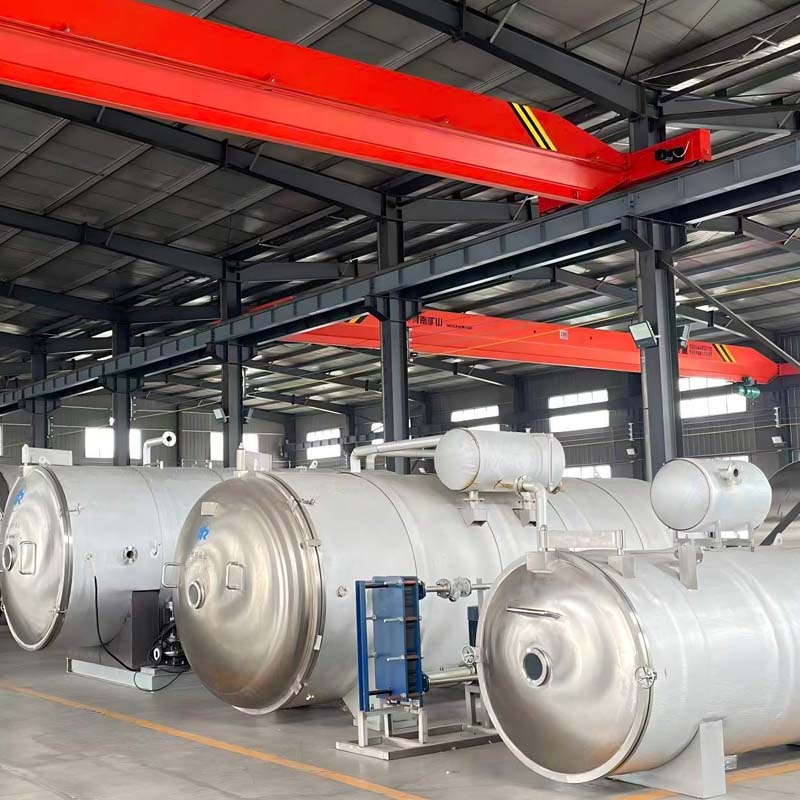
Why Factory Capability Matters
Zhucheng Huaran Tengye Machinery Technology Co., Ltd. has more than 19 years of manufacturing experience, a 17,000 m² modern production facility, and more than 100 professional employees. The company states that its freeze-drying operations cover design, manufacturing, assembly, testing, and delivery.
Its technical scope includes vacuum systems, refrigeration systems, and intelligent control systems. This integrated capability is important because freeze-drying performance depends on the interaction between these systems rather than on a single component.
The company also reports equipment exports to more than 100 countries worldwide, giving its engineering team experience with different production environments and electrical requirements.
Making the Right Investment
Whether the application involves a Home Freeze Dryer or a large Commercial Freeze Dryer, the central objective remains consistent: remove moisture efficiently while maintaining desired product characteristics.
A professionally engineered Vacuum Freeze Dryer can provide controlled conditions throughout freezing, primary drying, and secondary drying. For food processors, this makes freeze drying a practical technology for fruits, vegetables, meat, coffee, prepared foods, and other high-value products.
The right Food Freeze Dryer should therefore be evaluated not only by price but also by engineering quality, production capability, process control, service support, and long-term reliability.
