
Spiral Quick Freezer
I. Advanced Freezing Technology For Modern Food Processing
1.1 Efficient Freezing For Growing Food Production Needs
As the global frozen food industry continues to develop, food manufacturers are looking for faster, more efficient, and more reliable freezing solutions. A spiral quick freezer has become an important piece of equipment for many food processing lines because it combines continuous production, efficient heat transfer, compact installation, and flexible product handling.
Unlike traditional batch freezing systems, a spiral freezing system allows products to enter the freezer continuously and travel through multiple levels of a spiral conveyor. During this process, cold air circulates around the products, rapidly reducing their temperature while maintaining production continuity.
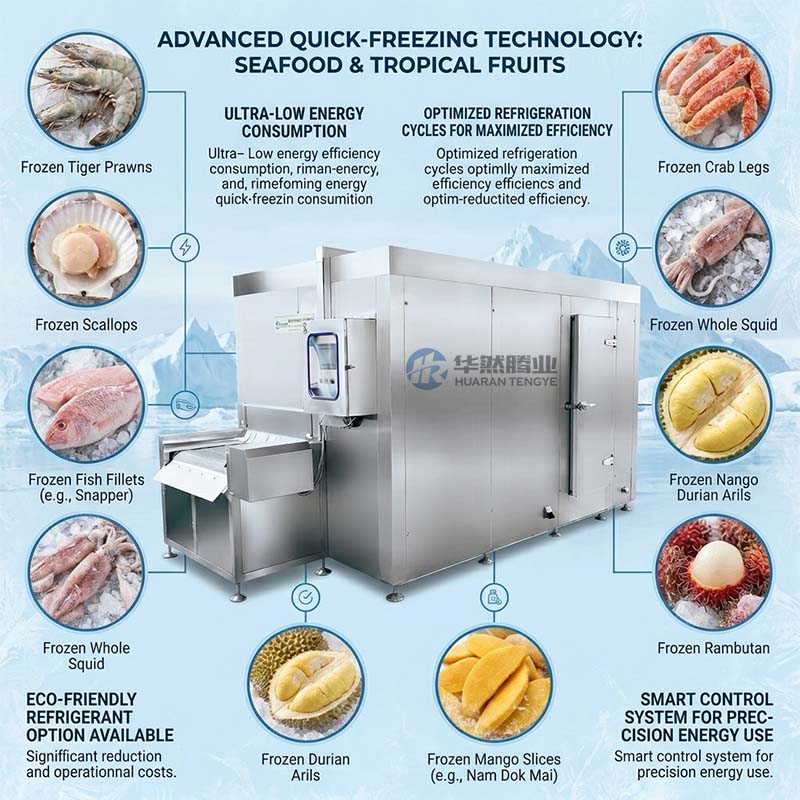
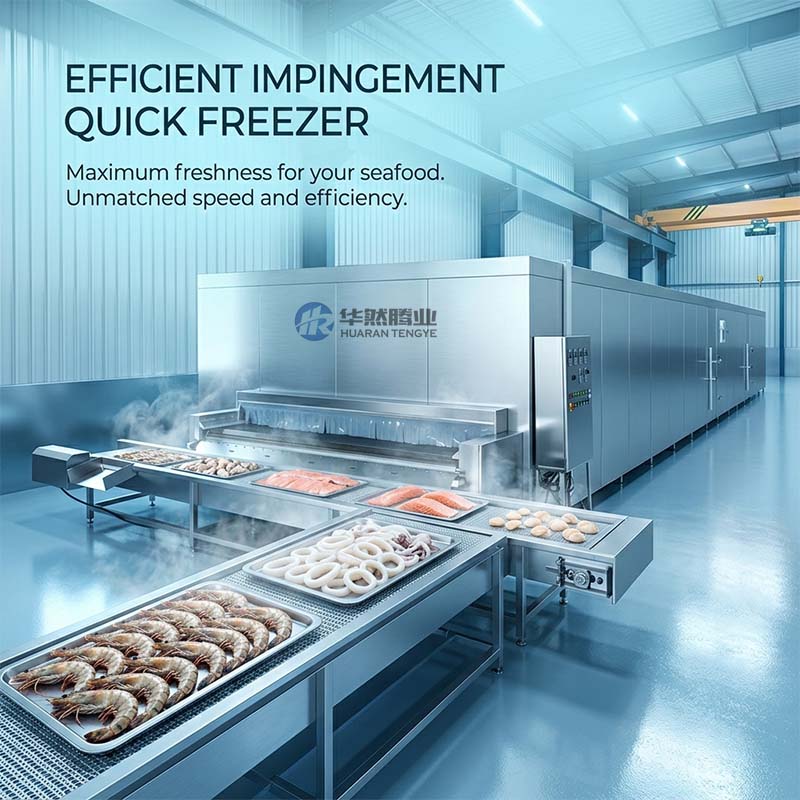
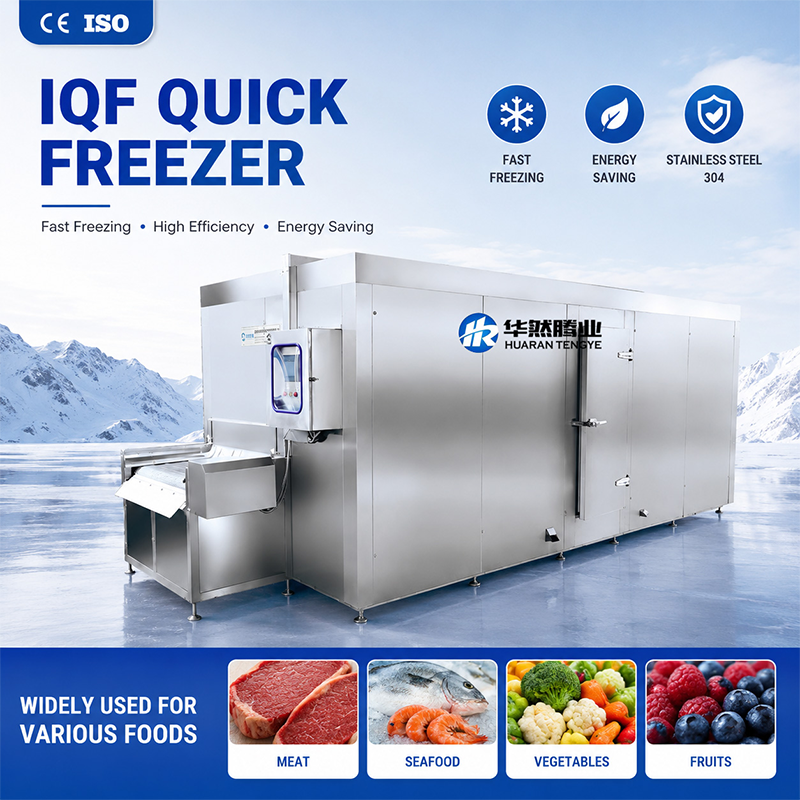
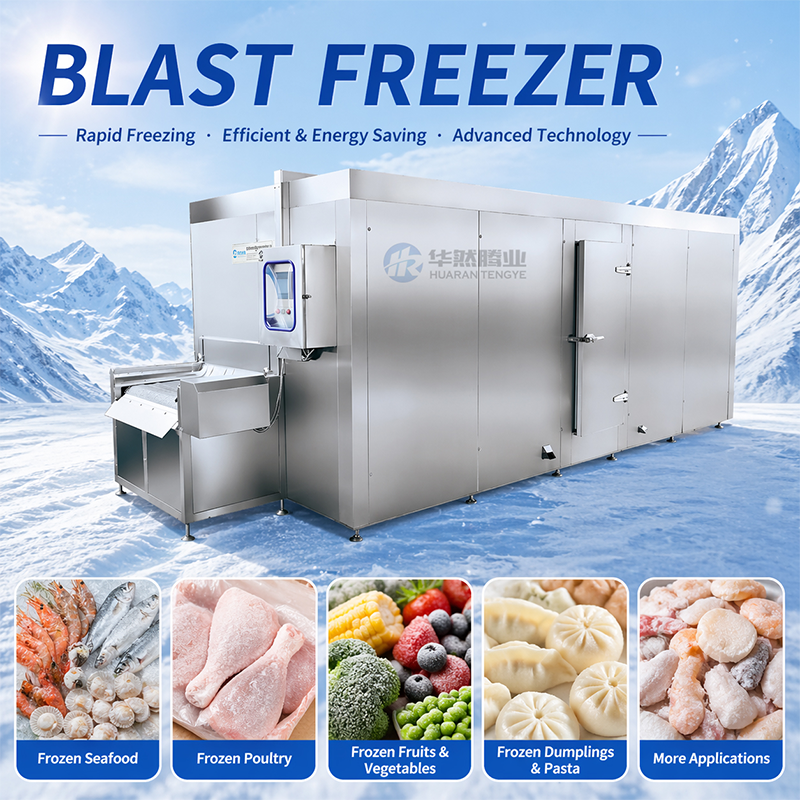
This type of equipment can be used for a wide variety of food products, including meat, poultry, seafood, vegetables, fruits, prepared foods, fried foods, bakery products, dumplings, and other processed foods.
For food processors that need high production capacity while making efficient use of factory space, spiral freezing technology provides a practical solution.
1.2 How A Spiral Freezer Works
The basic operating principle of a spiral freezer is straightforward but highly efficient. Products are loaded onto a conveyor at the freezer entrance. The conveyor then carries the products upward or downward through a spiral path inside the insulated freezing chamber.
At the same time, powerful refrigeration fans circulate cold air through the product area. The combination of product movement and controlled airflow creates consistent heat transfer across the product surface.
After completing the required residence time inside the freezing chamber, the products reach the discharge conveyor at the exit. The entire process can operate continuously, which makes the system suitable for automated food production lines.
The freezing time can be adjusted according to product type, product thickness, loading density, target temperature, and production capacity.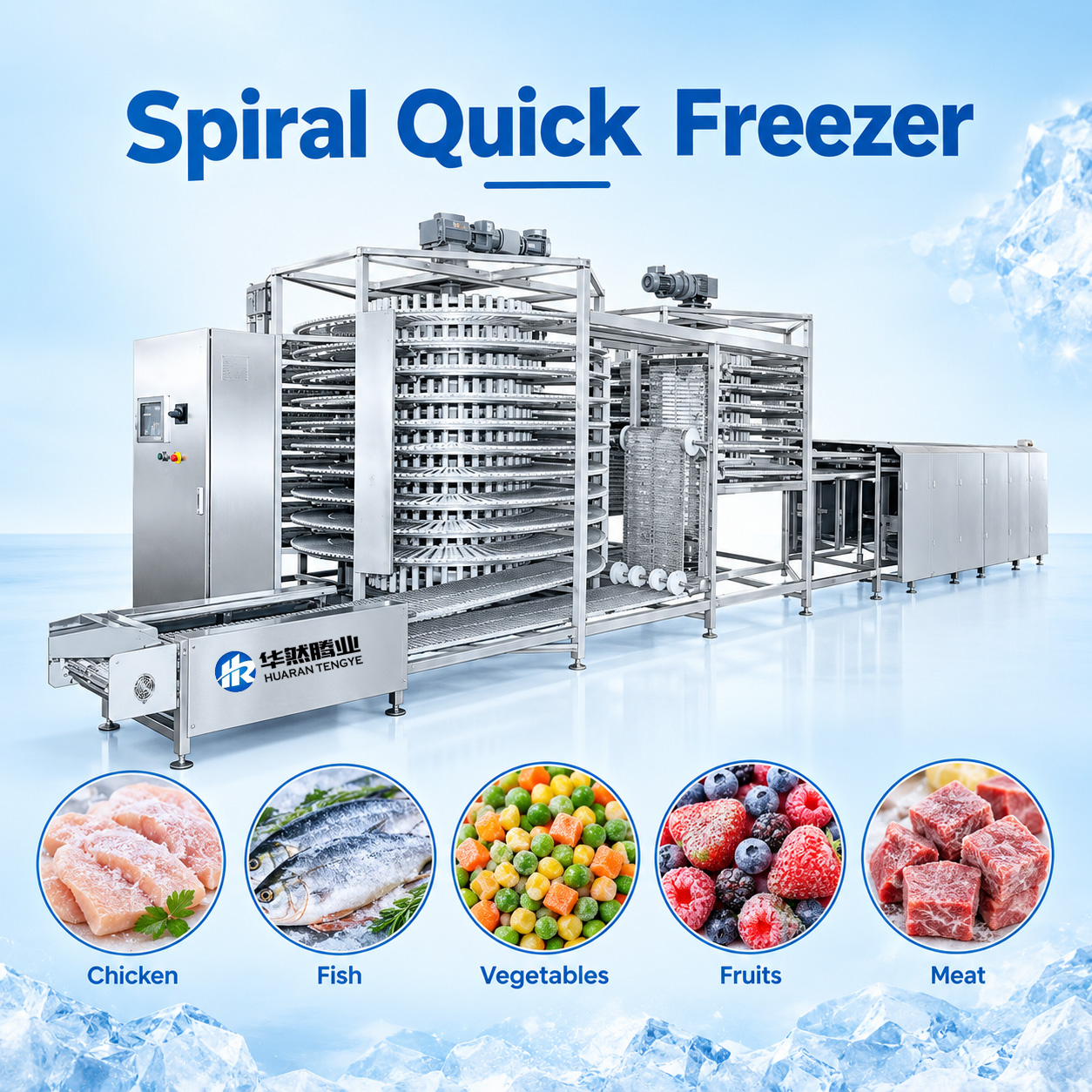
II. What Makes A Spiral Quick Freezer Different?
2.1 Continuous Production
One of the major advantages of a spiral quick freezer is continuous operation.
Products can enter the machine one after another instead of being loaded into separate freezing batches. This allows the freezer to connect directly with upstream processing equipment such as cooking systems, blanchers, frying lines, cooling machines, forming machines, or packaging systems.
Continuous production can help food manufacturers create a more organized production flow and reduce unnecessary manual handling.
2.2 Compact Use Of Factory Space
A conventional straight tunnel freezer may require a long installation area because products need sufficient residence time inside the freezing chamber.
A spiral freezer uses vertical space to create a longer conveyor path within a relatively compact footprint. Depending on the design, products can travel through multiple spiral levels before reaching the outlet.
This makes the equipment particularly useful for factories where floor space is limited but a relatively long freezing time is required.
2.3 Flexible Product Handling
Spiral freezers can be configured for different food products and production requirements.
Depending on the application, the conveyor belt, belt width, spiral diameter, number of levels, freezing temperature, airflow arrangement, and conveyor speed can be customized.
Common applications include:
Meat And Poultry
Chicken nuggets, chicken strips, chicken breast products, meatballs, sausages, cooked meat, and other processed meat products can be frozen using spiral freezing systems.
Seafood
Fish fillets, shrimp, squid, seafood portions, and other seafood products can be continuously frozen before packaging or further processing.
Fruits And Vegetables
Fruits and vegetables can be frozen after washing, cutting, blanching, or other preparation processes. Spiral systems can be integrated with vegetable processing and IQF production lines.
Prepared And Convenience Foods
Dumplings, spring rolls, fried foods, prepared meals, bakery products, and other convenience foods are also suitable applications for spiral freezing equipment.
III. IQF Spiral Freezer For Individual Product Freezing
3.1 Understanding IQF Freezing
IQF, or Individually Quick Frozen, refers to a freezing method designed to freeze individual food pieces separately rather than allowing them to form large blocks.
An IQF spiral freezer can be used in applications where maintaining product separation and individual appearance is important.
For example, products such as vegetables, seafood pieces, fruit pieces, chicken products, and prepared foods may need to remain individually separated after freezing.
Proper airflow, product distribution, belt loading, freezing temperature, and residence time all influence the final freezing result.
3.2 Advantages Of IQF Spiral Freezing
The use of an IQF spiral freezer can provide several production advantages.
First, individual freezing makes downstream handling easier. Frozen products can be weighed, sorted, packaged, or processed without needing to break apart large frozen blocks.
Second, controlled freezing can help maintain product shape and appearance.
Third, continuous IQF production can be integrated with automated weighing, sorting, conveying, and packaging systems.
For food factories producing large quantities of individually frozen products, this type of freezing technology can become an important part of the complete processing line.
3.3 Integration With Complete Food Processing Lines
A spiral freezer does not have to operate as an independent machine.
Modern food production facilities often connect freezing equipment with other processing systems to create a complete automated production line.
A typical process may include:
Raw Material → Processing → Washing → Cutting/Forming → Cooking or Blanching → Cooling → Quick Freezing → Inspection → Packaging → Cold Storage
The exact configuration depends on the product and factory requirements.
IV. Key Components Of A Modern Spiral Freezer
4.1 Insulated Freezing Chamber
The freezing chamber is designed to reduce heat exchange between the internal freezing environment and the external factory environment.
High-quality insulation helps maintain stable internal temperatures and supports efficient refrigeration operation.
The internal structure is generally designed with food processing requirements in mind, making cleaning and routine maintenance easier.
4.2 Spiral Conveyor System
The spiral conveyor is the central component of the system.
Products move continuously along the spiral path while remaining inside the controlled freezing environment. Conveyor speed can be adjusted according to the required freezing time and production capacity.
Different conveyor widths and spiral configurations can be designed according to product size and factory layout.
4.3 Refrigeration And Air Circulation System
The refrigeration system provides the cooling capacity required by the freezer.
High-performance fans circulate cold air through the freezing chamber. Proper airflow distribution is essential because uneven airflow can result in inconsistent freezing performance.
The refrigeration configuration can be selected according to production capacity, product characteristics, target freezing temperature, and local operating conditions.
4.4 Electrical Control System
A modern spiral freezer normally includes an electrical control system for monitoring and controlling important operating parameters.
Operators can control conveyor speed, monitor equipment status, adjust operating parameters, and identify potential faults through the control interface.
Automation also makes it easier to integrate the freezer with upstream and downstream equipment.
V. How Spiral Freezer Manufacturers Build Reliable Equipment
5.1 Engineering And Customized Design
Professional spiral freezer manufacturers normally begin with the actual production requirements rather than offering only one standard machine configuration.
Important factors include:
Product type
Product size and weight
Required production capacity
Freezing temperature
Freezing time
Belt loading
Factory space
Refrigeration conditions
Product entrance and exit direction
Automation requirements
Based on these parameters, the equipment can be engineered to match the customer's production line.
5.2 Stainless Steel Construction
Food processing equipment needs to operate in demanding environments involving moisture, low temperatures, frequent cleaning, and continuous production.
For this reason, stainless steel is commonly used for major food-contact and structural components.
The equipment design should also consider smooth surfaces, accessible maintenance areas, hygienic construction, and convenient cleaning.
5.3 Factory Assembly And Testing
Before shipment, the equipment can be assembled and inspected at the manufacturing facility.
This process allows engineers to check conveyor movement, electrical control functions, component installation, insulation structure, and other key systems.
For large customized systems, factory assembly and testing can also help identify potential installation issues before the equipment reaches the customer's site.
VI. Quality Control Before International Shipment
6.1 Equipment Inspection
Quality control is an important step before exporting a large freezing machine.
Manufacturers can inspect the equipment structure, conveyor system, electrical cabinet, refrigeration-related components, safety devices, and other critical parts.
The inspection process helps ensure that the equipment is prepared for transportation and installation.
6.2 Trial Assembly
For large spiral freezing systems, manufacturers may conduct trial assembly before dismantling the equipment for shipment.
This allows the production team to verify the overall structure and connection points.
It can also make the final installation process more organized because the machine has already been checked during factory assembly.
6.3 Documentation And Technical Support
International customers may require technical drawings, installation instructions, electrical diagrams, operating manuals, spare parts information, and other technical documents.
Providing complete documentation can make overseas installation and commissioning more efficient.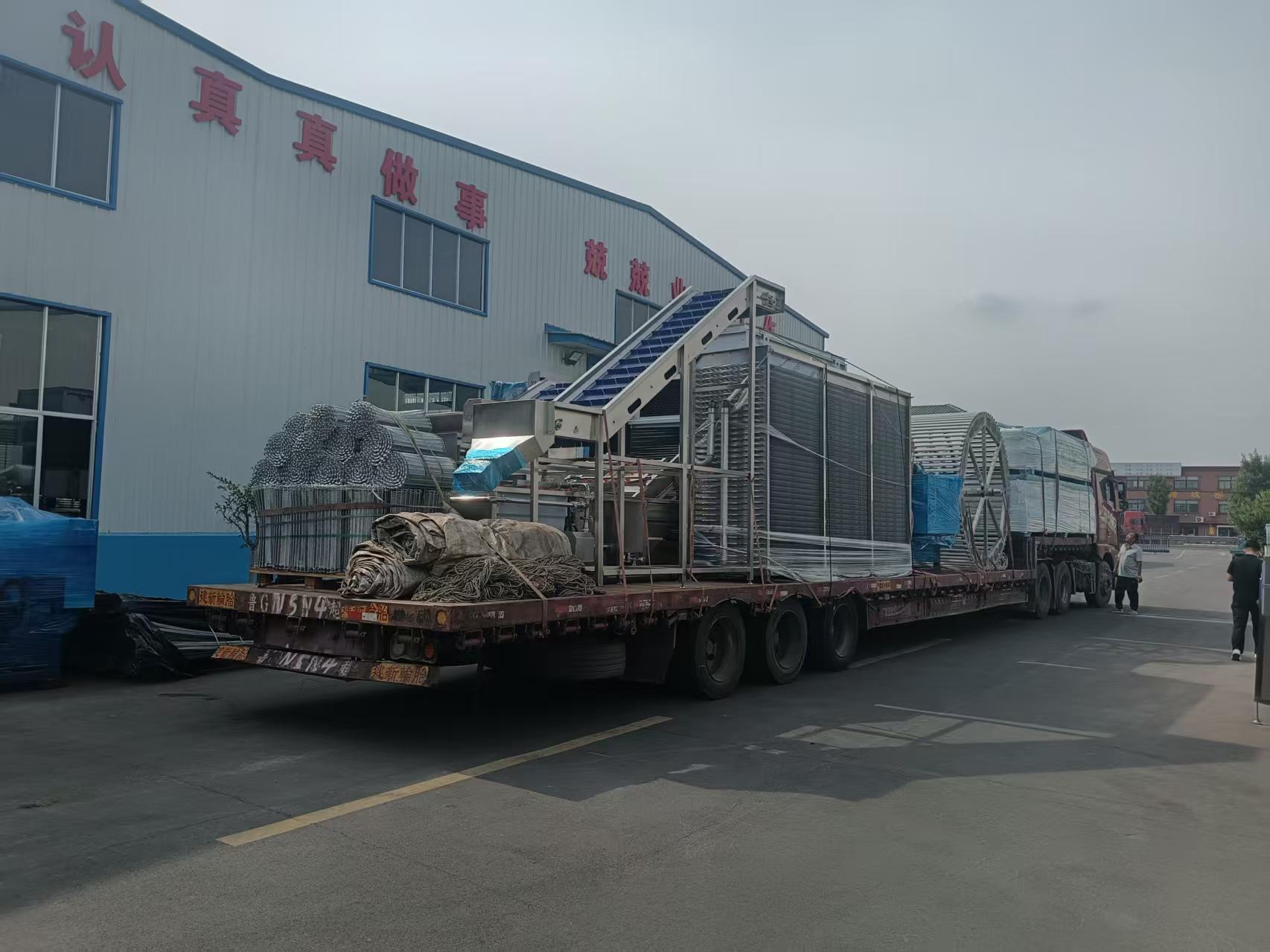
VII. Spiral Freezer Shipment To International Customers
7.1 Professional Export Packaging
Because spiral freezers are large industrial machines, transportation requires careful preparation.
Before loading, equipment sections are normally inspected, protected, and packed according to their size and transportation requirements.
Sensitive electrical components and other parts that require additional protection can receive separate packaging.
The objective is to reduce the possibility of damage during handling, loading, ocean transportation, and unloading at the destination port.
7.2 Container Loading
Depending on the equipment configuration, spiral freezer components can be prepared for container transportation.
Engineers and production workers carefully plan the loading sequence to maximize available container space while protecting the equipment.
Large structural sections, conveyor components, electrical cabinets, refrigeration-related parts, and accessories can be arranged according to the final installation sequence.
Photos and videos can also be taken during loading and shipment preparation so international customers can clearly understand the delivery process.
7.3 From Factory To Customer
International delivery is an important part of a complete equipment project.
A typical export process may include:
Equipment Manufacturing → Factory Inspection → Trial Assembly → Equipment Dismantling → Export Packaging → Container Loading → Port Transportation → Ocean Shipping → Destination Port → Customer Factory → Installation And Commissioning
This process provides customers with a clear understanding of how their equipment moves from the manufacturing facility to the final production site.
VIII. Choosing The Right Spiral Freezer For Your Production Line
8.1 Start With Production Capacity
Production capacity is one of the most important factors when selecting a spiral freezer.
A factory producing several hundred kilograms per hour may require a different configuration from a large industrial line producing several thousand kilograms per hour.
The equipment should therefore be designed according to the actual production target rather than simply selecting the largest available machine.
8.2 Consider Product Characteristics
Different products require different freezing conditions.
Product thickness, moisture content, initial temperature, packaging condition, belt loading, and target core temperature can all influence freezing performance.
For this reason, providing detailed product information to the equipment manufacturer can help engineers develop a more suitable configuration.
8.3 Consider Factory Layout
The position of the production line, entrance height, discharge height, available floor space, ceiling height, refrigeration room, electrical room, and packaging area should all be considered.
A customized spiral freezer can be designed around the existing factory layout to help create a smoother material flow.
IX. Global Demand For Spiral Freezing Equipment
9.1 Supporting Modern Frozen Food Production
The continued growth of frozen foods has increased demand for automated freezing equipment in many markets.
Food producers are looking for solutions that can support higher production efficiency while maintaining stable product quality.
Spiral freezing technology can be applied to different product categories, making it a flexible option for food processing companies.
9.2 Equipment As Part Of A Complete Solution
For international customers, a freezing machine is often only one part of a larger project.
A complete solution may include conveyors, cooking equipment, blanching systems, cooling machines, forming machines, packaging equipment, refrigeration systems, electrical controls, and other supporting machinery.
Professional spiral freezer manufacturers can therefore provide not only the main freezing equipment but also engineering support for integration into the complete production process.
X. From Manufacturing To Global Delivery
10.1 A Complete Equipment Project
A successful spiral freezer project involves much more than manufacturing a stainless-steel machine.
It includes engineering design, production planning, component selection, factory assembly, inspection, packaging, transportation, installation, commissioning, and after-sales technical support.
Every stage contributes to the final operating performance of the equipment.
10.2 Building Long-Term Customer Relationships
For international food processing companies, equipment investment is usually a long-term decision.
Reliable communication, clear technical documentation, responsive engineering support, and professional after-sales service can therefore be as important as the machine itself.
A strong manufacturing partner should understand the customer's production requirements and provide appropriate technical solutions from the initial inquiry through final installation.
XI. Conclusion: Efficient Spiral Freezing For Global Food Processing
11.1 Reliable Technology For Continuous Production
A spiral quick freezer provides a continuous freezing solution for modern food processing plants. Its multi-level conveyor design allows manufacturers to achieve longer freezing times within a relatively compact production area.
For individual quick freezing applications, an IQF spiral freezer can support continuous processing of vegetables, fruits, seafood, meat products, prepared foods, and many other products.
11.2 From Factory Manufacturing To Overseas Delivery
For international projects, choosing experienced spiral freezer manufacturers can help simplify the entire equipment purchasing process.
From customized engineering and factory assembly to quality inspection, export packaging, container loading, shipping, installation, and commissioning, every step should be carefully organized.
As global demand for frozen food continues to expand, efficient spiral freezing equipment will remain an important technology for food processors seeking continuous production, flexible product handling, and optimized use of factory space.
For food processing companies planning a new freezing line or upgrading an existing production system, a professionally designed spiral freezer can be developed according to product characteristics, production capacity, freezing requirements, and factory layout.
The right freezing solution is not simply a machine. It is a complete combination of engineering design, manufacturing quality, production efficiency, international logistics, and technical service.