




Integrated technical Evaluation of Machines for the Rapid Freezing of Sea Products and Machines for the Application of Ice Coating.
1. An introduction
Aquatic products are very likely to deteriorate shortly after their harvesting, so how to preserve their freshness and nutritional value as rapidly as possible is an essential problem facing the industry of aquatic product processing. Rapid freezing technology and the ice coating technique are two powerful approaches to this problem: the former employs rapid cooling to carry aquatic products beyond the ice crystal formation zone, thus reducing the amount of damage that ice crystals can do to cellular tissues; the latter refers to covering a frozen product surface with a thick icy layer, which becomes a protective layer from air exposure, wind drying, and oxidation. These two methods are quite complementary and altogether make up an almost comprehensive technology for freezing and preserving aquatic product in the modern era.
A machine used for quick freezing is an industrial freezer device that aims to bring product core temperature below -18 °C within 30 minutes using refrigerant and air circulation systems. An ice-coating machine is a type of freezer wherein ice cubes and ice water are mixed together in the machine's ice tank to coat products such as shrimp or fish, thus resulting in a uniform layer of ice on the product surface. These two machines, the quick-freezing one and the ice-coating one, have been getting more advanced technically and have found wider adoption in the market in the past few years as a result of consumers getting pickier for better product quality and the development of the cold logistics industry going much faster than anticipated.
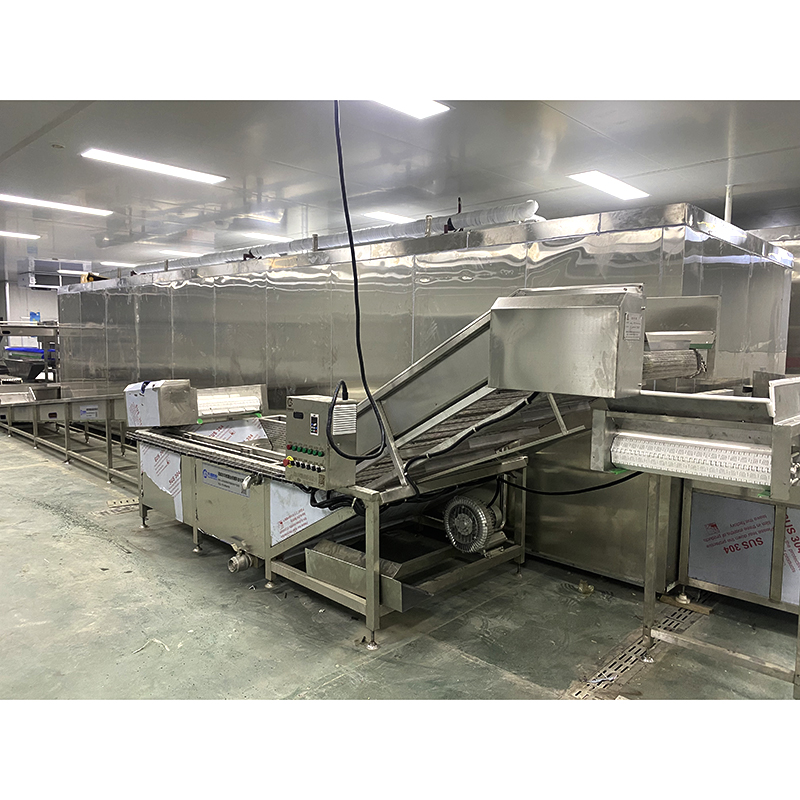
Freezing Machine for Aquatic Products: Specifications, Operating Principle, Selection
The main working principle of a quick-freezing machine is to make use of the heat absorption associated with refrigerant phase changes to create an extremely cold surrounding environment of food, thereby enabling a rapid surface freeze and the formation of a protective layer; later, a forced-cycling cold air stream is used to equalize heat loss to the food so that the whole is freezing. The secret to rapid freezing is to get food through the ice crystal formation zone (the temperature range from 0°C to-5°C) very quickly - it is at this stage when plenty of ice crystals are being created and when cell structure is particularly vulnerable. The more rapidly freezing, the resulting ice being of small dimension and quite uniform, with less damage to the muscle of aquatic creatures; the lower will then juiciness loss and the slower the texture deterioration after thawing.
Primary types of freezer machines
Aquatic product quick-freezing machines may be divided into the following types, primarily if we look at their structural design and technical approach:
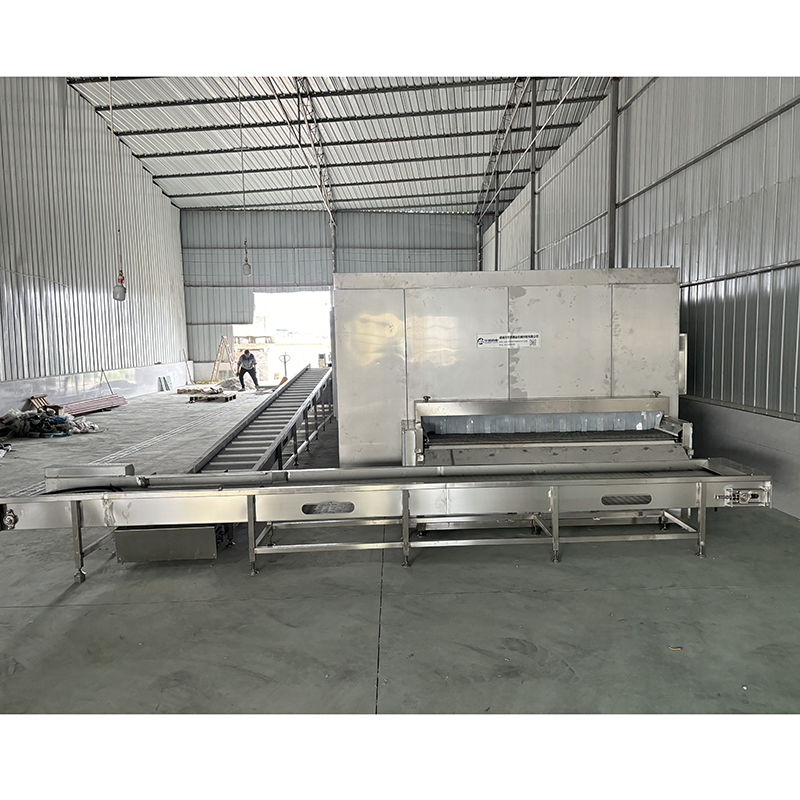
1. Tunnel-type quick-freezing machine
A tunnel-type quick-freezing machine is one of the most extensively used rapid-freezing equipment for the processing of aquatic products. It works by having food placed on a conveyor that moves through a long and well-insulated tunnel where cold air at around -35 °C is regularly blown. The product is frozen during transit in the tunnel. This type of machine has a simple arrangement, high productivity, and a very satisfactory extent of continuity, that is ideal for large-scale freezing of all types of aquatic products such as shrimp, fish fillets, and whole fish. The technical specifications are, for instance, average air temperature within the tunnel: -35°C ±5°C, adjustable freezing time ranging from a few dozen to several hundred minutes, and freezing capacity of shrimp: 300-1000 kg /h. The external dimensions of a big tunnel-type quick-freezing machine can be as large as 21 700 × 4 200 × 2 200 mm, with a rating of installed power of about 41 kW.
2. Spiral Freezing Machine
A spiral quick-freezer works on a principle where a spiral conveyor belt is used to move the product very slowly either upwards or downwards through multiple layers so that the total distance of freezing is very long, yet the machine itself remains compact. This design combines the advantages of a high production level together with minimum space requirements; thus, it is extremely suitable for the production of frozen goods with long freezing times, high input temperatures, or big production volumes. This freezer is quite versatile in its production capacity: a single-spiral one being able to freeze 250-2500 kg/h while a dual-spiral unit reaching up to 500-5000 kg/h. The temperature of the chamber is set at about -38'C and the freezing time may range from 20 minutes to 90 minutes. Shrimp or fish fillets, for example, with the aid of the spiral quick-freezing machine, it becomes quite effortless to freeze them continuously while ensuring a high level of efficiency!
(三)Important factors to consider in the selection of a freezer
In this section, we list the major considerations which aquatic product processing companies must take into account when making a choice about which freezer they will be using.
What sort of product needs what type of freezer: this being the top priority consideration. The way products look, their sizes, and whether they start out from room temperature or not are the key determinants for different products' freezing needs. Tiny things like shrimp or fish fillets will do very well with mesh-tunnel-type rapid-freezing machines; bigger ones such as whole fish will not only need longer freezing time but might also have to opt for one of the other freezer types such as spiral or plate-and-strip-types. As for most seafood products, it has been generally agreed upon that they must be flash-frozen at -35°C (in 15 to 3 minutes) so that damage due to ice crystals would be avoided at the very least possible level.
Capacity-related requirements are a major factor in deciding on the model. The company should purchase a freezer that has a production capacity that matches the volume of their operation and production cycle.
Tunnel-type freezers suit large-scale production because they require little supervision and are practically continuous. Spiral-type freezers are suitable for products with a medium number of units and that require longer freezing times. Tunnel-type freezers are most often used for small batches that require fast freezing to add value quickly.
The level of automation will definitely affect how the factory will run on an ongoing basis. The new types of freezing machines most often come with a PLC control system for precise control and a CIP cleaning system for automatic cleaning and other functions so as to facilitate the work of the staff.
Three, Ice Coating Machine: Principle, Structure, and Process Flow
(一)Ice Wrapping Machine Working Principle
The operating principle of the ice-coating machine is based on the heat exchange principle. Since frozen aquatic products naturally contain a lot of cold energy that is quite considerable (the center temperature of the product can usually not be higher than –18°C), when these products are fed into the ice-coating machine, they are immersed in, or they pass through, a loop of low-temperature cold water (usually the water is kept at 0–2°C). The cooling capability of the products is rapidly released, causing surface water to freeze rapidly, thereby resulting in a uniform ice layer coating.
To maintain the low-temperature water environment of the tank, it uses an ice and cold-water mixture in the layer of ice insulation, so there is usually no extra cold source required. For a good ice coating, generally the equipment will need to be equipped with two quite different circulating water systems: one is for mixing and circulating the ice-cold water to ensure the water temperature is maintained; the other is for creating an upper water curtain so that the whole surface of the product, when it is moving through, has more equal contact with the icy-cold bath.
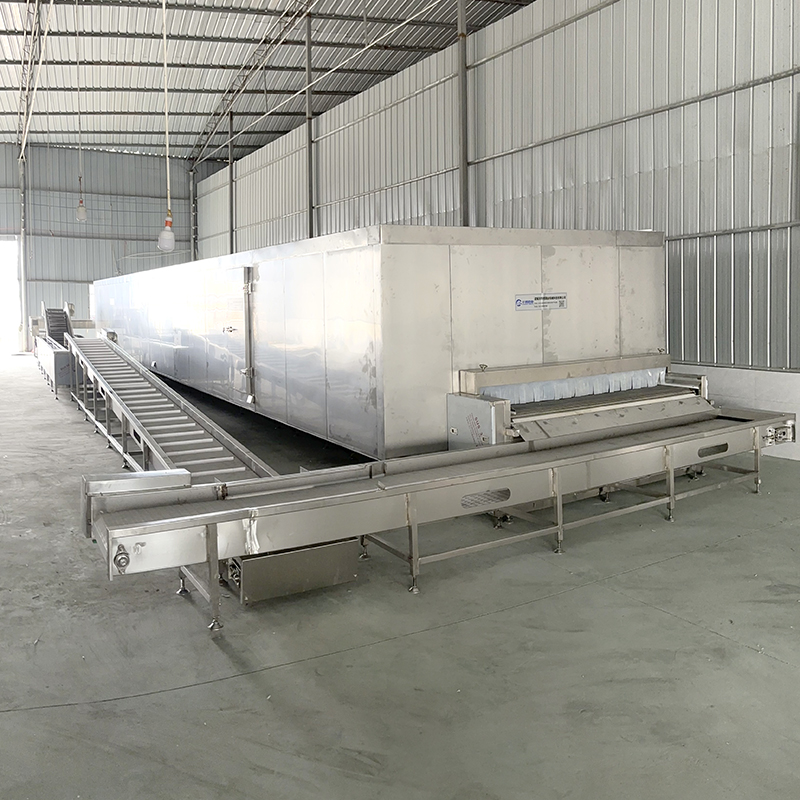
(二)Ice Coating Machine – Equipment Structure
The whole machine is usually made of food-grade 304 stainless steel that meets food hygiene demands. Equipment operating units core:
Storage and ice separation parts: It is a place for ice-water mixing and a zone to freeze the product into ice; both sides have ice baskets for additional ice or barriers for ice separation that help in adding ice and cleaning. The cooling basket is filled with the ice-water mixture, and the ice-melting unit, the water distributing system, and the ice-water circulation tank are all interconnected.
Transport: It is composed of the stainless-steel belt system for conveying the frozen aquatic products until the packaging is done. These conveyor belts feature stainless-steel mesh belts whereas material separators have been positioned equidistantly along the surface of the conveyor. To have greater flexibility in controlling the machine's operating speed, a variable frequency drive (VFD) has been incorporated in the control system, allowing speed to be adjusted continuously within a 0–8 m/min range.
Water Circulation & Temperature Control System: Food grade quick-fit connectors are used on all pipes so that they are readily disassemblable and cleanable. A device of this kind will, in the main, have a clean-up circuit that is separate so that it is possible to run a cleaning water circulation system. Some ice-coating machine models come with a separate temperature control system that will keep the temperature of the tank water steady between 0°C and 2°C.
Spraying System: Some equipment of this type has a pair of top and bottom spray nozzles in the machine body; the spraying action agitates the aquatic products, resulting in even ice coating. The machine for adding an ice coating is capable of both the dipping-coating and spraying-coating methods.
(三) Ice Wrapping Machine Workflow
Normal working procedures of anice-coating machine are summarized below:
Step 1: Freezing as a prerequisite for ice coating. The product to be packed has to go through a freezing step first so that its core temperature is brought no higher than-18°C and thus its chilling capacity is ensured. This means that the ice-coating machine is able to form an ice coating on the surface of the goods.
Step 2: Prepare ice-cold water. Put ice sheets or ice blocks into the pools' ice compartments (there are two ice-compartments on either side of the pool), and use circulating water to blend together the mixture so that the water temperature is lowered to 0–2°C. Keeping the water temperature at a highly controlled level is crucial: if the water temperature is too high, then ice coating might be absent, or it could result in a coating not of a desirable quality; if water temperatures are too low, the coat may be of an excessive thickness, or it could be uneven.
Step 3: Ice coating. The very quickly frozen aquatic products are placed by means of a roller conveyor into an ice/coating machine where they may be totally immersed in the ice/cold water tank, or they may be moved through a spraying area. Owing to the fact that cold is inherent in the product itself, moisture on the product surface is rapidly solidified into an ice layer around the product. The time of ice coating is product-dependent, e.g., how much ice coating is required for the product. A typical interval is in the range from 2 to 60 seconds. A changeable dwell time in the ice-water bath, controlled by conveyor belt speed, is the method to precisely control.
Step 4: Drainage and Secondary Freezing. After getting an ice coating, the product undergoes a drain phase to remove any excess water; then, depending on the need, it may be directed to a secondary freezer for re-freezing which, in turn, could further enhance the durability of the ice coating.
(四)Ice Coating Machine Technical Details
The following are the common specifications for the ice coating machine:
| Parameter Name | Normal values |
| Supply Voltage | 380V |
| Total power rating | 22kW-250kW |
| Operating water temperature | 0-2℃ |
| Ice Application Weight Gain Ratio | 15%-30% |
Single-use ice pack quantity | 20%-40% |
| transporting velocity | 0-8m/min |
| outline dimension | 4000×1200×1300mm 至 6000×1200×1300mm |
material quality | Sus304 |
(五)Uses of the Ice Coating Machine
The ice coating machine is used on a large scale for putting ice coating on the surface of various frozen aquatic products. Specifically, it includes:
Seafood: products such as shrimp, hairtail fish, cod, mackerel, seafood, octobus, sea cucumber, shellfish, squid, and so on.
Meat of poultry and livestock: products consisting mainly of frozen poultry meat such as chicken, chicken legs of the chickens, etc.
Spherical products: all kinds of frozen fish balls and shrimp balls, etc.
Others: frog, abalone, yellow croaker, etc.
Four, Baking procedure parameters and quality control
(一) Effects of ice coating on product quality of aquatic animals
This article presents a number of experimental pieces of evidence that ice coating is able to bring about a drastic change in the quality of the product frozen and stored.
Suppression of fat oxidation and changes in protein structure: Ice coating is quite effective in isolating products from oxygen, thereby slowing down the oxidation of fat and deterioration and breakdown of protein in aquatic foods. In a study using shrimp and shrimp fillets, the results showed that ice coating is very effective in decreasing the rise in levels of total volatile basic nitrogen (TVB-N) during frozen storage of whole shrimp and shrimp fillets.
Decreasing the rate of drying and weight loss: The ice coating works as a mechanical barrier to a major extent, preventing surface drying as well as water loss through sublimation of ice crystals of the products that are being packed in ice. By keeping the ice-water temperature used for ice-coating at 2 ± 1°C, one of the factory operators in Zhejiang province reported a reduction in the thawing weight loss of their products by 2.3 percentage points.
Keeps sensory qualities: In parameters such as texture, water-holding power, and overall sensory evaluation, the products that had been given ice coating were significantly above the control (non-ice-coated) group. In addition, it has a positive effect not only on the overall aesthetics of the frozen item but also prevents the antenna of pre-cooked shrimps from rupturing thereby ensuring that these products look complete and nice when sold.
Appropriate ice-coat thickness: Findings indicate that when the ice-coating is up to 10%-20%, the protective effect is at maximum level. When ice-coating goes above this level, energy and freezing storage costs will both be excessive; in addition, it may result in a bad appearance because of a thick ice cover. Companies have to take into consideration their products' characteristics together with how long they can retain frozen condition and decide the ice-coat thickness just right for a happy customer.
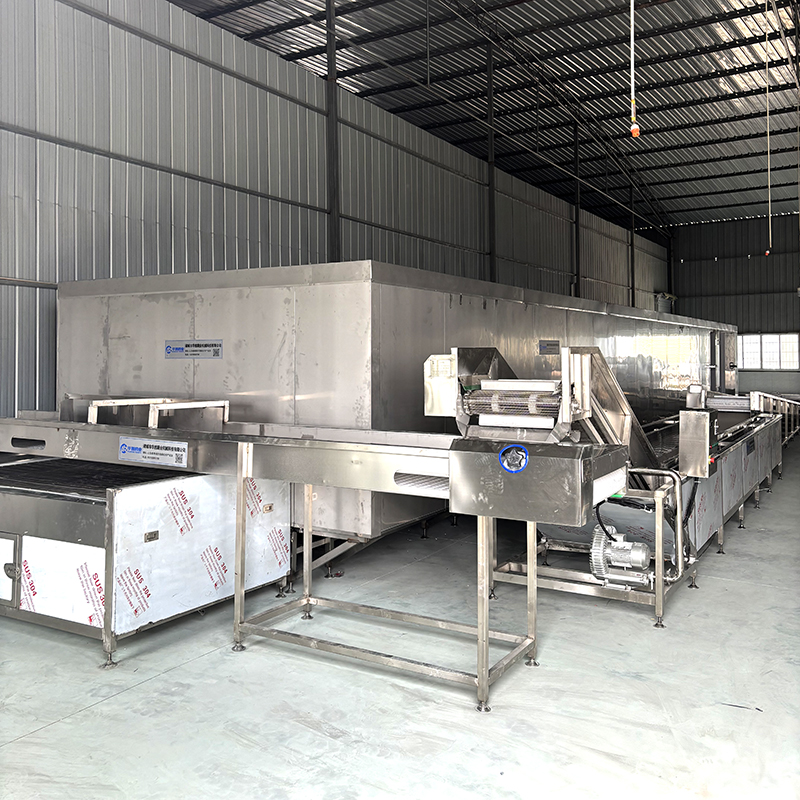
(二) Major control points of the process of ice packaging
Main control points of the ice packaging procedure are as follows:
Water temperature control:
Ice is produced during ice-making with water kept at a uniform temperature of 0-2°C. If the temperatures become too high, ice may not be formed at all or may be very little. On the contrary, if it is getting much below the target, it can also result in an ice layer that is too thick or irregular, or even the freezing point may get lowered beyond the freezing point, and a different kind of ice could form, such as a type of supercooled ice. A Zhejiang province-based company managed to set an extremely narrow margin of temperature difference (±1°C) by introducing a pre-cooling water recirculating system.
Ice-coating time:
Time spent during the ice-coating phase should not only consider the time required per unit for coating to be done, but also take care that if it is either over or under a certain period will affect the thickness and quality of the coat. In fact, if the coat is formed very quickly, for example by means of a hot water treatment, the product will not have a chance to cool down enough; the temperature gradient across the surface will cause the skin to curl or, in the worst case, the whole body of the product will be ruptured.
Ice-water uniformity
Water agitation, whether by a pump or a bubbler, is essential for keeping the product fully submerged and evenly coated with a layer of ice water. One business from Shandong raised their success rate at applying icing coats by 18% just by making two small adjustments – reducing the conveyor belt speed from 0.7 to 0.35 m/s and increasing the water pressure from 0.2 to 0.3 MPa.
Possible combination of machines using a freeze tunnel and the ice coating machine.
The quick-freezing machine and the ice coating machine are often run together in production to create a full-line processing line for freezing, packaging, and refrigeration, etc., of frozen aquatic products.
The standard way of processing them is:
raw material receipt and sorting → cleaning/steaming/cooling → quick freezing (spiral, tunnel, or liquid nitrogen freezer) → ice coating (ice coat machine) → secondary freezing (refreezer) → packaging → refrigeration
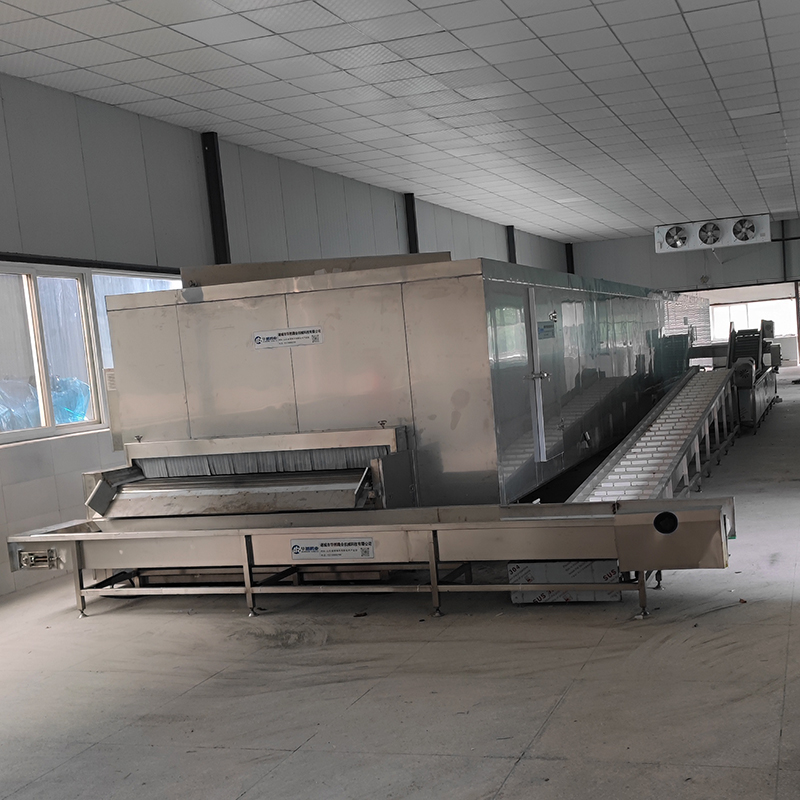
In the above flow, the fast freezing machine gets the aquatic products cooled down rapidly to a core temperature below-18°C, thus providing the "cold source" necessary for the ice coating operation. During the ice coating process, the ice-coating machine utilizes the natural cooling effect of the product to develop an ice layer at the surface. For some products that need thicker layers, we might add an ice coating operation after secondary freezing.
