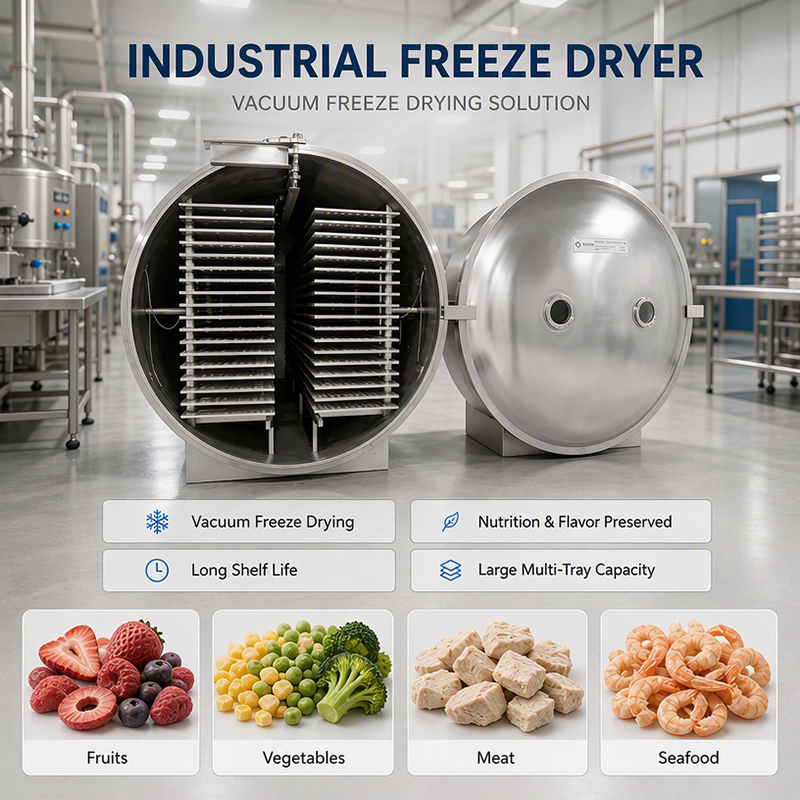
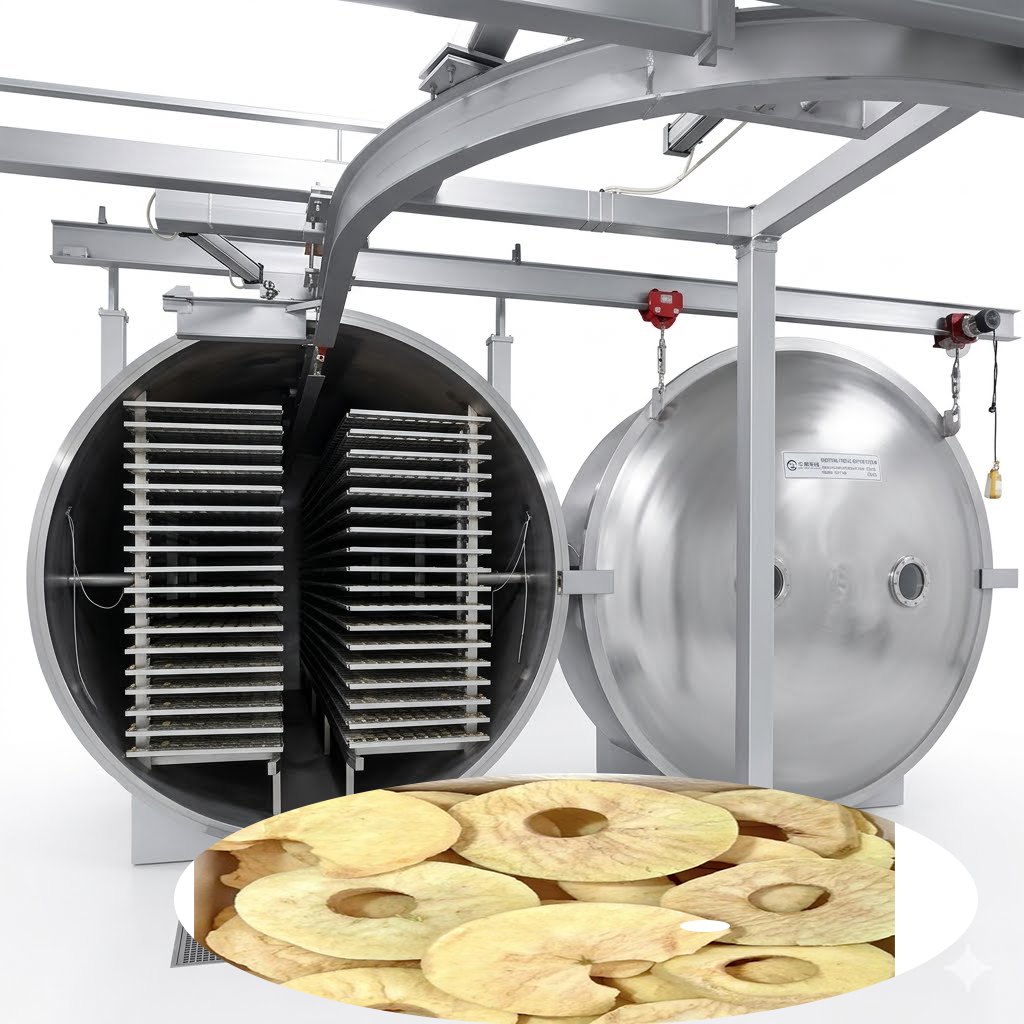
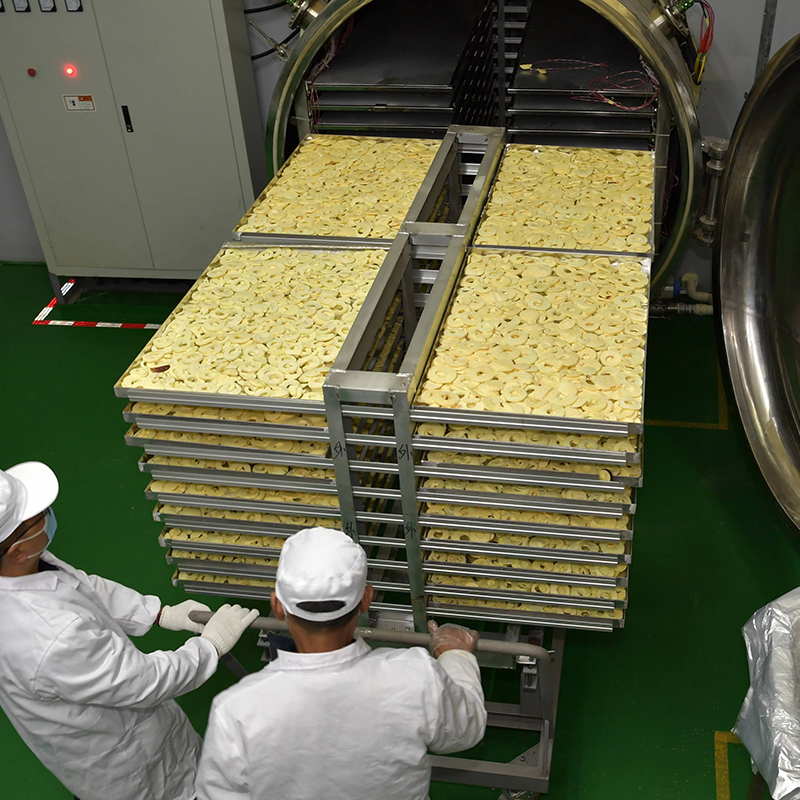
Product introduction:
One of the main benefits of freeze-drying technology for apples is its capacity to preserve the nutrient level of apples, the visual appeal, and the flavor through low-temperature dehydration of apples, leading to the production of crisp apple snacks with a high value in the market. Freeze-drying is a process that results in a very minimal loss of heat-sensitive nutrients. Freeze-drying has some downsides.
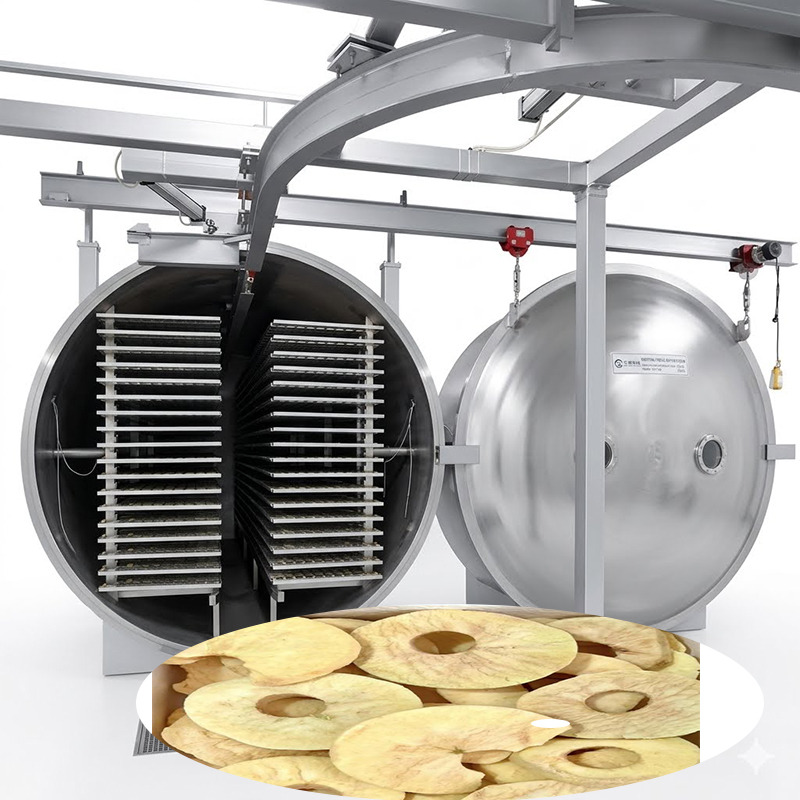
Technical parameters
| Model | Shelf Area (m²) | Batch Capacity (kg/cycle)* | Recommended Application |
| FDG-AS-0.5 | 0.5 | 5 | R&D / pilot batches |
| FDG-AS-1 | 1 | 10 | Small-batch / specialty apple products |
| FDG-AS-5 | 5 | 50 | Small-scale production |
| FDG-AS-10 | 10 | 100 | Commercial production entry |
| FDG-AS-20 | 20 | 200 | Mid-scale production |
| FDG-AS-30 | 30 | 300 | Full-scale production |
| FDG-AS-50 | 50 | 500 | Large-scale operation |
| FDG-AS-75 | 75 | 750 | Industrial production |
| FDG-AS-100 | 100 | 1,000 | High-volume production |
| FDG-AS-200 | 200 | 2,000 | Maximum capacity |
*Capacity based on fresh apple slices (approx. 10mm thickness).Real throughput is determined by factors such as slice thickness, machine load, and process parameters.
Apple crisp freeze dryer machineKey Advantages
Superior Nutritional Preservation
Traditional drying methods mostly use heat and result in losing nutrients. But here it comes - our freeze dryer will lower the surrounding temperature to a very low level. Through vacuum freeze-drying, we'll be able to keep about 90% of fruits' vitamins, flavonoids, and dietary fiber as part of their natural composition. What's more, research shows that the level of antioxidants in vacuum freeze-dried apples is much higher than that of stove- or sun-dried ones.
Exceptional Quality & Appearance
Color Retention: Freeze-dried apple products maintain a vivid color, some of them with the L* values as high as 72.91. These products are almost identical to natural ones in color.
Natural shape: The freeze-dried process is the only one that retains the initial plant cell structure and does not result in shrinkage/deformation of the material.
Dessert -like Porosity.A sponge-like porous structure is one of the major factors that produces light yet crisp food. This feature is now one of the things that consumers really love.
Advanced Technology Integration
PLC Autocontrol:The system is capable of operating on its own without requiring human input, as it can control temperature and vacuum very accurately and also perform cycles. Compliance With GMP: All the surfaces that come into contact with product are made of 304 stainless steel, a material that satisfies food safety regulations in various countries. Drying in Different Phases: A freeze-drying machine has internal pre-cooling, main drying, and monitoring drying functions to create the finest results.
Convenient search
Freeze - dried apples, when properly packed, last for 18-36 months without refrigeration.In a sense, these fruits can be exported easily, kept for long periods of time, and sold, while serving a great purpose in the retail market.
Whatever your business - mass food production, fruit processing, or a health snack entrepreneur- freeze dryer machines are a great tool for consistent and very high-quality product making.
Production Process
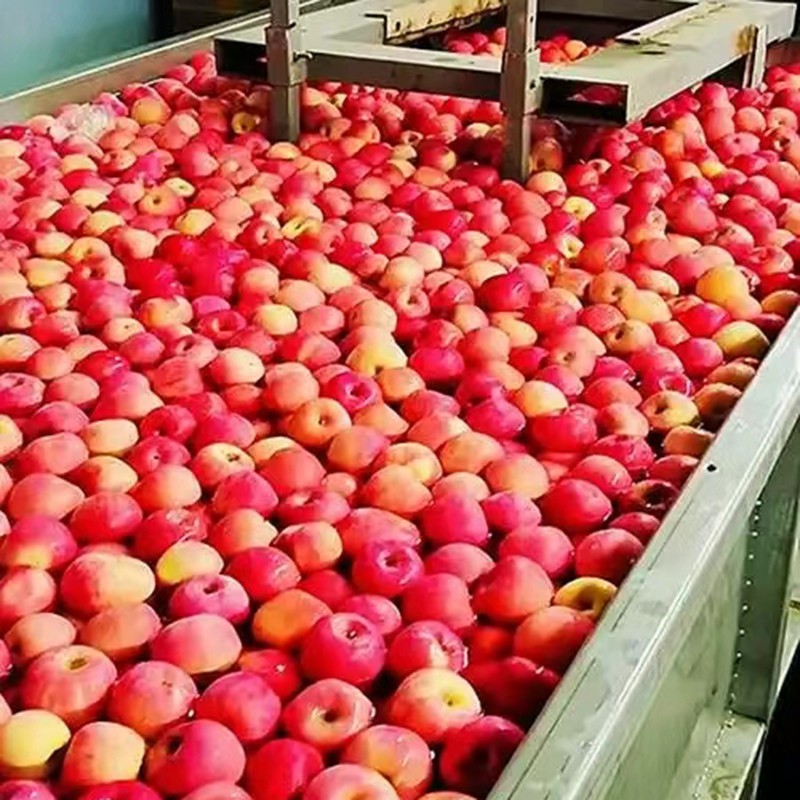
1. Fruit Selection & Washing
– Tender apples of very fresh and excellent quality, hand-picked only when ripe, have been cleaned quite thoroughly.
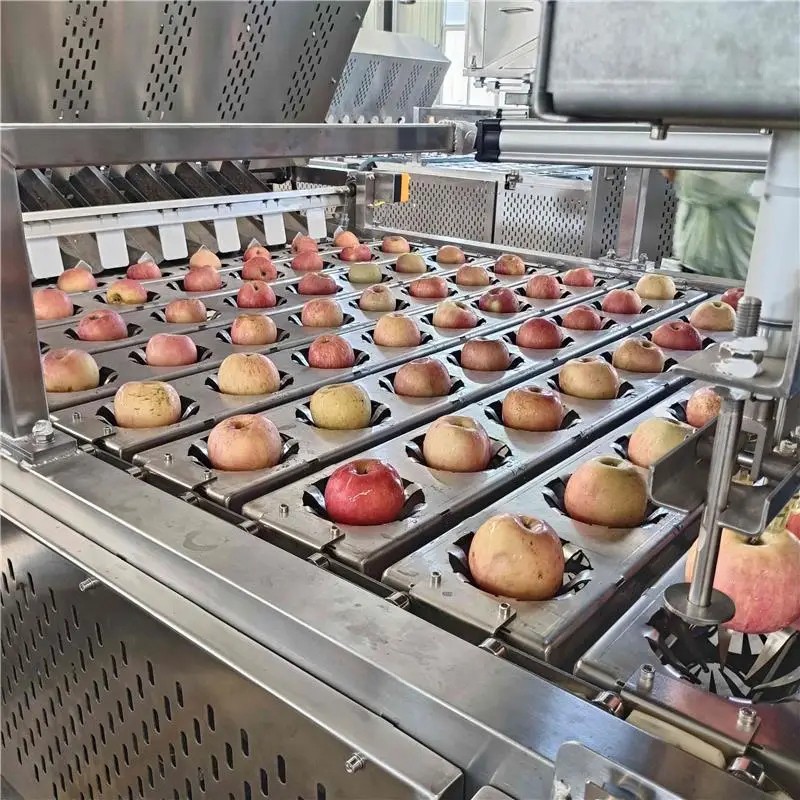
2. Peeling & Coring
– You can be assured of uniform results through the usage of an automated system which removes the skin and core.
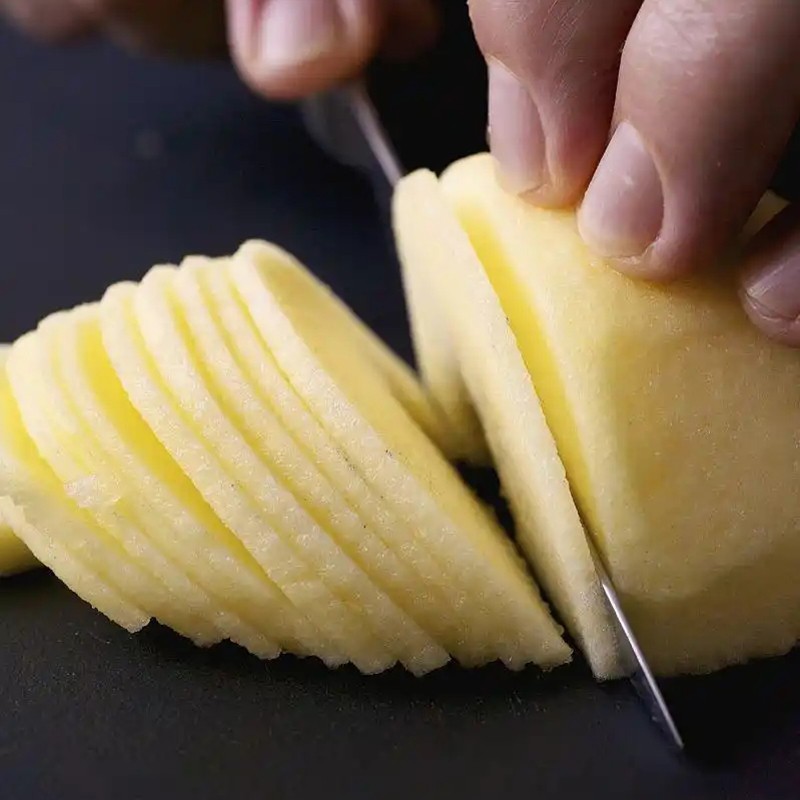
3.Slicing & Color Protection
– Precision slicing with antioxidant treatment to prevent browning.
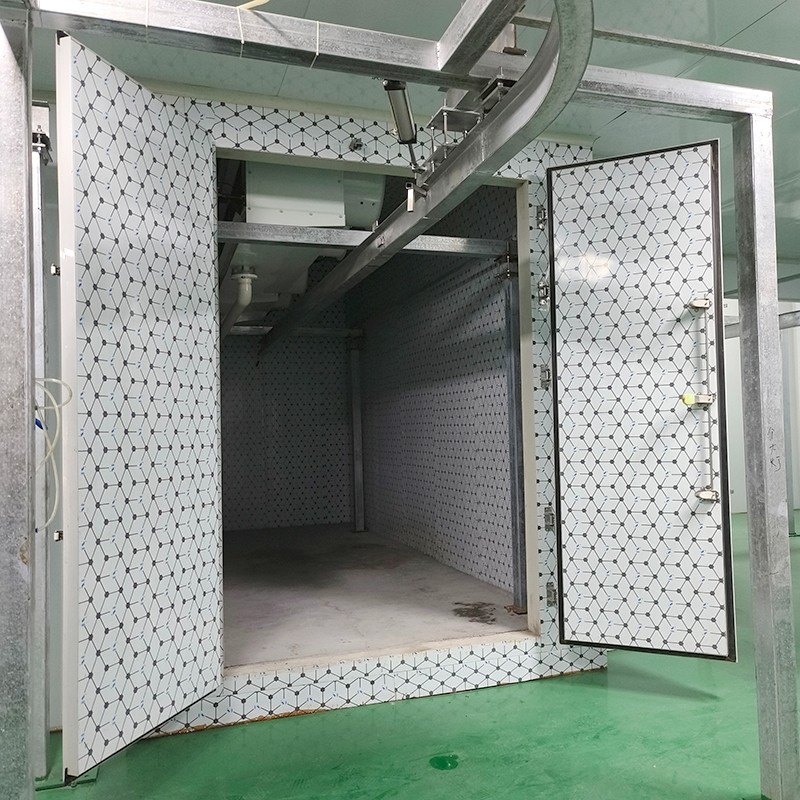
4.Pre-Freezing
– Fast freezing at -30°C to -40°C is used to produce the formation of micro-ice crystals
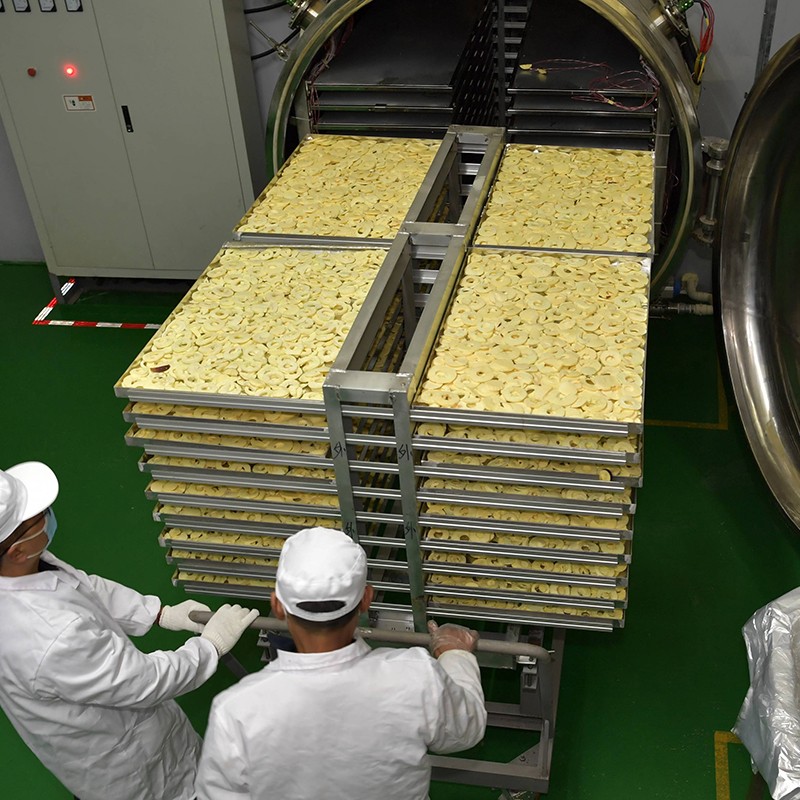
5.Vacuum Sublimation
–Under vacuum conditions, ice turns directly into vapor; hence, water is removed without the material structure being destroyed
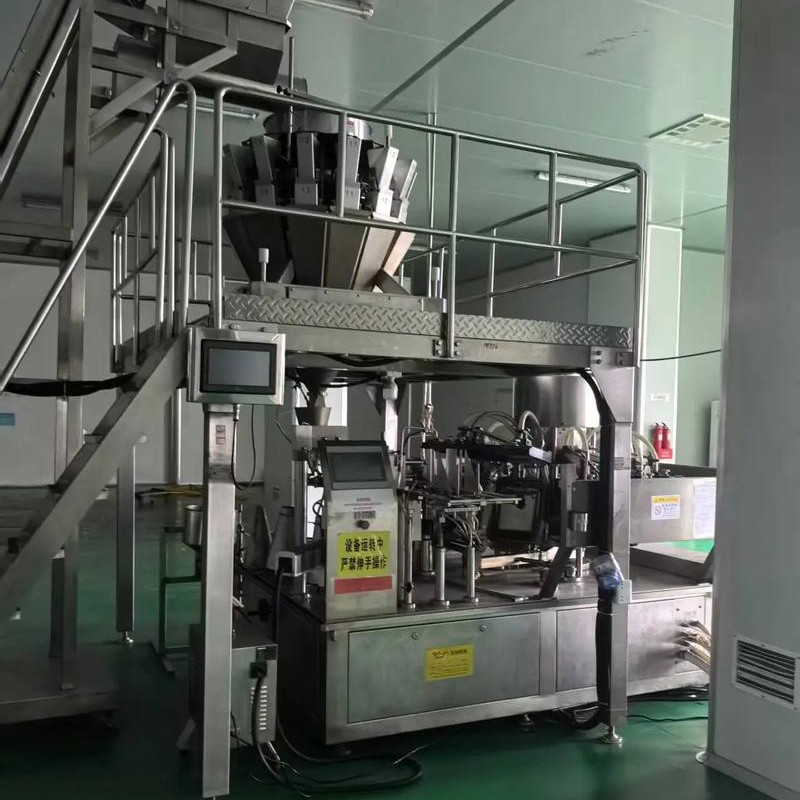
6.Sorting & Packaging
Nitrogen-flushed packaging for extended shelf life
Applications Beyond Apples
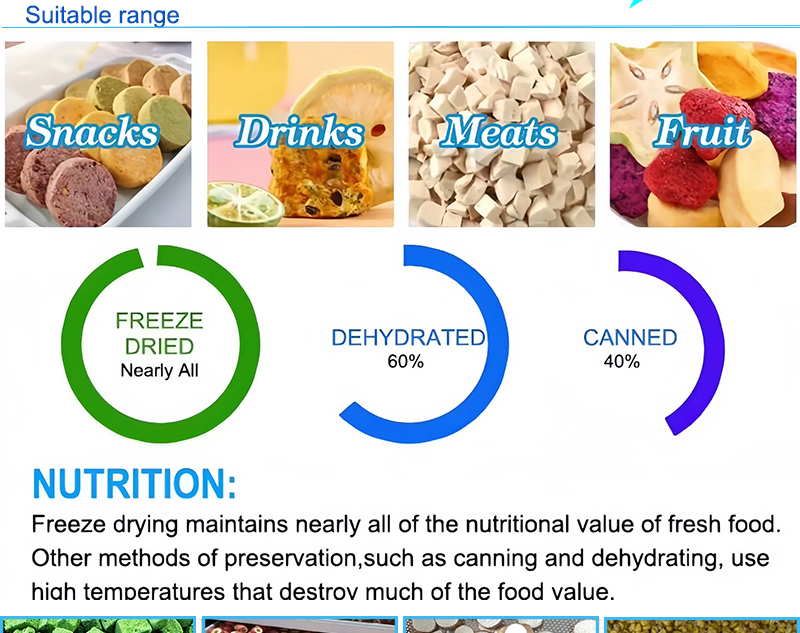
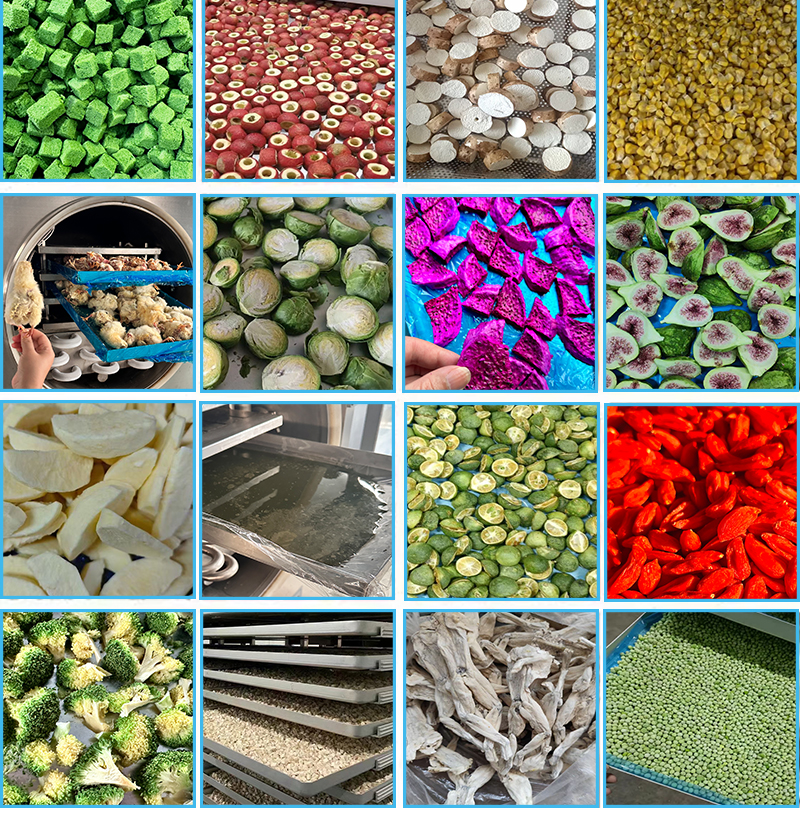
While optimized for apple processing, this versatile machine is also ideal for:
· Other fruits: bananas, strawberries, mangoes, kiwis, lemons, lychees
· Vegetables: mushrooms, corn, carrots, spinach
· Herbs and botanicals
· Pet treats
Get a Quote Today
Interested in boosting your fruit processing capacity? We are at your disposal to guide you in selecting a proper layout that is suitable and aligned with your manufacturing requirements. Get in touch for a tailor-made quotation and detailed technical consultancy.
About Us
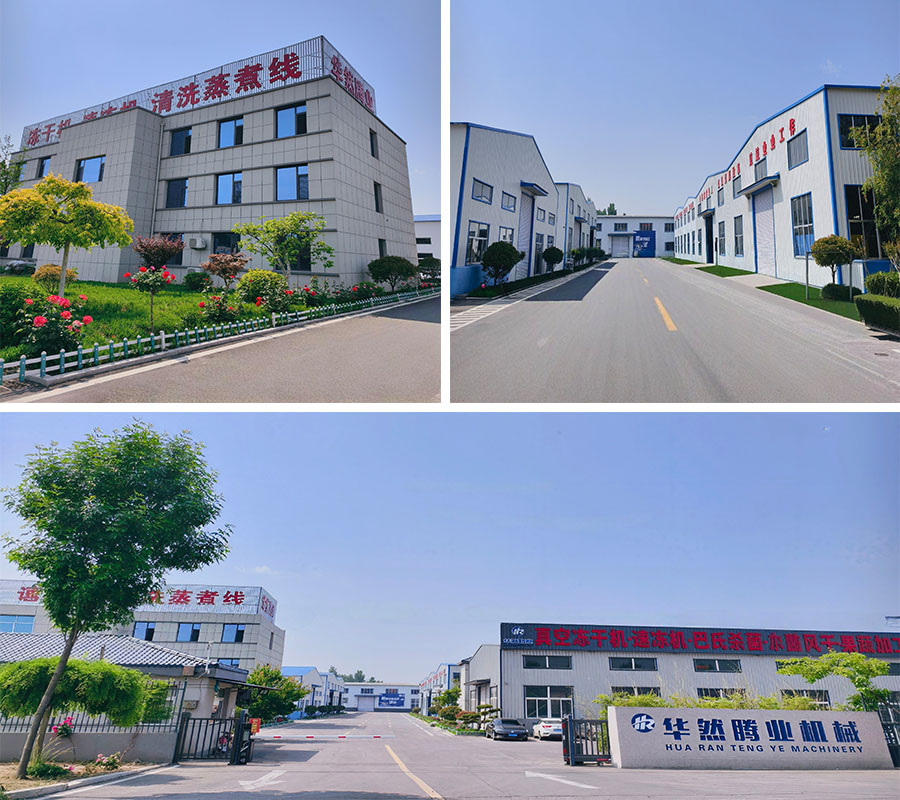
Year established: 2006 (with 19 years in the industry)
Factory area: 18,000 m²
R&D team: 22 engineers
Production lines: 4 assembly lines
Annual capacity: 120+ units/year
Certifications: ISO 9001, ISO 14001, CE, ASME
Core component partners: Bitzer, Leybold/Edwards, Siemens, Emerson
Export markets: 40+ countries including USA, Germany, Japan, South Korea, Australia, Brazil
Units exported since 2010: 800+
FAQ
Q1: What is an apple freeze dryer and how does it work?
A: An apple freeze dryer (also known as a lyophilizer) is a machine that preserves apples by removing their water content through a process called sublimation. The process involves three main steps:
Freezing:Fresh apple slices are placed in the machine and frozen solid, typically at temperatures around -35°C to -40°
Primary Drying (Sublimation): A strong vacuum pump sucks the air out of the chamber, which in turn makes the air extremely low in pressure as compared to the surroundings. In this type of environment, the water inside the apple gets a chance to freeze as it starts to sublime directly into vapour (the ice changes directly into water vapour, skipping the liquid phase). Normally, the process occurs in a vacuum of 10–50 Pa (sublimation phase).
Secondary Drying (Desorption): The temperature is slightly raised to remove any remaining bound moisture, ensuring the apple is completely dry. This is often done at 20-30 Pa and 50-60°C
Q2: Why freeze-dry apples instead of using other drying methods?
A: Freeze-drying preserves the apple's quality much better than other methods like hot air drying.
The main advantages include;
Appearance and Nutrition: This process preserves the fruit's shape and color while holding onto valuable minerals such as vitamin C and antioxidants.
Structure: The freeze-dried apple maintains its crispiness and remains a sponge-like texture. On the contrary, heat-dried apple is hard and small in size.
Longevity: About 12-24 months after production at room temperature, the product is still good for consumption, provided the product is packaged in a nitrogen-flushed, moisture-proof container (e.g., aluminum foil bags). Cold storage prolongs the product's lifespan from 24 months to 36 months.
Q3: What are the typical processing parameters for freeze-drying apples?
A: Parameters can change; however, the commonly used setting for apple slices (around 10mm thick) is:
Freezing: Freezing at -35°C for roughly 1 hour.
Sublimation Pressure:10–50 Pa.
Desorption Pressure:20–30 Pa.
Final Temperature: The shelf temperature will be in the range of 50-60°C during the desorption step.
Total Time: Depending on the thickness of the slices, chamber pressure and shelf temperature, the overall process takes around 10 hours.
Q4: What is the capacity of these machines?
A: In today's market, a variety of Apple freeze dryers, both in types and sizes, are commercially available to suit diverse customer needs.
Small commercial machines normally can only take 5-10 kg/batch. Conversely, freeze-dryers used for production-scale can be as small as 50 m² (500 kg/batch) or as big as 200 m² (2,000 kg/batch), if you'd like to know more about your capacity needs to get an accurate recommendation, you are advised to contact our team.
Q5: What should I do after the apples are freeze-dried?
A: Freeze-dried apples are highly hygroscopic.Serve it in a vacuum-sealed, moisture-resistant pouch (e.g., with a desicant pack sealed by aluminum foil) right after nitro-packaging to preserve its crunchiness.