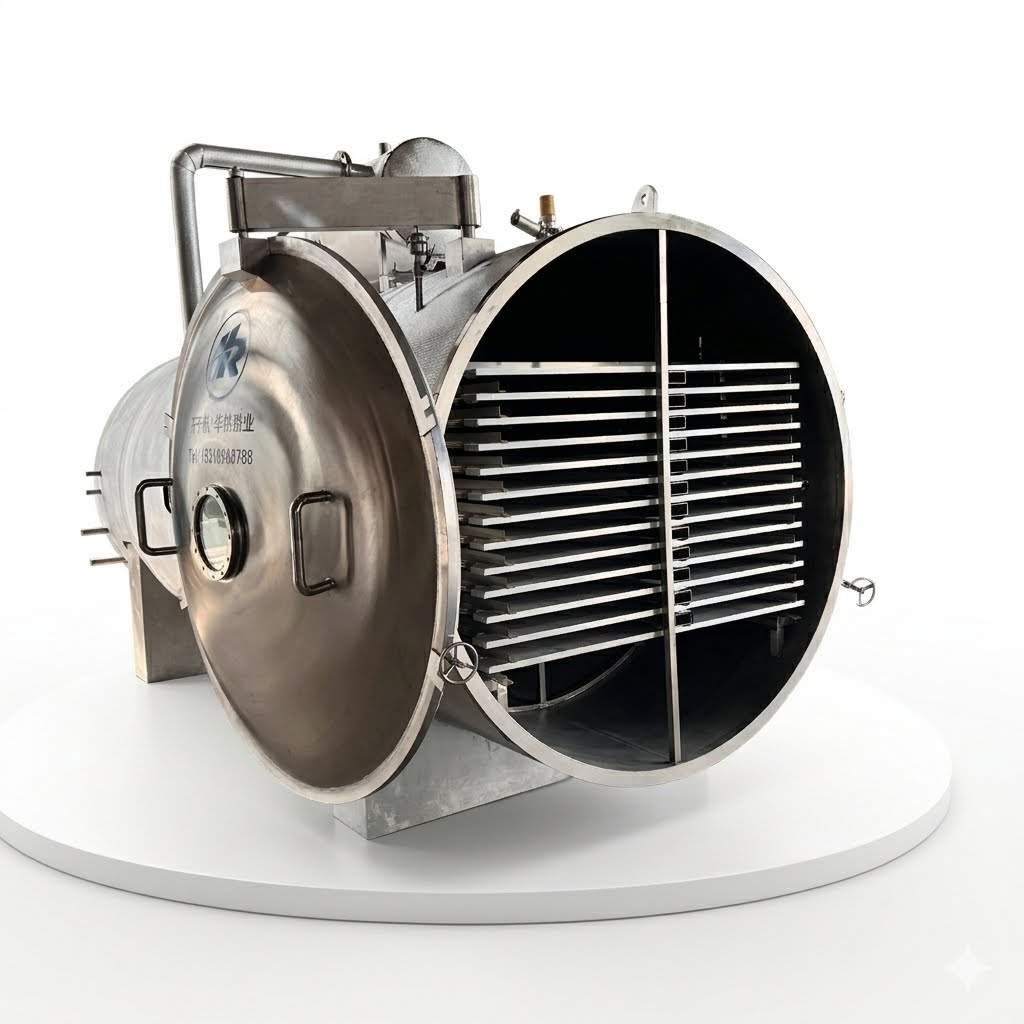
• Dairy Freeze Dryer
  • Dairy Freeze Dryer
  • Dairy Freeze Dryer
  • Dairy Freeze Dryer
  • video

Dairy Freeze Dryer

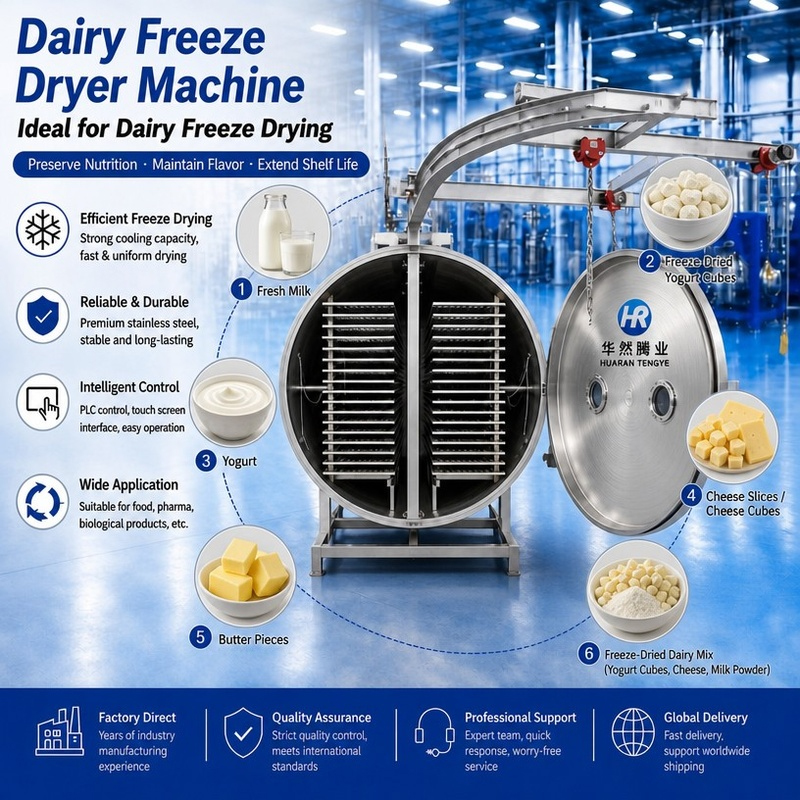
    Freeze​‍​‌‍​‍‌ Dryer Machine – Premium Lyophilization solution for Dairy, Ice Cream & Probiotic Products. A Freeze Dryer Machine works with the help of high-vacuum sub-ambient temperature and freeze drying technique to preserve highly sensitive food such as yogurt,ice cream, and milk powder without a change of structure, taste, or nutrition. Compared with heat-based drying processes, our freezing dryer employs sublimation; the ice is turned straight into vapor without passing through the water ​‍​‌‍​‍‌phase.

    Product content


    Dairy‍‌‍‍‌ items, especially powdered milk, are mostly made through spray-drying, which means that the milk liquid is heated to a very high temperature to dry it out very quickly. In the process, the heat denatures the sensitive and fragile bioactive components like immunoglobulins.
    Vice versa, the freeze-drying process takes place in an environment vacuum with a low temperature. It gently eliminates water by sublimation, without turning the water into liquid. Hence, the natural nutritional content like vitamins, proteins, enzymes, and other basic nutrients are mostly preserved. This keeps the quality of the product the same as before and its ‍‌‍‍‌bioactivity.

    Dairy product freeze dryer


    Standard Process Flow

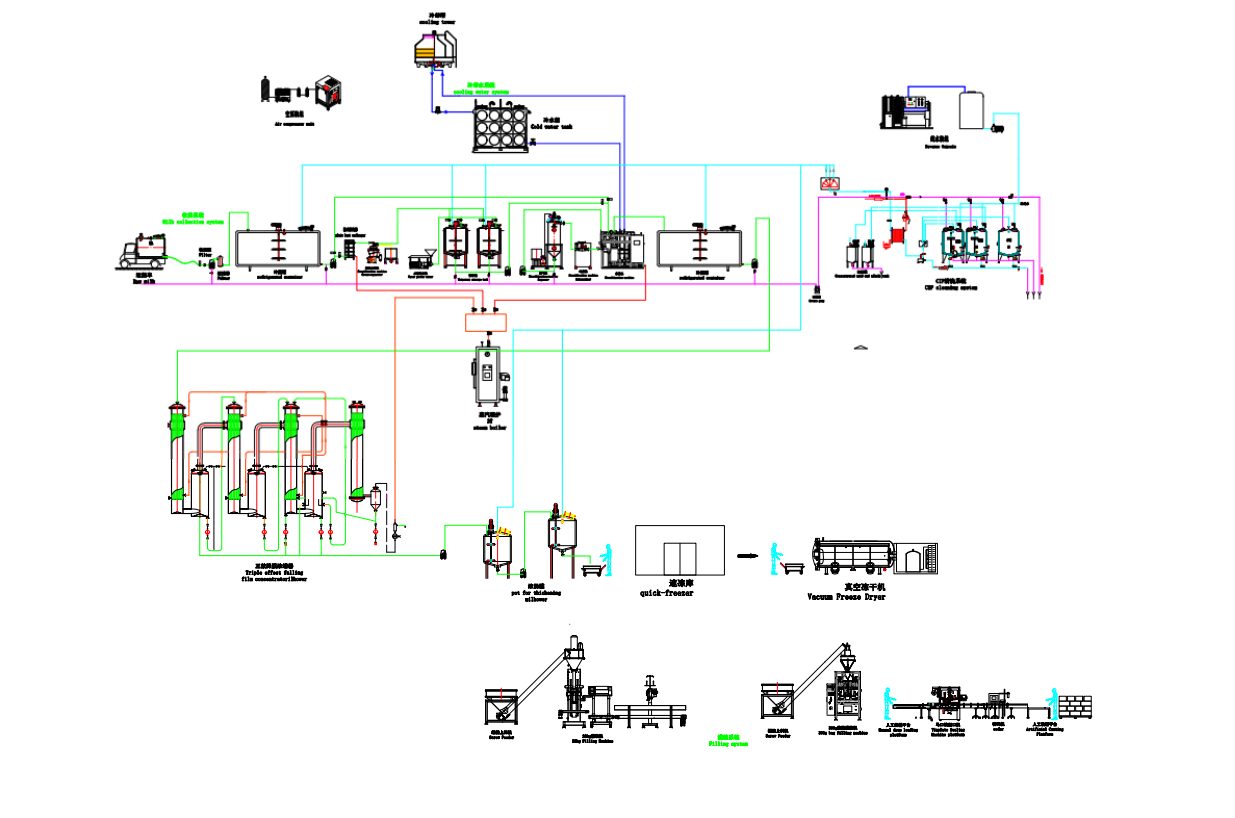
    The complete dairy freeze-drying process flow is as follows:


    Raw Milk → Standardization → Blending → Sterilization & Homogenization → Cooling → Aging → Freezing & Molding → Low-Temperature Pre-Freezing → Vacuum Freeze-Drying → Sorting & Packaging → Warehousing

    Technical parameters


    Product NameDairy Product Freeze Dryer
    BrandHRTY
    ModelHRTY-DFD-500
    Output Capacity~500 kg/batch
    Maximum Ice Capacity750 kg
    Shelf Area45 m²
    Number of Shelves15 + 1 
    Shelf Dimensions2200 × 1350 × 18 mm
    Shelf Spacing80 mm
    Loading Thickness4 ~ 15 mm (adjustable)

    Ice cream freeze dryer machine

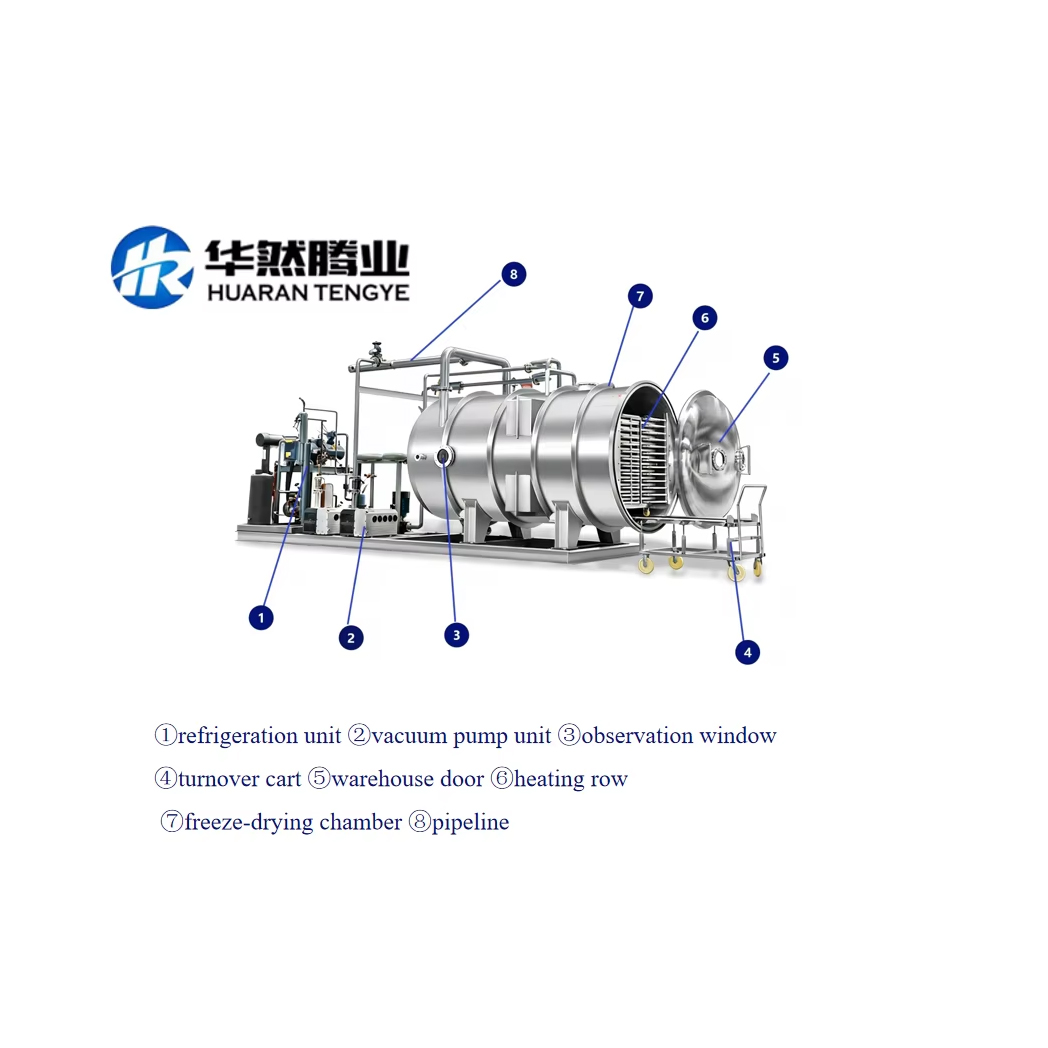
    Freeze dryer machine Key Features

    Yogurt block freeze dryer machine

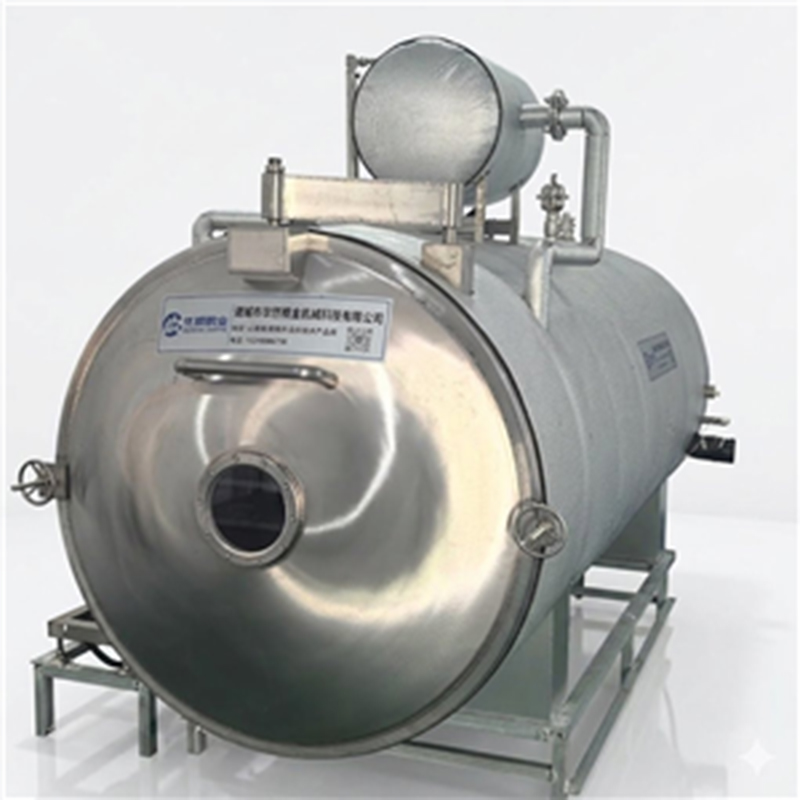
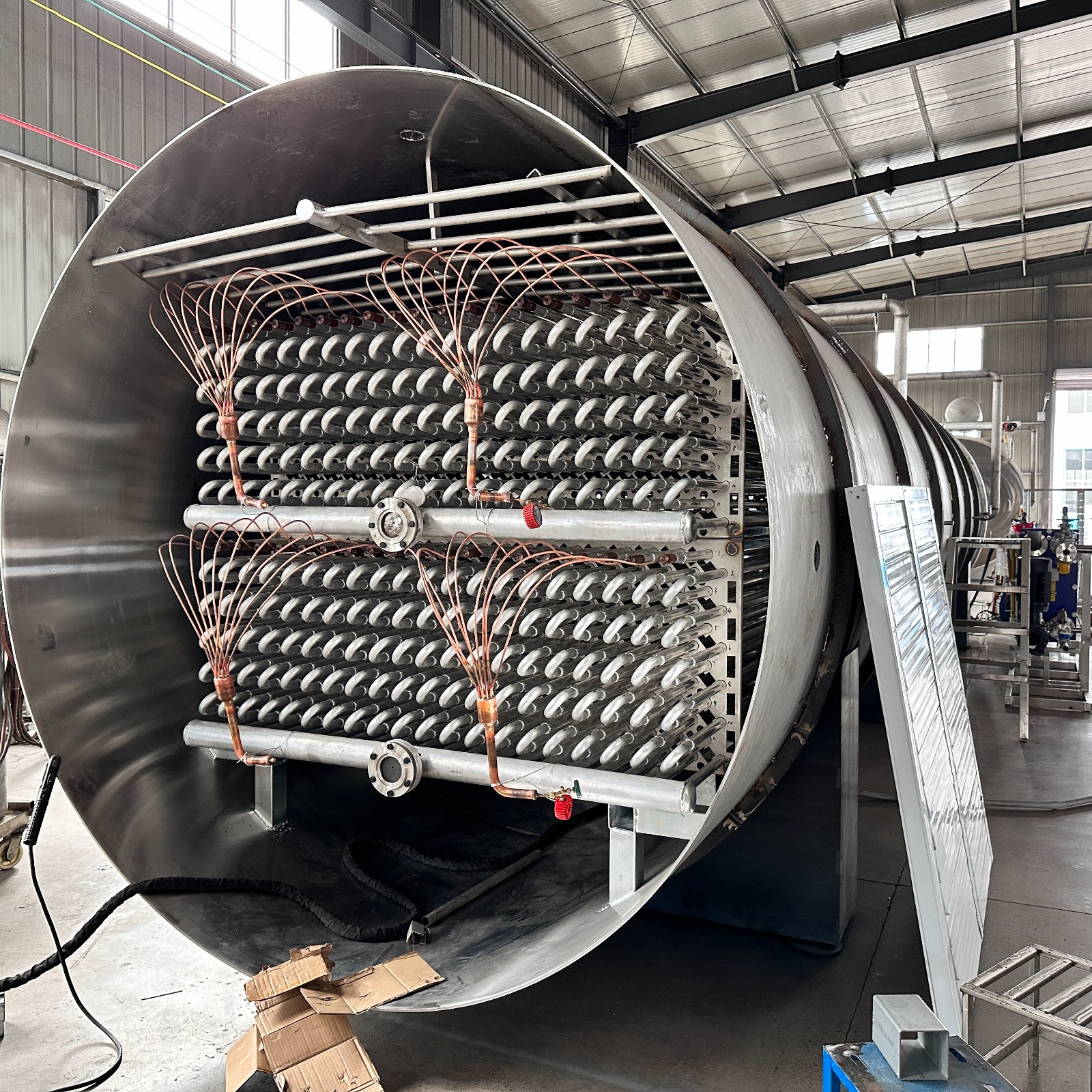
    High-Quality Construction

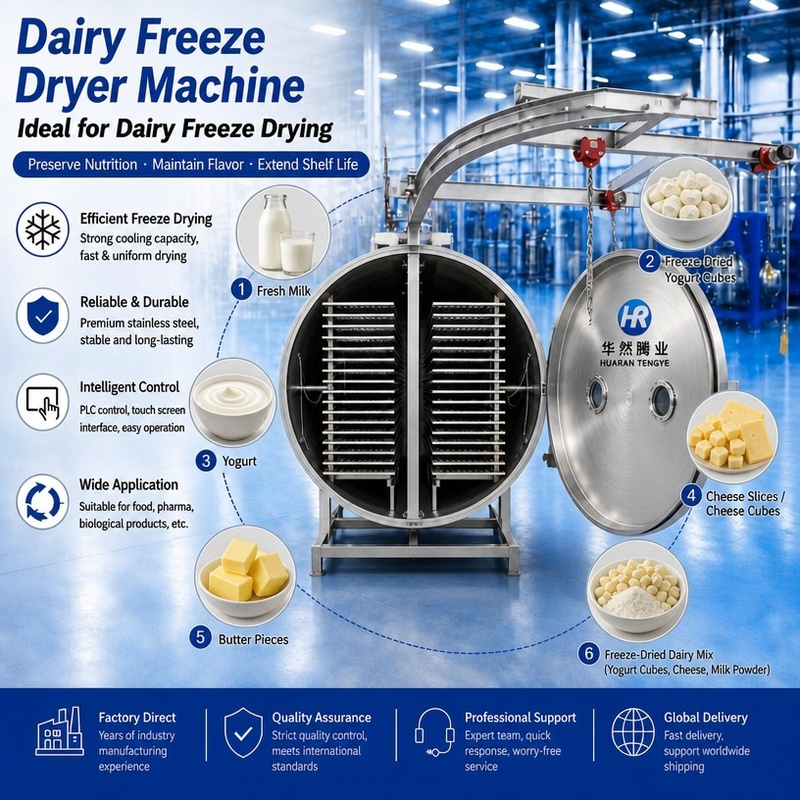
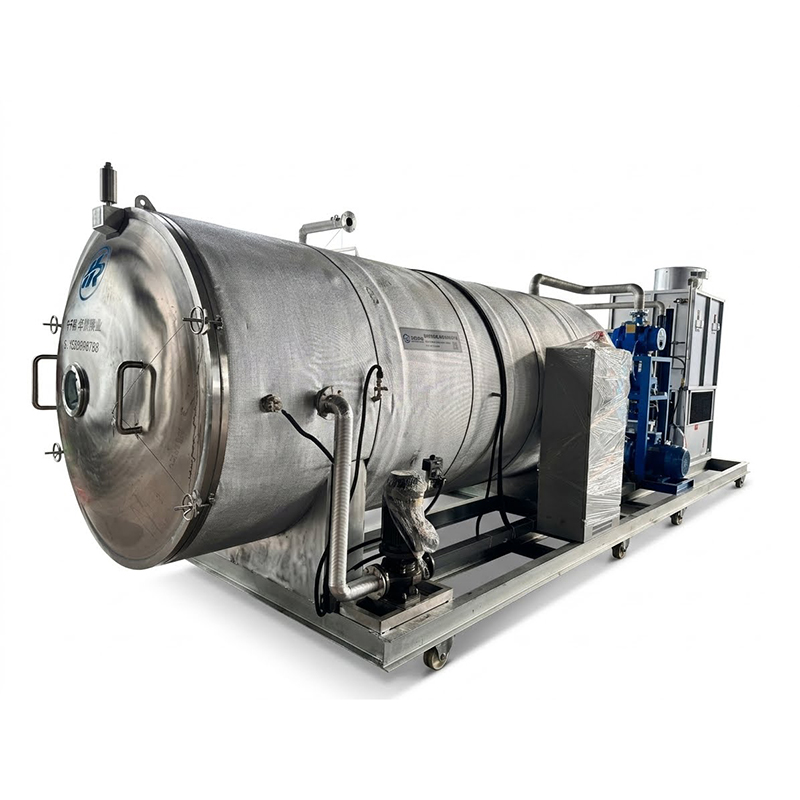
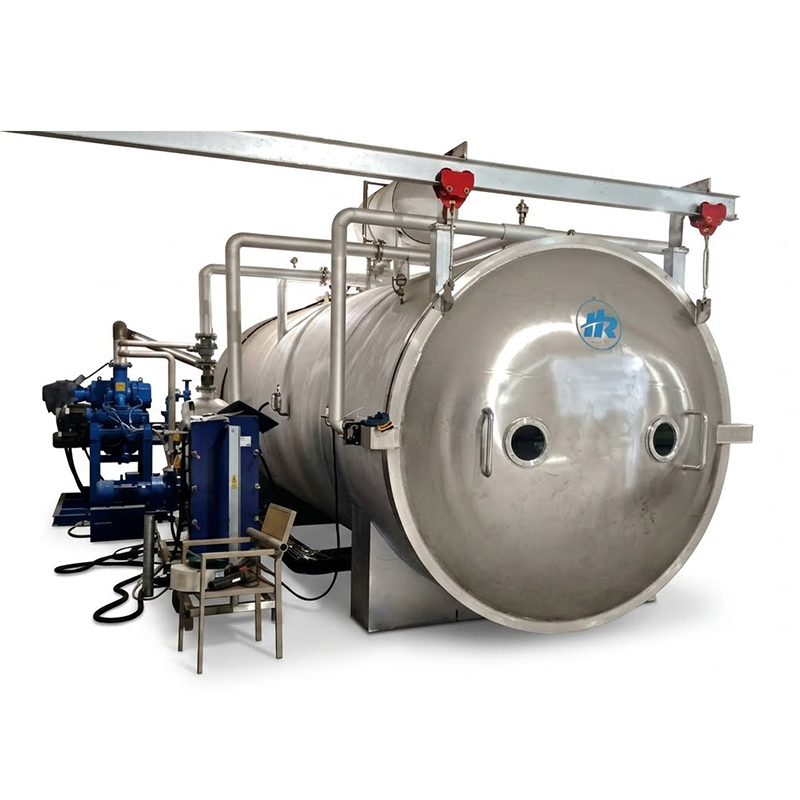
    SUS304/SUS316L stainless steel drying chamber and trays; durable and corrosion-resistant
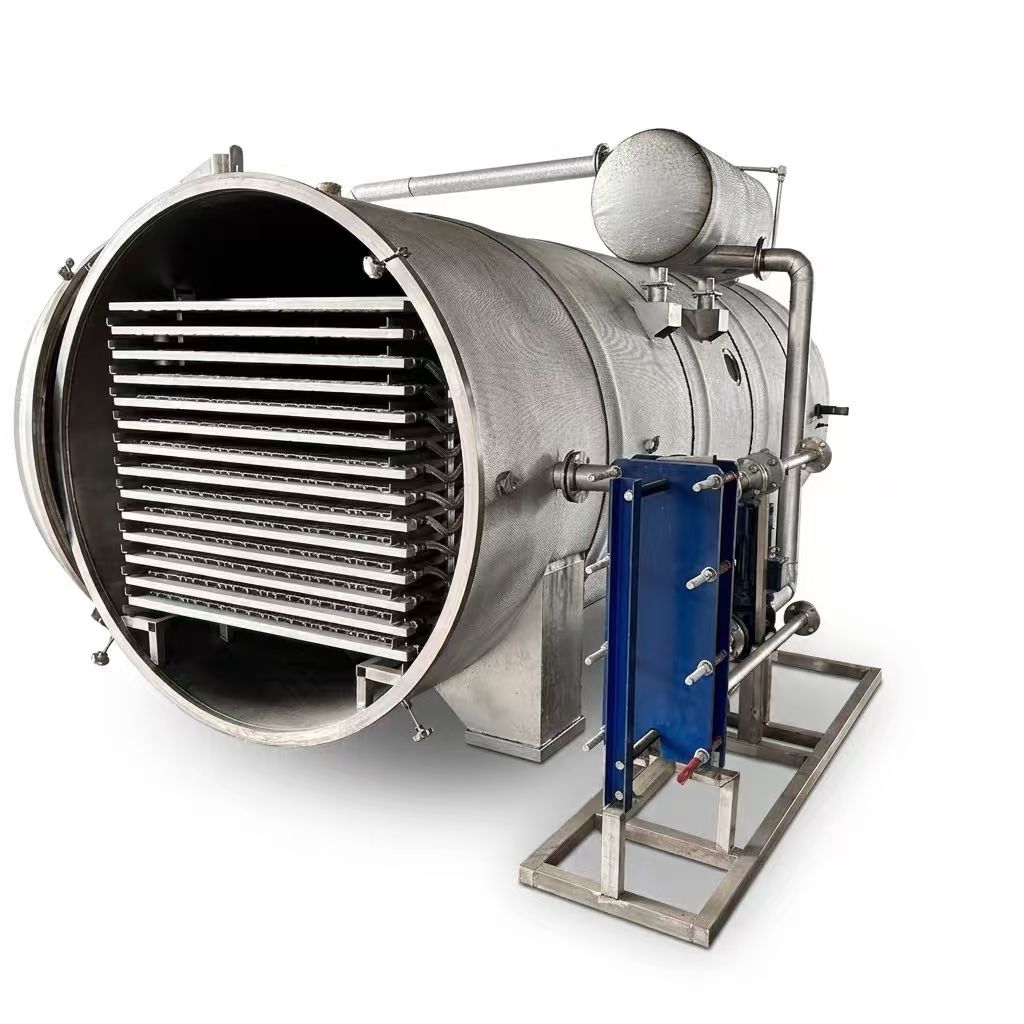
    Dairy product freeze dryer

    Precise Temperature Control 

    Shelf temperature range -20°C to +120°C with uniform double-sided radiation heating; protects heat-sensitive dairy proteins
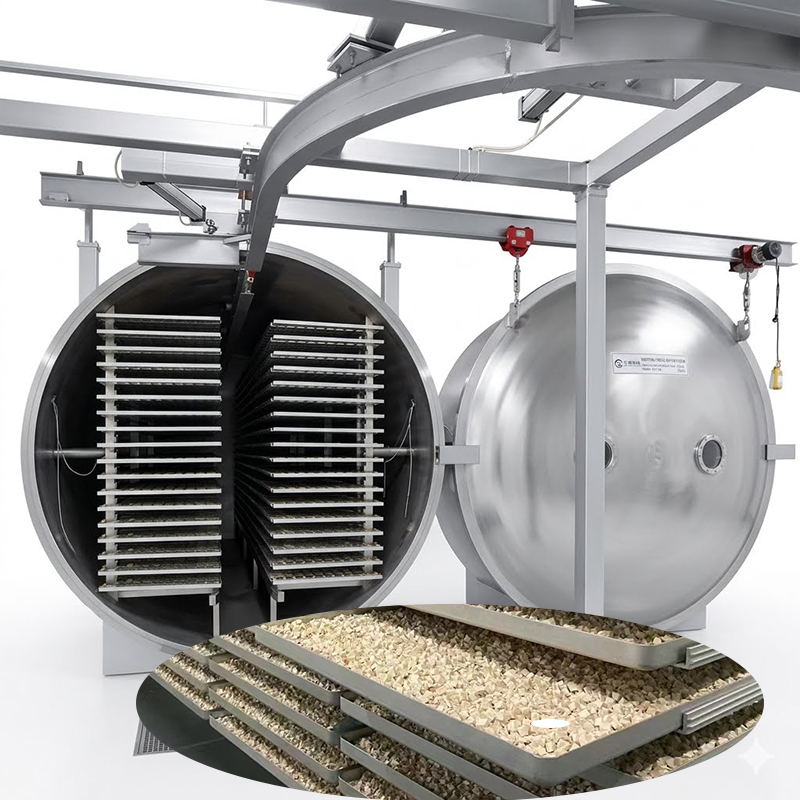


    Ice cream freeze dryer machine

    Dual Condenser System 

    Alternate vapor traps allow extended continuous production—one captures vapor while the other defrosts
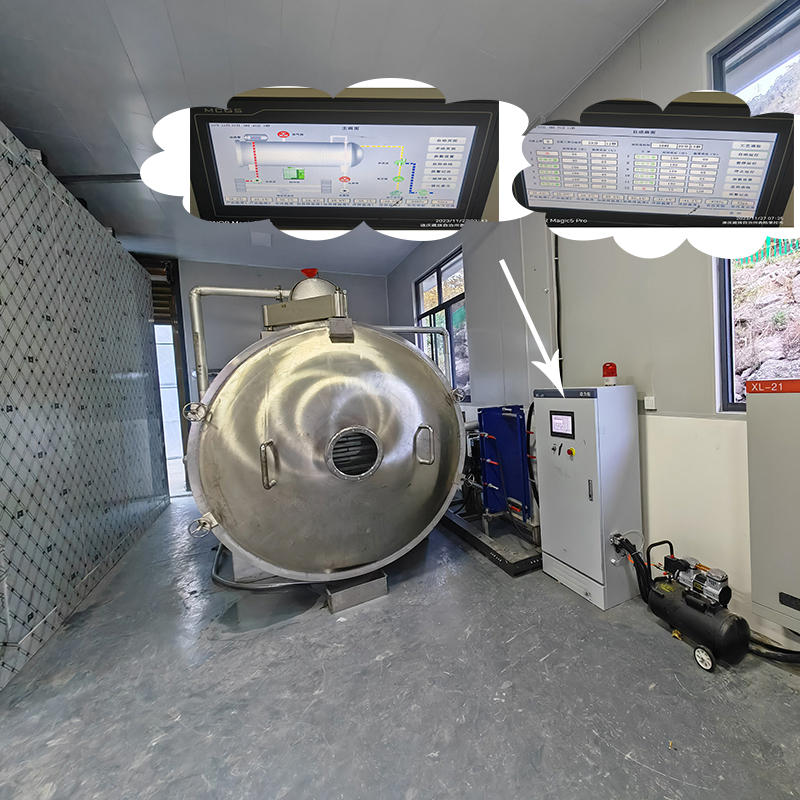
    Yogurt block freeze dryer machine

    Advanced PLC Control 

    Touchscreen interface; programmable freeze-drying curves; real-time monitoring and fault diagnostics
    Dairy product freeze dryer

    CIP-Ready Design

    Hygienic construction meets GMP requirements; automated cleaning options available
    Ice cream freeze dryer machine

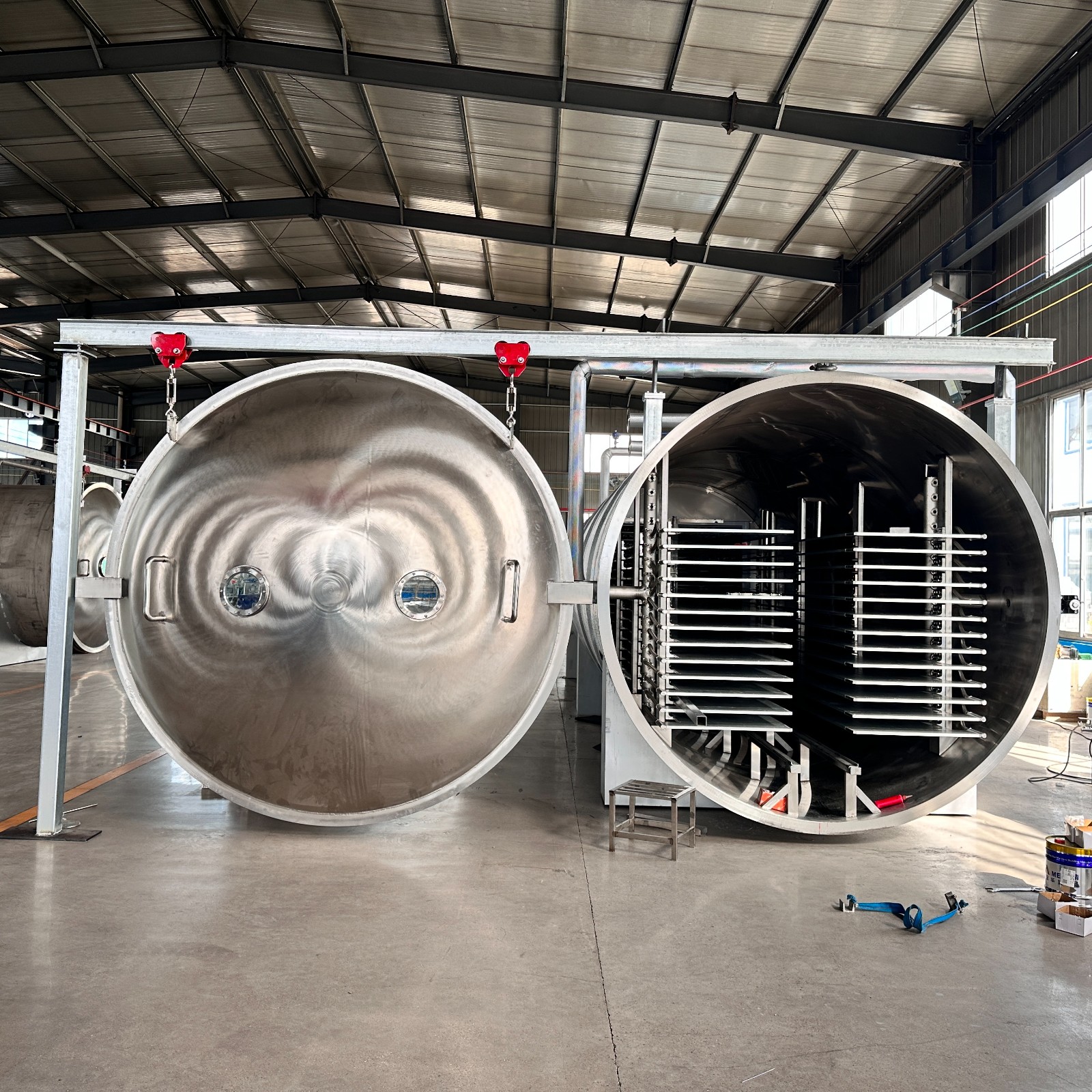
    Visual Monitoring 

    Hygienic construction meets GMP requirements; automated cleaning options available

    Process flow

    Milk → Standardization → Blending → Sterilization & Homogenization → Cooling → Aging → Freezing & Molding → Low-temperature pre-freezing → Vacuum freeze-drying → Sorting & packaging → Warehousing 
    Yogurt block freeze dryer machine

    Vacuum Freeze-Drying&Traditional High-Temperature Drying

    1

    Definition & Core Principle

    ‍‌‍‍‌ Vacuum Freeze-Drying (VFD) :: The freeze-drying process using vacuum involves very fast freezing of milk or other products at a dairy level of −40 °C, then placed in vacuum chambers. In this process, under the condition of vacuum, the water molecules in the form of ice go straight to the vapor phase without passing the liquid phase, which is known as sublimation, and is possible only for materials that have solid and vapor phases at low pressures, which are called sublimable materials. This drying method, without high temperature, will keep the original properties of dairy products, such as their nutritional value and characteristics, while high temperature drying methods will probably cause degradation (see more on that below). Traditional High-Temperature Drying (e.g., dairy products have been the main raw material for the food industry, since they are rich in proteins and other nutrients).


    2

    Impact on Nutritional Value

    VFD‍‌‍‍‌ (Vacuum Freeze Drying):
    Works at low temperatures, retaining heat-sensitive nutrients such as B vitamins, vitamin C, immunoglobulins, and bioactive enzymes. Minimal protein denaturation
    Traditional drying:
    Heat damages various types of vitamins, causes Maillard (browning) reactions, and results in loss of volatile flavor compounds. Some essential amino acids might be reduced as ‍‌‍‍‌well.


    3

    Physical Structure & Rehydration


    VFD:
    It‍‌‍‍‌ forms a porous, sponge-like network.
    Milk powder is rapidly and completely rehydrated to a product that is very soft to the touch and similar in texture and taste to fresh milk.
    Conventional drying:
    Particles are heat-damaged, compressed into a smaller volume, and become very dense.
    They do not rehydrate very well, and even when they do, they may not rehydrate all the way.
    They tend to have a rough or gritty finish after being made into a ‍‌‍‍‌drink.


    4

    Flavor, Color, and Aroma


    VFD:‍‌‍‍‌ Maintains natural color, freshness (characteristic of dairy), and original aroma, as the effects of oxidation and caramelization are limited to a large extent
    Traditional Drying: Frequently results in cooked, burnt, or oxidized flavors. Color fades due to non-enzymatic browning (Maillard ‍‌‍‍‌reaction).


    5

    Energy Consumption & Cost


    VFD:‍‌‍‍‌ Large energy usage (extreme processing time: 12 - 24 hrs) and use of costly vacuum devices. The production is 2 - 2× more expensive than the heat methods.
    Regular Drying: Very quick (seconds - minutes), low power consumption per item, and easy devices - so more cost-effective when a large quantity is needed. ‍


    6

    Shelf Life & Storage Stability


    VFD
    Low‍‌‍‍‌ residual moisture (1–3%) together with a  porous structure ensures good long-term stability without cooling, provided that the packaging is moisture-proof.
    Traditional Drying
    Residual moisture is higher (3–6%) products have more tendency to clump, undergo fat oxidation, and microbial growth over ‍‌‍‍‌time.‌‍


    7

    Application Suitability


    VFD:‍‌‍‍‌ The best drying method for high-end products such as infant formula, probiotics, cheese powders, and dairy functional ingredients with a lot of life activity.
    Conventional Drying: Applicable for general food materials – e.g. skim milk powder, whole milk powder, and whey powder used in baking or ‍‌‍‍‌confectionery.‍‌


    8

    Summary Table

    Aspect‍‌‍‍‌ VFD Traditional High-temp Temperature Sub-zero (sublimation) 150–250°C (evaporation) Nutrient retention Excellent Poor to moderate Rehydration speed Fast Slow Flavor Fresh, natural Cooked, browned Energy cost High Low Product value Premium ‍‌‍‍‌Commodity


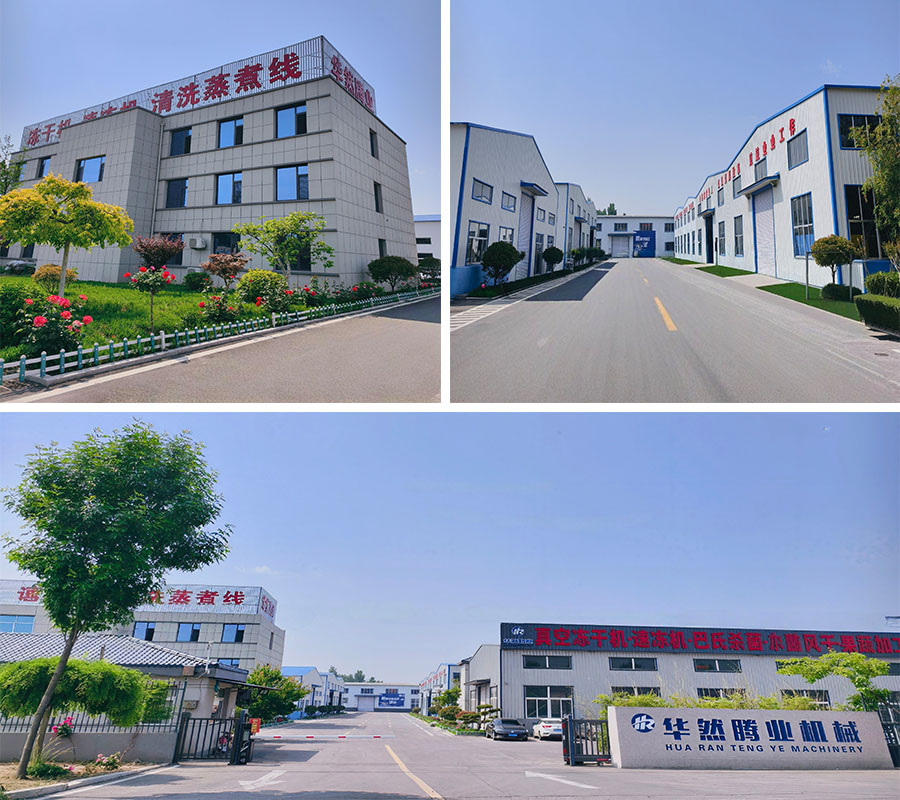
    About Us

    Year established: 2006 (19 years of experience)

    Factory area: 18,000 m²

    R&D team: 22 engineers

    Production lines: 4 assembly lines

    Annual capacity: 120+ units/year

    Certifications: ISO 9001, ISO 14001, CE, ASME

    Core component partners: Bitzer, Leybold/Edwards, Siemens, Emerson

    Export markets: 40+ countries including USA, Germany, Japan, South Korea, Australia, Brazil

    Units exported since 2010: 800+
    Dairy product freeze dryer

    FAQ

    Q1: How long does the freeze-drying process take for dairy products?

    Typically 22–38 hours for whole milk and skim milk; 28–48 hours for high-fat cream, yogurt, and kefir. Cycle time depends on fat content, solids concentration, and loading thickness.

    Q2: What dairy products can be processed in this machine?

    Whole milk, skim milk, colostrum, yogurt, kefir, cream, and infant formula mixtures. The PLC stores up to 100 dairy-specific recipes for different fat contents and formulations.

    Q3: What is the shelf life of freeze-dried dairy products?

    12–24 months at room temperature when packaged in nitrogen-flushed, moisture-proof packaging. Refrigerated storage extends shelf life to 24–36 months. For infant formula and colostrum, we recommend nitrogen-flushed packaging to preserve bioactive components.

    Q4: Can I test samples before purchasing?

    Yes. We offer sample testing services to determine optimal drying profiles for your specific dairy formulations. Contact our application lab for details.

    Q5: Is the machine easy to clean?

    Yes. All food-contact surfaces are SUS304/SUS316L stainless steel. Optional CIP (Clean-in-Place) system provides automated cleaning cycles — essential for dairy hygiene and allergen control between different product runs.


    Related Products

    Get the latest price? We will reply as soon as possible (within 12 hours)