The routine maintenance of laboratory equipment requires a considerable portion of working hours – vacuum pump oil is changed every few weeks; manual defrosting is a time-consuming affair that has to be done quite frequently between cycles, and seal integrity of the systems requires regular checks. All the human resource time and energy that are spent this way would much better be used to do R&D work instead.
Our Solution
The major cause of time-consumption is routine maintenance that can now be done a lot more quickly with just four engineering changes on our side.
To start with, as an alternative to the conventional oil-sealed pumps which can contaminate sensitive samples due to oil backstreaming risk, you have at your disposal one of our oil-free dry vacuum pumps.
It not only completely removes the need for oil changes, but also eliminates the risk of oil backstreaming that can contaminate sensitive samples, while simultaneously saving the laboratory owner roughly $400 per unit annually in consumables.
We have also incorporated a hot-gas bypass defrosting feature as a secondary improvement. We have tapped into the heat dissipated by the refrigeration system itself and are successfully converting it into an energy source to defrost the condenser coil without any additional energy consumption, and in 30 Minutes (max) compared with industry standards of 4—6 hours. Manual defrosting is avoided thereby; in consequence, you get more production cycles in one day without manual involvement.
Our third change is a condenser housing that has a no-hands-needed quick-release latch, which makes accessing and inspecting/cleaning of the chamber quick as well as convenient. A typical laboratory unit would require disassembling of bolts and gaskets, which may be quite tedious for a lab employee, not to mention that it's also time-consuming.
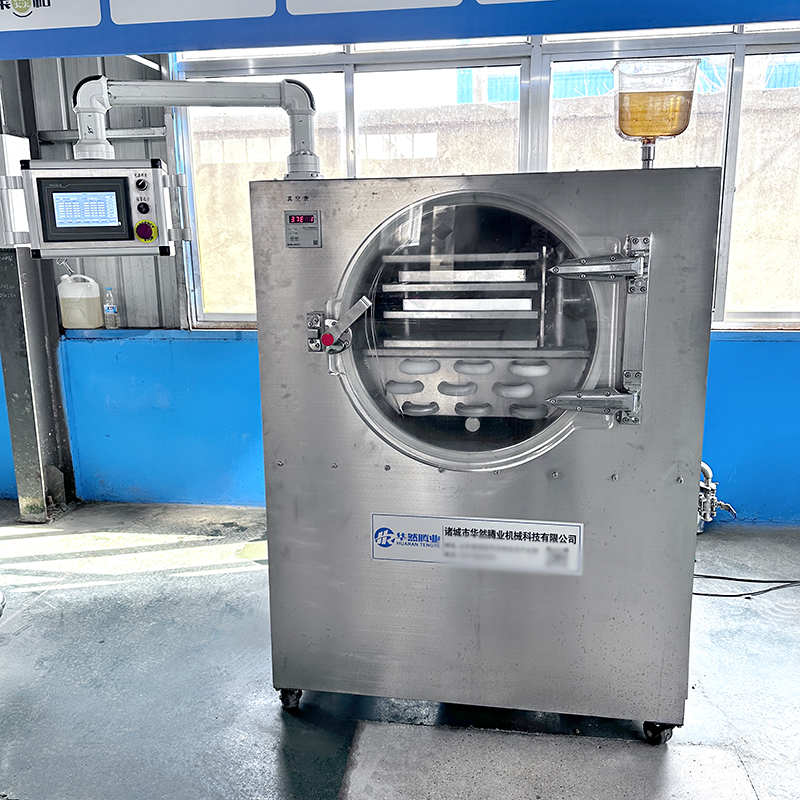
And in the case of the fourth change, you would just open the transparent acrylic door and have visual access to sample status and ice accumulation from within the chamber without needing to go in or break the vacuum. This way, chamber opening that is not really needed gets avoided altogether, and cycle integrity is preserved.
Overall, time taken for daily cleaning/maintenance is reduced to just 5 minutes. This, in a year, means over 150 hours of time that gets saved per laboratory, which is a time investment that can be turned into R&D core activities of the company.
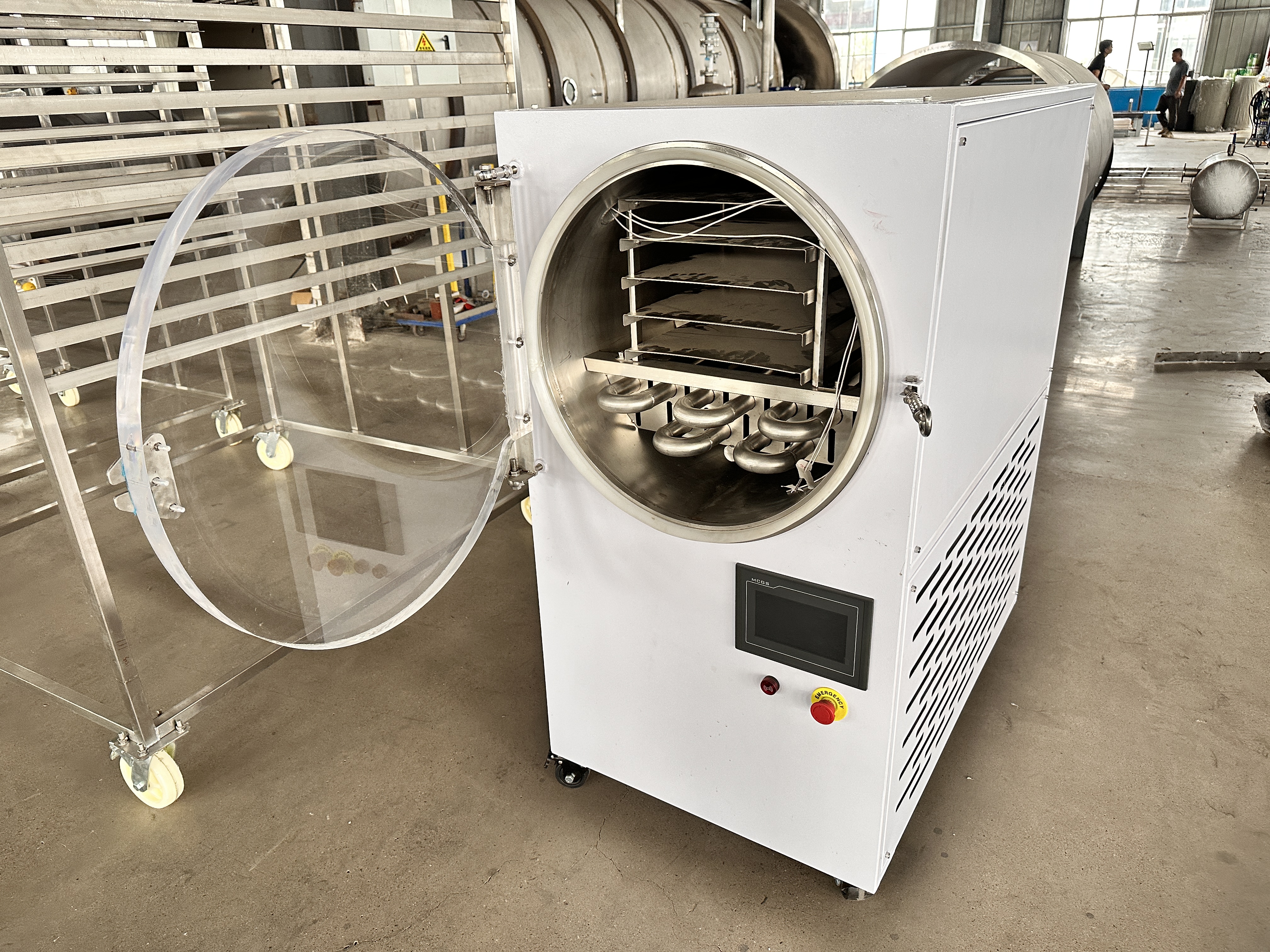
Complete Module Description for a Small-Size Experimental Freeze Dryer
Technical parameters
Key Parameter Specification
Freeze Drying Capacity 2–10 kg/batch (Customizable)
Condenser Temperature -55℃ (standard) / -80℃ (optional, cascade refrigeration)
Vacuum Level ≤ 10 Pa
Drying Area 0.1–0.5 m²
Shelf Temperature Range -50℃ to +80℃
Standard configuration: 0.12 m² (single shelf, 1–2 kg/batch). Expandable up to 0.5 m² (4 shelves, 10 kg/batch).
Which Model Fits Your Application?"
• Biopharma / Protein Formulation: Require cascade refrigeration (-80°C cold trap), precise shelf ramping (±0.5°C), and inert gas backfill. Recommended shelf area: 0.2–0.5 m².
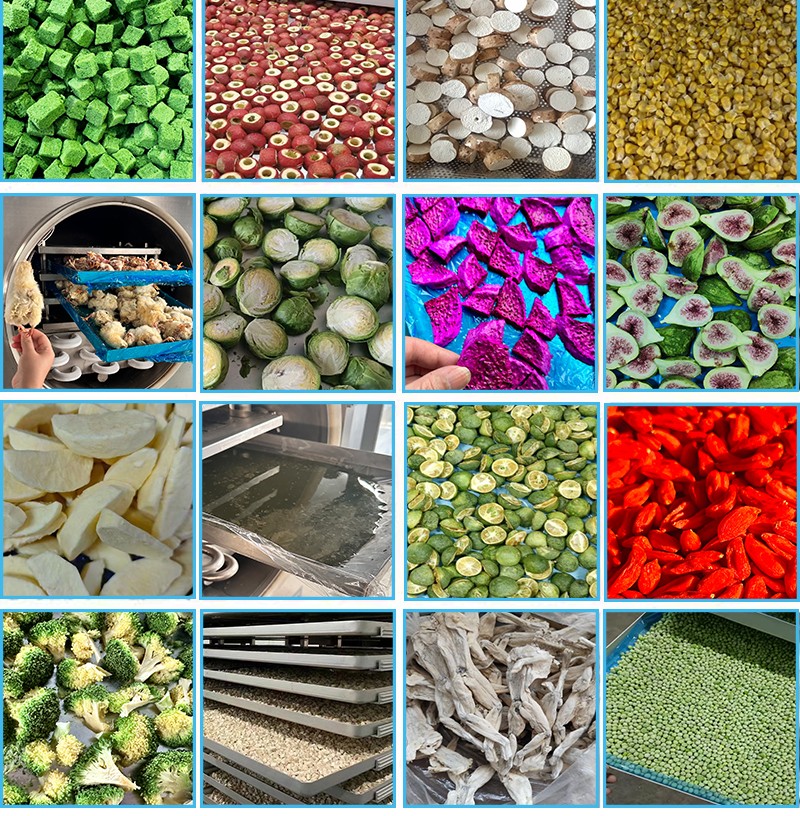
• Food Science / Probiotics: Single-stage (-55°C) sufficient; prioritize capacity (up to 10 kg/batch) and quick-cycle functionality.
• Material Science / Nanomaterials: Need ultra-low temperature (-110°C option) and corrosion-resistant chamber for organic solvent recovery.
• Academic Research / Multi-purpose: Recommend modular design with interchangeable shelves and multi-port manifold for flasks, vials, and bulk trays.
Each configuration is detailed in our Application Note Library — request yours here.
1. Overview and System Architecture
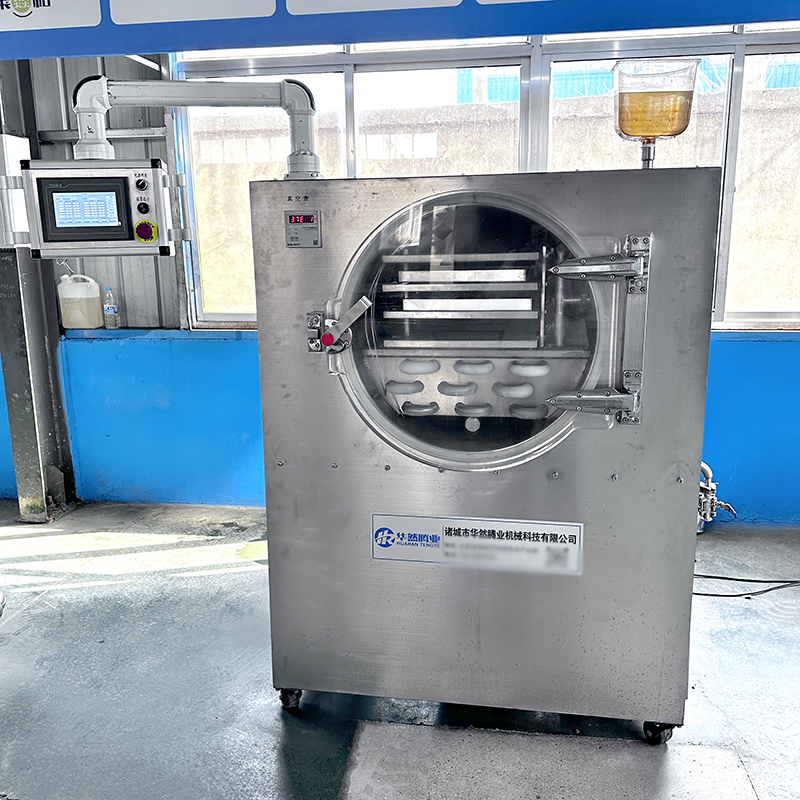
The use of small-balance freezing dryers (commonly termed lab lyophilizers and benchtop freeze dryers) is of primary concern for R&D labs engaged in pharmaceutical, biotechnology, food science, and materials science.
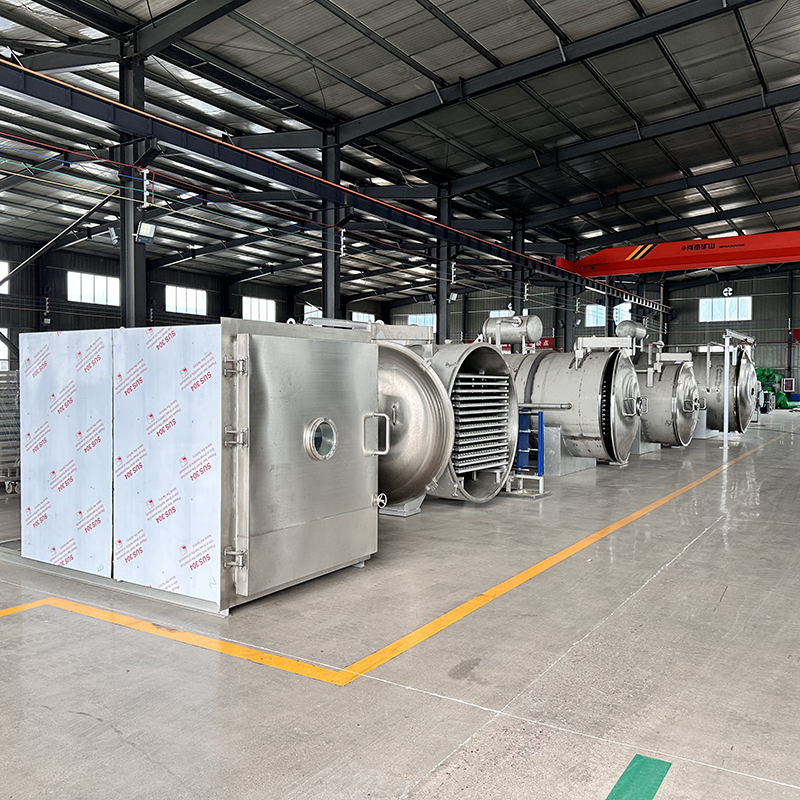
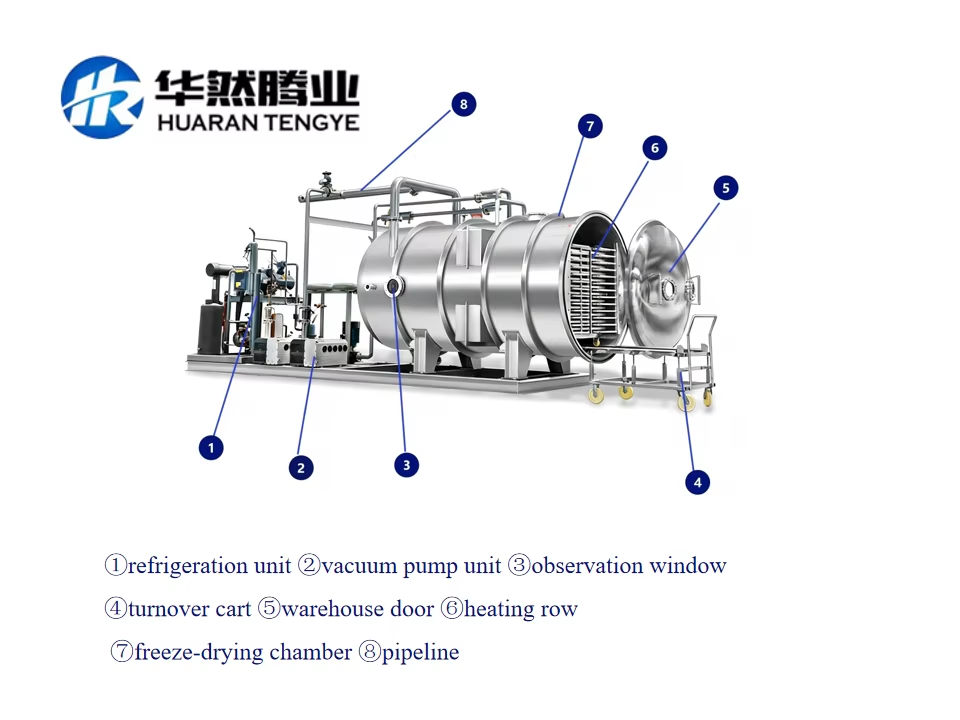
Production-scale large-sized freeze dryers for factories
If you have process development or need formulation, the small-scale experimental freeze dryer is the right choice for freeze drying. Moreover, it is used for research on freeze-drying behavior of new materials and for making small-batch of clinical trial products.
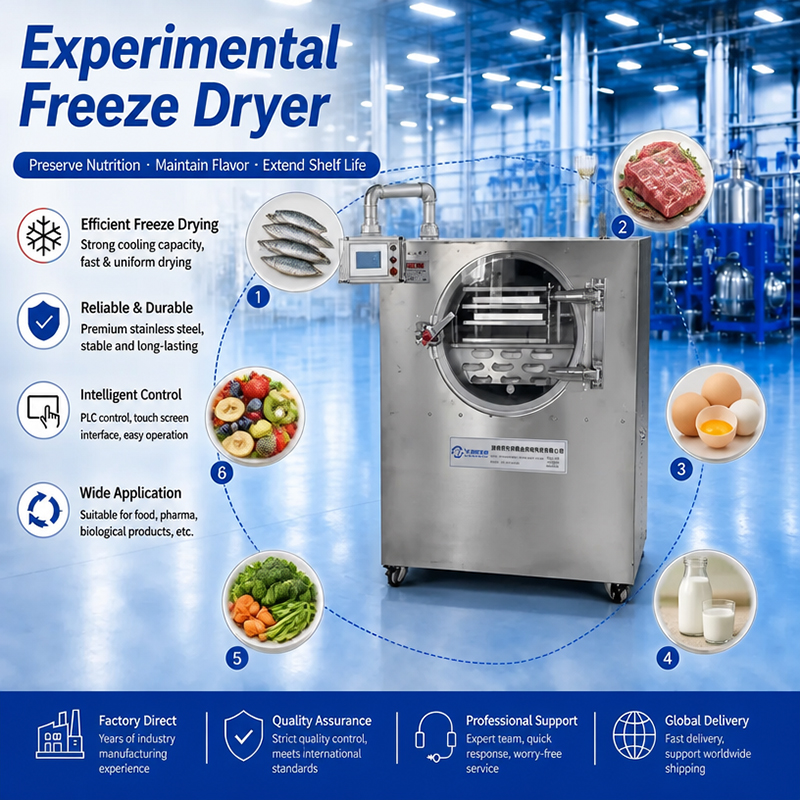
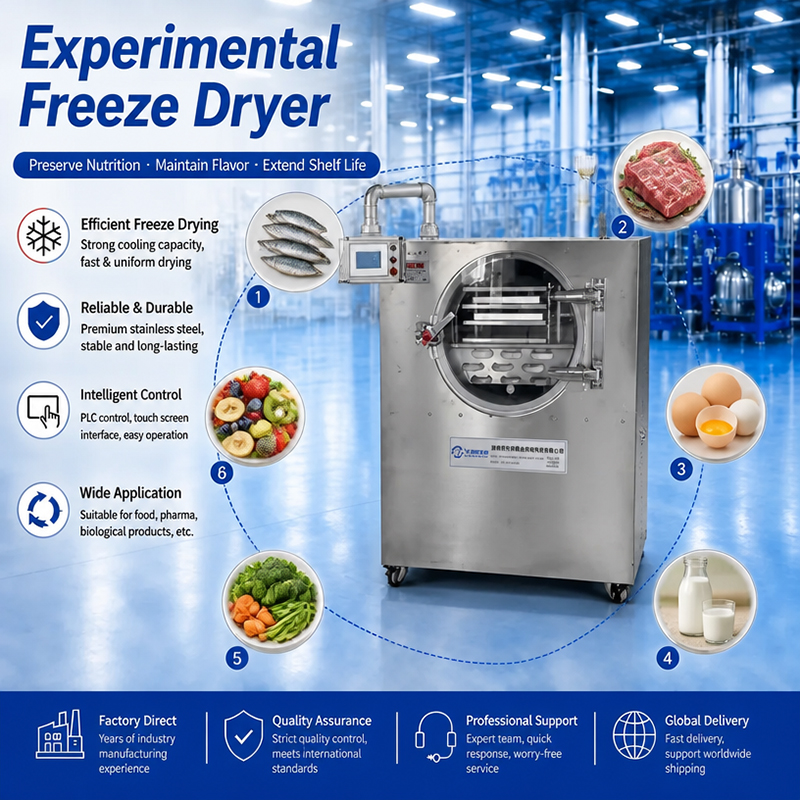
Essential parts of a typical small-scale experimental freeze dryer to allow for controlled sublimation drying are:
Cooling Refrigeration System – it freezes both the cold trap and shelf freezing modules to a very low temperature
Vacuum System – it maintains the very low-pressure environment for sublimation
Drying Chamber Unit – it contains the products during freeze-drying
Processing Unit – it manages the lyophilization process
An experimental freeze dryer in small-balance form typically has a modular design of quite small size capable of placing itself on a conventional laboratory bench. It may come as an In-Situ unit with an integrated drying chamber and cold trap or may split into separate units according to the model and application.
2.Refrigeration Module
1 System Description
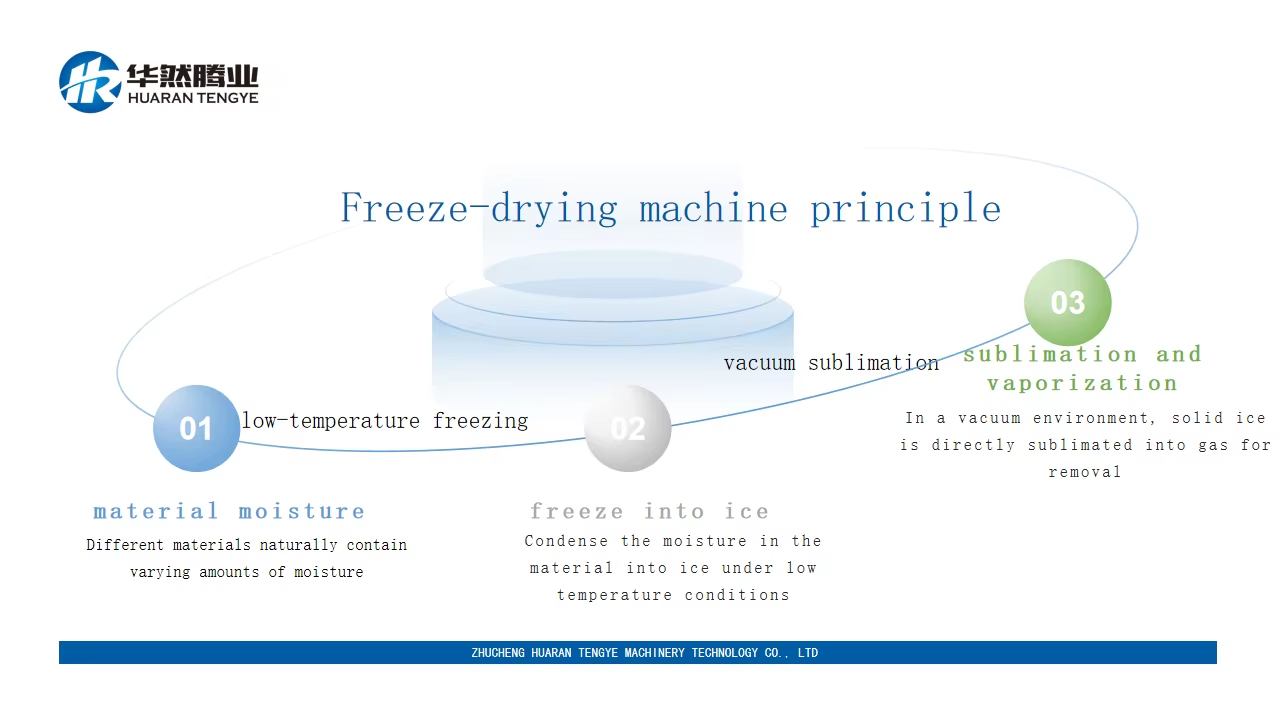
Refrigeration is the "engine" of freeze drying. The two major operations of a refrigeration system are:
Condenser (cold trap) gets cooled to a temperature level necessary to capture sublimated water vapor from the product
Freezing of the shelves by the time vacuum is switched on during the pre-freezing step so that a solid product develops
2 Compressor Technology
Small test freeze dryers are powered mostly by hermetic or semi-hermetic compressors made by leading manufacturers. When using aqueous samples with an eutectic point higher than -20°C, such a single-compressing-stage system with eco-friendly refrigerants, for example R507 or R404A, will do
. Single-stage systems achieve a cold trap temperature of -55°C ± 2°C, suitable for most aqueous samples. For applications requiring temperatures below -40°C (e.g., organic solvents, low-eutectic-point formulations), our optional cascade refrigeration system delivers -80°C, with an -110°C extreme-low option available for ultra-volatile solvents.
3.Cold Trap (Condenser )
Cold Trap (Condenser)
The cold trap captures water vapor sublimated from the product, freezing it onto the coil surface. This serves two purposes: it maintains the low pressure required for continued sublimation, and it protects the vacuum pump from moisture contamination.
Specifications:
Standard coil temperature: -55°C (single-stage)
Optional extreme-low: -80°C or -110°C (cascade)
Coil material: Stainless steel 316L with anti-corrosion coating
Defrost: Hot-gas bypass system, ≤30 minutes
Coil access: Tool-free quick-release, fully removable for cleaning
The coil design maximizes surface area while minimizing vapor flow resistance, ensuring efficient ice capture throughout the drying cycle.
4.Freezing and Drying Control of Shelves
Freezing and Drying Control of Shelves
Shelves in modern freeze dryers for small scale experiments are basically fluid-based plates that are subjected to temperature control.
Heat transfer fluid that goes through hollow shelves is used to cool (by pre-freezing) and to heat (by primary and secondary drying).
Laboratory freeze dryers usually operate with a shelf temperature range from minus 50°C to plus 80°C. The shelf temperature should be homogeneous throughout the shelf and from one shelf to another. In general, temperature uniformity is ±1°C. The shelf should be able to be heated and cooled at a rate of 1°C per minute or more. Shelf layers: 1–6 depending on the model.
The ability to directly pre-freeze a load on the shelf (in-situ freezing) is one big plus of the newer small-scale systems.
There is no need to move the frozen specimens from a separate freezer to the lyophilizer, so there are fewer contamination risks, and temperature excursions that could cause ice recrystallization are prevented.
5. Vacuum System Module
1 Functional Overview
Mainly responsible for the creation of and maintenance of the vacuum environment (low-pressure conditions) inside a sublimation chamber, the vacuum system is key. By keeping the chamber pressure low enough that it falls below water's triple point (0.611 kPa / 4.58 mmHg), the vacuum system makes ice pass from the solid phase directly to vapor without undergoing the liquefaction phase.
2 Vacuum Pump Configuration
Sometimes, a single rotary vane vacuum pump is all that is required for a vacuum system at a lab scale; however, when the drying area of a freeze-dryer bench-top unit reaches ~180 to 270 sq. cm, a vacuum pump system with two stages (first pump + mechanical booster) has to be used. A mechanical booster in this case is also known as a Roots pump and, combined with the first pump, the two-stage vacuum pump enables faster evacuation and reaching a lower pressure.
Pump specs:
Description: Normal Vacuum Pump Parameter Values. Ultimate vacuum < 1 Pa (at empty load) up to ≤10 Pa. Pumping speed 2–14 L/s = 7.2–50 m³/hPump typeOil sealed rotary vane or dry running pumpBrand optionsEdward, Leybold, or Tier 1 Chinese equivalent
6. Drying Chamber Assembly
Drying Chamber Assembly
The drying chamber houses the product during the lyophilization cycle. It is designed to maintain a controlled environment that supports efficient sublimation while protecting sample integrity.
Key features:
Transparent acrylic door — allows visual monitoring of product appearance and ice accumulation without breaking vacuum
316L stainless steel interior — corrosion-resistant and easy to clean
Removable shelves — flexible configuration for vials, flasks, or bulk trays
Sample access port — allows intermediate sampling without cycle interruption (optional)
7.Control System Module
Control System Module
The control system coordinates all modules to execute precise, repeatable lyophilization cycles. Our PLC-based system features a 10-inch capacitive touchscreen HMI with:
Recipe management: Store up to 100 user-defined cycles, with 50+ pre-programmed templates for common materials
Real-time monitoring: Display shelf temperature, chamber pressure, condenser temperature, and optional product temperature on a single trend screen
Data export: USB port for CSV/PDF cycle log export
Alarm system: Visual and audible alerts for pressure deviations, temperature excursions, and maintenance reminders
Multi-level access: Operator, Supervisor, and Admin roles with password protection
About Us
Year established: 2006 (19 years of experience)
Factory area: 18,000 m²
R&D team: 22 engineers
Production lines: 4 assembly lines
Annual capacity: 120+ units/year
Certifications: ISO 9001, ISO 14001, CE, ASME
Core component partners: Bitzer, Leybold/Edwards, Siemens, Emerson
Export markets: 40+ countries including USA, Germany, Japan, South Korea, Australia, Brazil
Units exported since 2010: 800+
Delivery Time
The standard freeze dryers can be delivered within 15-30 working days as soon as the order is confirmed. For customized models, delivery dates shall be determined based on the details of the project. Every freezer is shipped only after being tested for proper operation, so that customers get the right machines.
Packaging & Logistics
All freeze dryers are packed in sturdy wooden cases made in compliance with the export requirements, so that they can withstand the most rigorous shipment conditions. We offer our customers different shipping options - by sea, air, or express - to best suit their individual preferences.
Payment Methods
We offer various payment methods like T/T, L/C, and others if necessary. Also, payment options can be flexible after a detailed discussion about the requirements for the projects.
After-Sales Service
We offer our customers after-sales service through installation guidance, operation training, remote technical support, spare parts supply, etc., to ensure the smooth and trouble-free functioning of the equipment.
Warranty Policy
All products (freeze dryers) are covered by a 12-month warranty which includes all manufacturing defects. Besides warranty service, we provide lifetime technical support and regular maintenance service as well.

FAQ
Q1:What is the actual usable shelf area, and how many vials (2mL, 5mL, 10mL) can it hold?
A1: The standard 0.12 m² shelf will carry: 480 pcs of 2mL vials, 280 pcs of 5mL vials, and 160 pcs of 10mL vials approximately. That means the 0.5 m² configuration would store around 2000 vials, which is 4 times that of the normal. Upon a special request, we will be delighted to show you a vial arrangement template.
Q2: Is it possible to use mixed vials (different vial sizes or fill volumes) on the same shelf during a drying cycle?
A2: Although it is possible, drying uniformity might be affected. We strongly recommend not varying fill depth only volume in the use of vials for this purpose. We have implemented a shelf system of temperature control with ±1°C uniformity, which greatly reduces any deviation from batch-to-batch. On our behalf, for special critical applications, we do have an extra feature (optional) of temperature monitoring on the shelf individually.
Q3: Besides opening the chamber, is there any way to tell when primary drying is ended?
A3: There are, in fact, two ways in our system:(1) Manometer reading using pirani and capacitance methods - if a reading of equal pressure from both devices is displayed, then sublimation has been completely stopped; (2) An external temperature probe on the product is optional - when the sample temperature gets close to shelf one, the process is finished. Besides, both of the above will also be displayed in real time on the HMI panel.
Q4: In what circumstances the power failure occur during a cycle?
A4: After an unexpected power cut, the PLC retains the current running status so that it can automatically carry on with the last cycle. A message appears after power resumes to ask for the operator’s command - to restart the cycle or to defrost safety. For more vulnerable samples where you can’t afford downtime during a power cut, we have added an UPS (battery backup) feature to the system, which gives an extra of about15-30 min to finish the process safely.
Q5: Which batch capacities are available for small-scale experimental freeze dryers?
A5: Our typical bench size model can do up to 1- 2 kg in a batch with a 0.12 m² shelf. The bigger one, which is capable of expanding its capacity up to 0.5 m², can handle at least 10 kg. If you have an unusual one that falls between these capacities, then we can change the shelf area and batch size to fit.