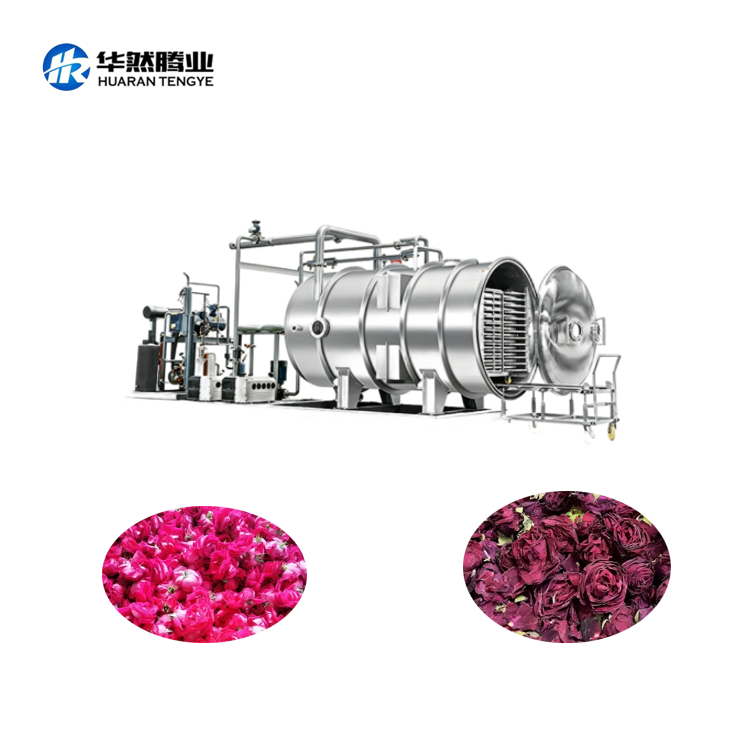
Understanding the Problem
The first thing that most users worry about is the high investment cost of the equipment and then sky-high energy bills. It is very expensive to buy the equipment, plus the machine can rarely stop working so the power consumption is huge as it runs for dozens of hours, which leads to high running costs.
Production is very slow; there's a bottleneck problem because one cycle of the freeze-drying process is 24-48 hours. Therefore, rush orders are not even a possibility, and this leads to a very large buildup in the production pipeline during holidays.
One downside of freeze-drying is that some flowers actually lose or change color. Besides, the extremely low moisture content which is less than 3% makes petals so brittle, like potato chips, that there is a high risk of breakage during shipment.
Freezing point of flowers varies, so the temperature and the vacuum controls need to be adjusted for each flower very precisely. Therefore, a lack of such an automated system and recipe could cause complete loss of a batch through the smallest temperature or vacuum fluctuation.
Moisture absorption in the air is an inevitable process as it is like a sponge, especially with freeze-dried flowers. Hence the flowers must be packaged right away with high-quality, moisture-proof and shock-absorbent material as soon as possible.
What We Offer
Color Protection Technology:Pre-treatment with natural color-fixing agents, combined with optimized vacuum-freezing curves, preserves the original hues of roses, chrysanthemums, and other flowers.
Gentle Drying Process:Low-temperature sublimation prevents petal shrinkage and maintains natural flower shape. Adjustable shelf spacing accommodates long-stem flowers.
Recipe Management:Built-in recipes for different flower varieties (rose, chrysanthemum, lavender, carnation, etc.) — no manual parameter adjustments required.
High Yield with Shape Integrity:Over 95% of flowers maintain intact shape and original color after drying, significantly reducing waste."
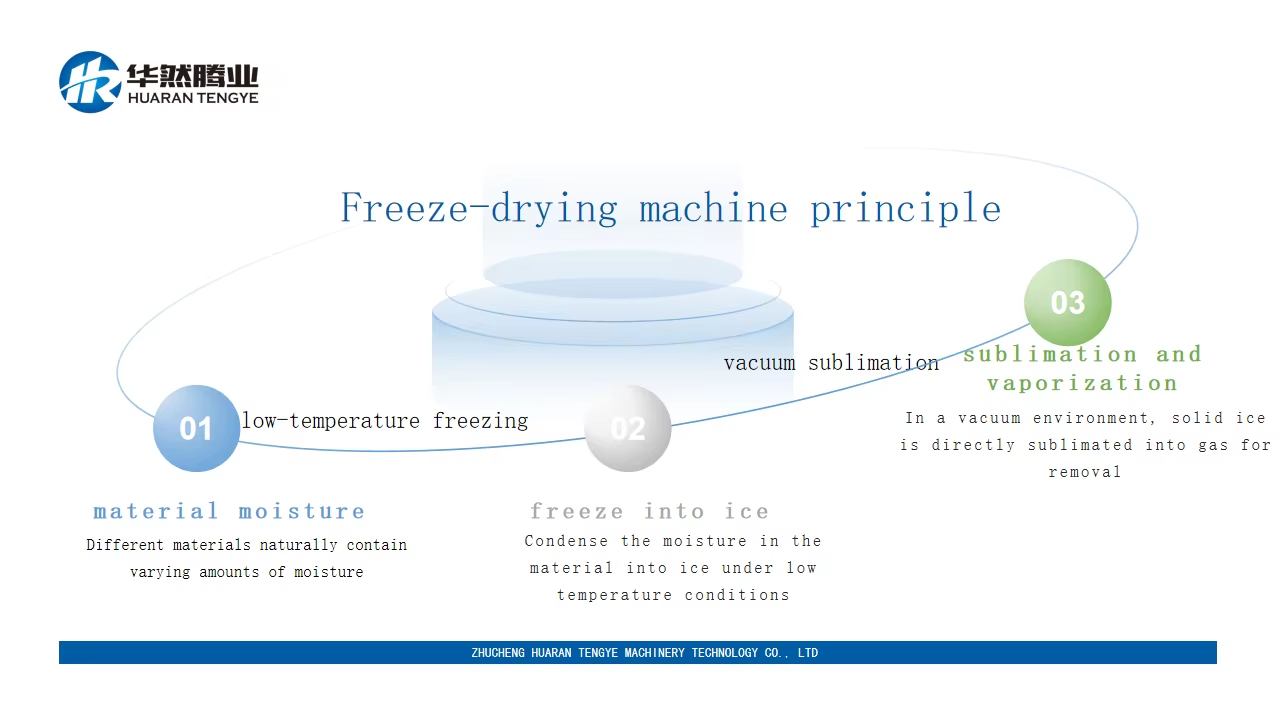
Typical yield obtained from a production line running optimized programs:
Yield of finished product (intact, color-retained flowers): ≥95%
Batch cycle time (roses): 24–36 hours
Batch cycle time (chrysanthemums, thinner petals): 18-24hours
Final moisture content: ≤3%
Moisture difference between trays: ±0.5%
| Parameter | Specification |
| Shelf Temperature Range & Accuracy | -50°C to +70°C Accuracy: Within ±1°C |
| Cold Trap Temperature | -60°C to -80°Cor lower |
| Ultimate Vacuum Degree | Below 10 Pa(approx. 0.1 mbar) |
| Effective Loading Area | Customized by output (e.g., 5㎡, 10㎡, etc.) |
| Max Ice Capacity | Must exceed the total water content per batch |
| PLC Recipe/Curve Control | Supports 30+ segmentsof temp/vacuum settings |
| Pre-freezing Cooling Rate | 1°C/minor faster |
| Defrosting Method & Speed | Steam or hot water defrosting (< 30 mins) |
This note: All numbers provided are design specs. Real-world performance will depend on factors such as product preparation, dosage, and methods of operation.
| Model | Shelf Area (m²) | Batch Capacity (kg/cycle)* |
| FDG-0.5 | 0.5 | 5 |
| FDG-1 | 1 | 10 |
| FDG-5 | 5 | 50 |
| FDG-10 | 10 | 100 |
| FDG-20 | 20 | 200 |
| FDG-30 | 30 | 300 |
| FDG-50 | 50 | 500 |
| FDG-75 | 75 | 750 |
| FDG-100 | 100 | 1,000 |
| FDG-125 | 125 | 1,250 |
| FDG-150 | 150 | 1,500 |
| FDG-200 | 200 | 2,000 |
Capacity calculations are based on fresh flowers with typical moisture content of 70–85% (varies by flower variety). Actual batch output depends on flower type, stem length, loading density, and final moisture requirement. Contact us for a capacity estimate for your specific flower variety.
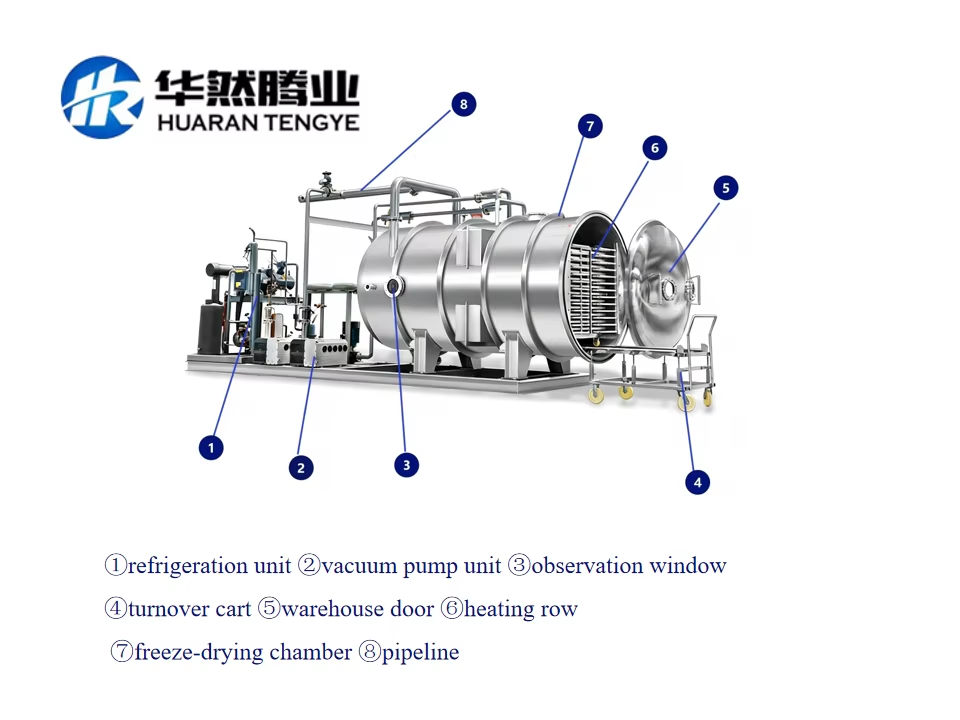
System Configuration
Refrigeration system:
Compressor: Bitzer (Germany) or equivalent open-type semi-hermetic
Refrigerant: R507 (compliant with current regulations)
Cooling method: Water-cooled / air-cooled (specify at order)
Vacuum system:
Pump set: Rotary vane pump + Roots pump (two-stage)
Pump brand: Leybold / Edwards / Chinese tier-1 equivalent
Ultimate vacuum: ≤5 Pa
Leak rate: ≤10 Pa·L/s (tested)
Control system:
PLC: Siemens S7-1200 series
HMI: 10-inch touchscreen, Siemens or WEINVIEW
Data logging: Temperature/pressure/time curves exported via USB or Ethernet
Control modes: Manual / recipe-based automatic cycle
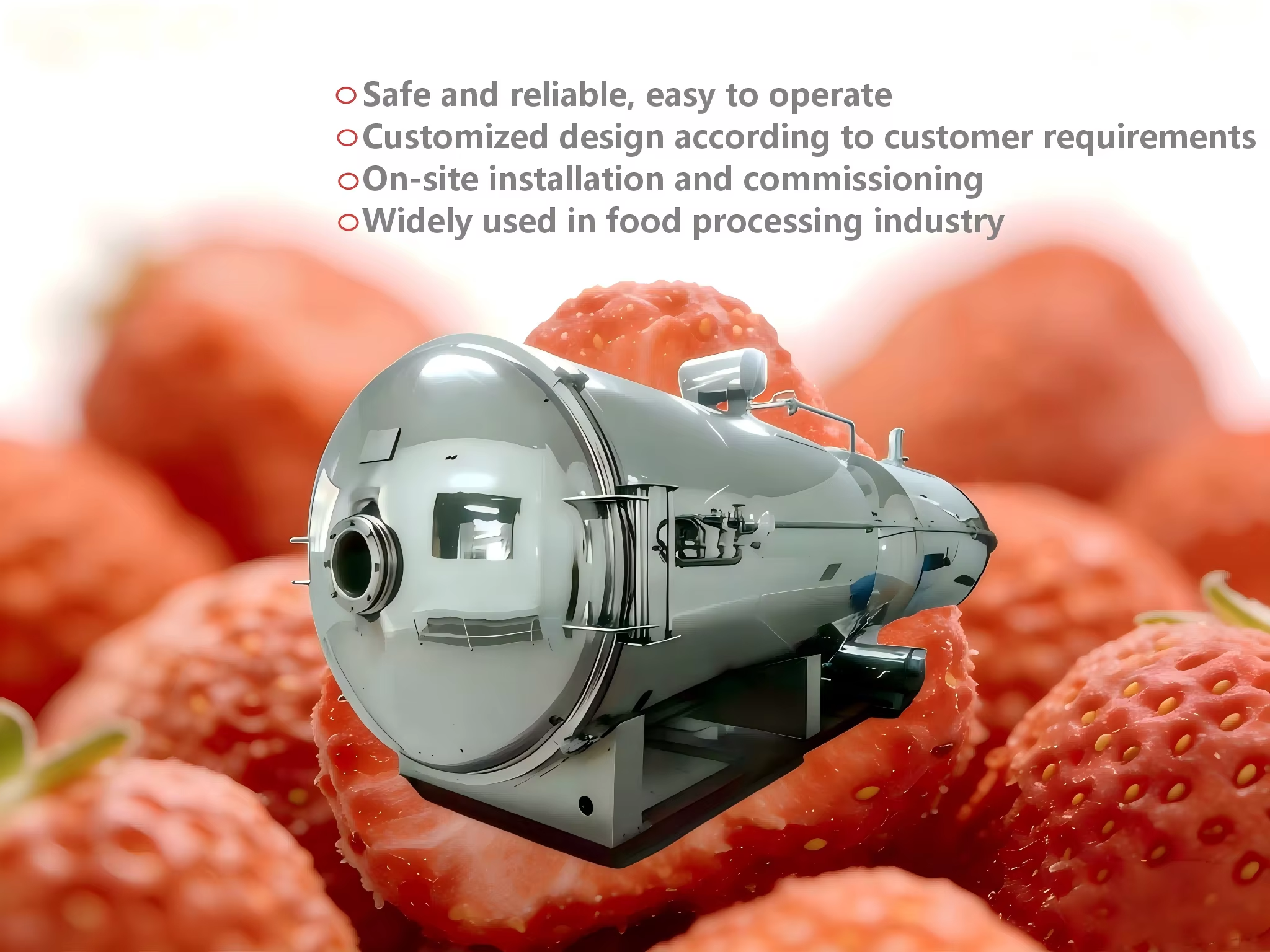
Chamber construction:
Material: SUS304 stainless steel (food grade)
Interior finish: Mirror polish (Ra ≤ 0.8μm)
Exterior finish: Brushed or painted (optional)
Door: Swing-open with silicone gasket, vacuum seal
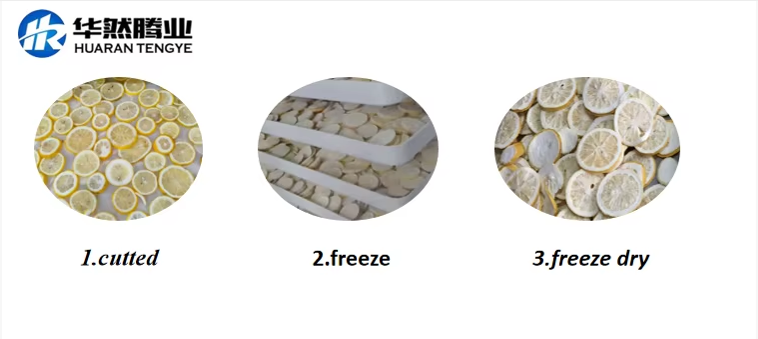
Operational Procedure
1. Select: Picking flowers with about 70-80% bloom gives best-looking flower shapes.
2. Trim: Cut stems leaving stem of 1-2 cm and allow complete surface to dry.
3. Protect: Color preservatives should be applied. Grids help in preserving the shape.
4. Preliminary Freezing: The flowers should be frozen at a very low temperature, -35°C ~ -40°C, fast enough so that water content gets converted into ice.
5. Freeze-Drying: Through a process of vacuum drying, the content of moisture in the product is brought down to less than 3%.
6. Packaging: At the same time with a few pieces of desiccants, they are packed in dry environment (RH <40%) immediately.
Important Parameters that a Flower Freeze Dryer Undergoes during an Inspection
Vacuum System: The vacuum depth, speed of pump, leak-proof system (system airtightness, the prevention of leakage) need to be checked.
Refrigeration & Temperature Control: The cold trap minimum temperature, cooling speed and shelf temperature (to be able to evenly dry the flowers without color fading or shape losing) homogeneity are main aspects of this part, which have to be tested.
Control System: It is essential to make sure that the heating curve control is accurate and the emergency alarm system for the case of power cut or over-temperature is working.
Hardware and Safety: It is very crucial that you check stainless-steel grade (SUS304/316L), welding quality, electrical insulation/ ground safety.
Pilot Test and Data Output: You will be able to see how well the machine can retain water, how the freeze-dried flowers look in shape, in color and their moisture level ($\le 5\%$) at the end of the test.
Year we started: 2006 and we've had more than 19 years of experience.
Size of our factory: 18,000 sq m
R&D team of 22 senior engineers!
Production line: four assembly lines
Max. production: 120+ units per annum
Accreditations: International quality standards ISO 9001 &ISO 14001; Europe's CE mark, US's ASME (pressure vessel standard)
Manufacturers of critical components: Bitzer, Leybold/Edwards, Siemens and Emerson
We ship to 40+ countries and some of our main markets are USA, Germany, Japan, South Korea Australia and Brazil. We've shipped more than 800 units since 2010
Quality & Compliance standards
Pressure vessel: Our equipment is ASME / Chinese GB150 certified (just state the region during your purchase)
Electrical equipment complies with CE (optional) / Chinese GB standards
How we produce: All vacuum systems undergo strict leak testing and pressure testing before they leave our workshops
Warranty on components: 12 months from the day your unit is connected
FAT protocol - Factory Acceptance Test (FAT) - is available before shipment
Production & Delivery
Item Description
StandardLead time is 45 working days from order confirmation (for standard sizes up to FDG-50)
Large units (FDG-75+)Lead time of 65 working days on average
On-site Installation & Commissioning:Available upon request (additional fee applies; travel and accommodation costs are billed separately).
Availability of spare partsCritical components are dispatched within 48 hours
Custom design possibilities
We can make changes to designs for:
Special shelf height (if products are extra thick or loading as bulk)
Question 1:
How long do they last? Is fading a problem?
A: If kept in the dark and sealed, it is possible to have them intact for 3–5 years. However, the light will fade them slightly, even though freeze-drying maintains their original colors.
Question 2:
Why do petals blacken or yellow?
A: The heat damages the petals, or the lack of the color preservatives leads to oxidation (red flowers become black; white ones turn yellow).
Question 3:
Why the flowers droop or wrinkle?
A: Incomplete pre-freezing or low vacuum will not give proper results because of the melting of ice crystals that "cook" and collapse the flower structure.
Question 4:
How long does one batch last?
A: Flowers are mainly composed of water and can be destroyed easily by heat, so, as per the factory, the freeze-drying usually takes 24–48 hours.
Question 5:
Freeze-dried vs. preserved, which is better?
A: Freeze-dried flowers only remove water (they look natural but are very fragile). Preservedflowers on the other hand change color chemicals (e.g. glycerin) and coloring, resulting in a soft texture.
Question 6:
Why the flowers get soft again a few days after the packaging is removed?
A:Freeze-dried flowers very much want to take up water moisture. This can also happen if the unpacking room is too moist or the packaging has not been sealed correctly using desiccants.





