Product Introduction
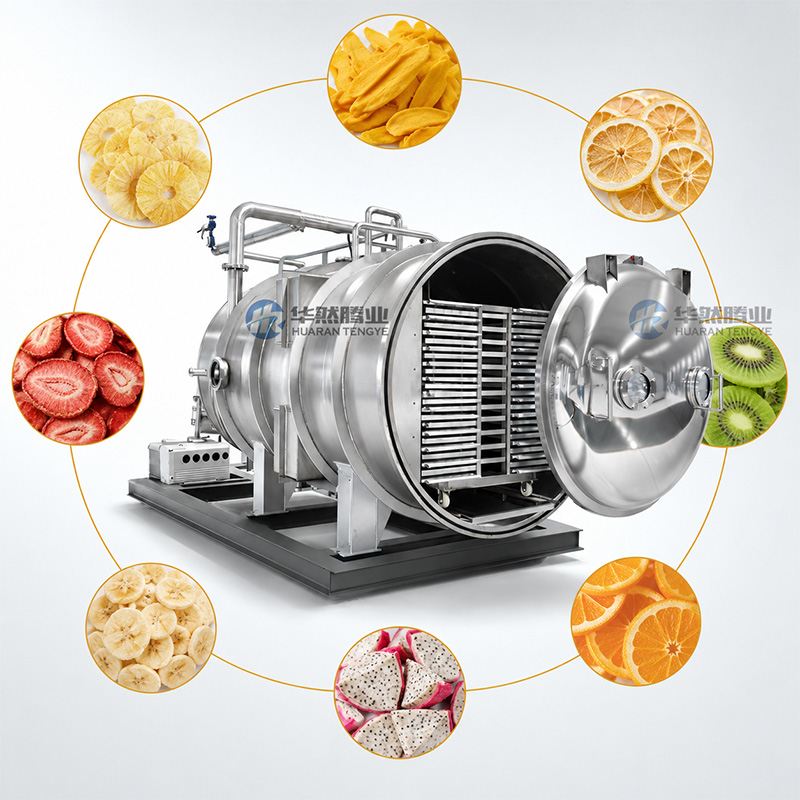
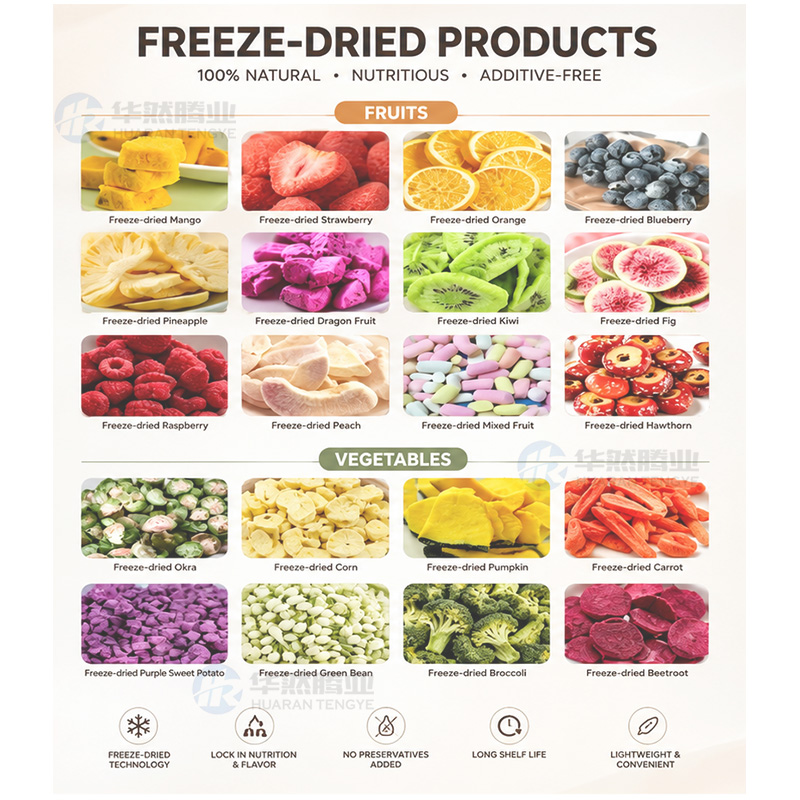
Freeze-drying fruit requires a much greater technological input than drying most other kinds of produce. Fibrous, dense fruits have an extremely uneven moisture pattern - the surface becomes dry very soon, whereas the center is still quite moist. Natural sugars also result in a lower freezing point, which, in turn, loosens up the tissue. Throughout the entire process of drying the fruit in the chamber, the vacuum level and radiated heat are balanced perfectly so that the product shape is not altered.
Failure to keep this balance results in shriveled, dark, chewy-centered fruits rather than a crisp bite, with 10 - 15% of the whole batch being lost as waste.
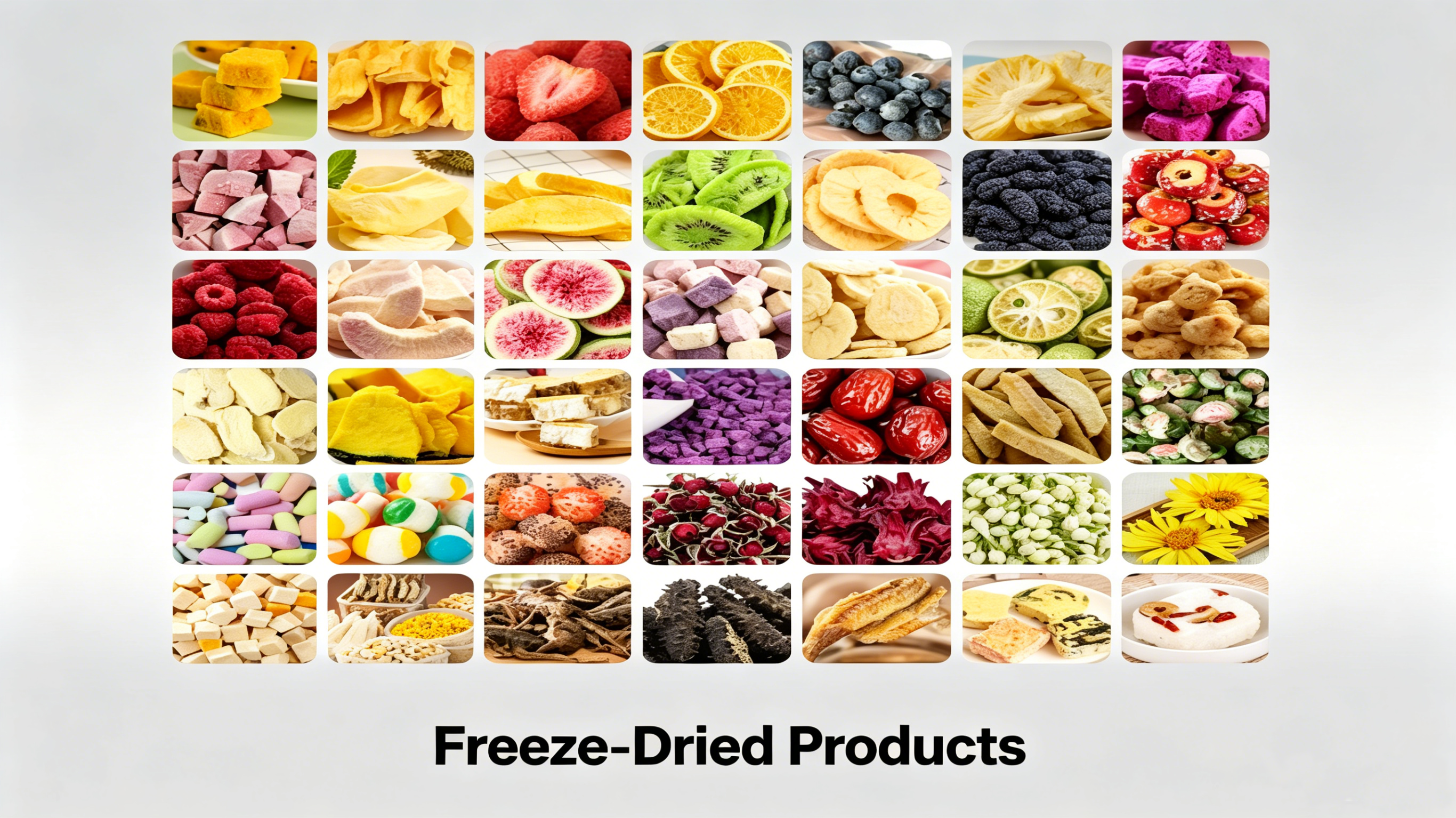
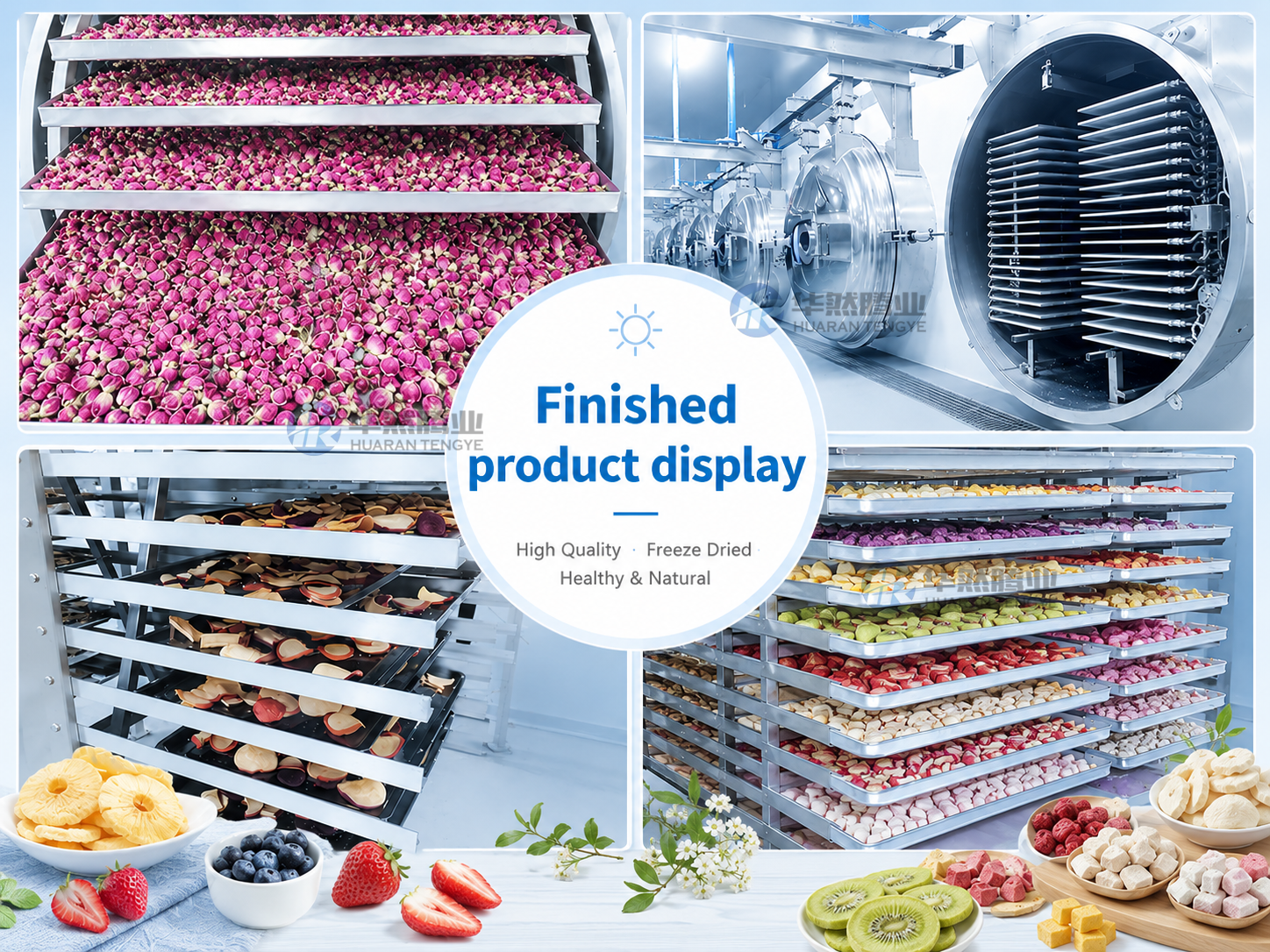
The finished product has a uniform coloring, and the texture is quite solid; besides, the taste is nice and fresh - really, every single slice could be presented as a premium snacking item.
In addition, different types of fruit and various cuts further increase the challenge. Kent, Alphonso, and Tommy Atkins have distinct differences in the amount/size of fibres, sugars, and the pulp; and also 6 mm slices, 10 mm strips, and 15 mm dices require individual approaches regarding freezing and sublimation.
By using parameters that have been hardcoded in the machine, the employees will be able to easily switch the fruit and making new cuts. Meanwhile, the packing further downstream will continue their work seamlessly without any delay.
Fruits can be industrially lyophilized on FDG Series lyophilizers without any quality loss, using the basic drying method. Programs for a PLC can be up to 100, with popular ones tested on the ground for fruit products, ways of cutting, and moisture levels.FDG Series lyophilizers can change from berry slices to pineapple dices with ease without a long time delay, while preserving color and texture. Each shelf plate is independently PID controlled so that differences in temperature over one tray do not occur very much. Vacuum stability that modulates pressure evenly takes off vapor from the surface to the core of the product without leaving dry skin or blackening, without color variations from one batch to another.
Following is a typical product yield. Yield after processing:> 95%. Drying time per batch (6 mm fruit slices): 18–26 hours. Final moisture content: < 3%. Moisture level variation from one batch to another: ±0.5%
Machining transition is fast with very minimal help from the operator, thus reducing the total number of operators needed, which in return results in faster equipment return.
Core Technical Parameters
| Parameter | Specification | Industry Benchmark |
| Ultimate vacuum pressure | ≤5 Pa (achievable) | ≤10 Pa (typical industry range) |
| Operating vacuum range | 10–50 Pa (sublimation phase) | Standard range |
| Shelf temperature range | -45°C to +80°C | Standard |
| Cold trap temperature | ≤ -65°C | ≤ -60°C (standard) |
| Final product moisture | ≤3% (typical) | ≤5% for most food products |
| Freezing rate | 1–3°C/min (adjustable) | Controlled-rate freezing |
| Defrost method | Hot water circulation | Electric/hot gas/water (varies) |
All figures reflect design-phase engineering targets. Actual output can vary depending on the type of fruit, its moisture level, slice thickness, how well your tray is loaded, and the conditions under which the machine is operated.
Model & Capacity Range
| Model | Shelf Area (m²) | Batch Capacity (kg/cycle)* | Recommended Product Type |
| FDG-0.5 | 0.5 | 5 | R&D / pilot batches |
| FDG-1 | 1 | 10 | Small-batch fruit / berries |
| FDG-5 | 5 | 50 | Small-scale production |
| FDG-10 | 10 | 100 | Commercial production entry |
| FDG-20 | 20 | 200 | Mid-scale production |
| FDG-30 | 30 | 300 | Full-scale production |
| FDG-50 | 50 | 500 | Large-scale operation |
| FDG-75 | 75 | 750 | Industrial production |
| FDG-100 | 100 | 1,000 | High-volume production |
| FDG-125 | 125 | 1,250 | Industrial scale |
| FDG-150 | 150 | 1,500 | Large industrial line |
| FDG-200 | 200 | 2,000 | Maximum capacity |
Capacity standards have been defined mainly based on high-moisture fruits such as mangoes and papayas (~82-88% water content). The weights of individual batches can vary according to the fruit type's texture, size of cuts, and method of filling the drying chamber. Also, there are custom shelves and trays in the facility for non-standard processing needs.
System Configuration
Vacuum subsystem:
The pump is a vacuum pump composed of an oil-free vacuum vane stage, followed by a Roots booster stage. It has a dual-level vacuum drawing method.
Options from manufacturers: Leybold / Edwards / premium domestic equivalent
At floor level, vacuum: ≤5 Pa (pressure units)
Leak point: ≤10 Pa·L/s (factory-confirmed)
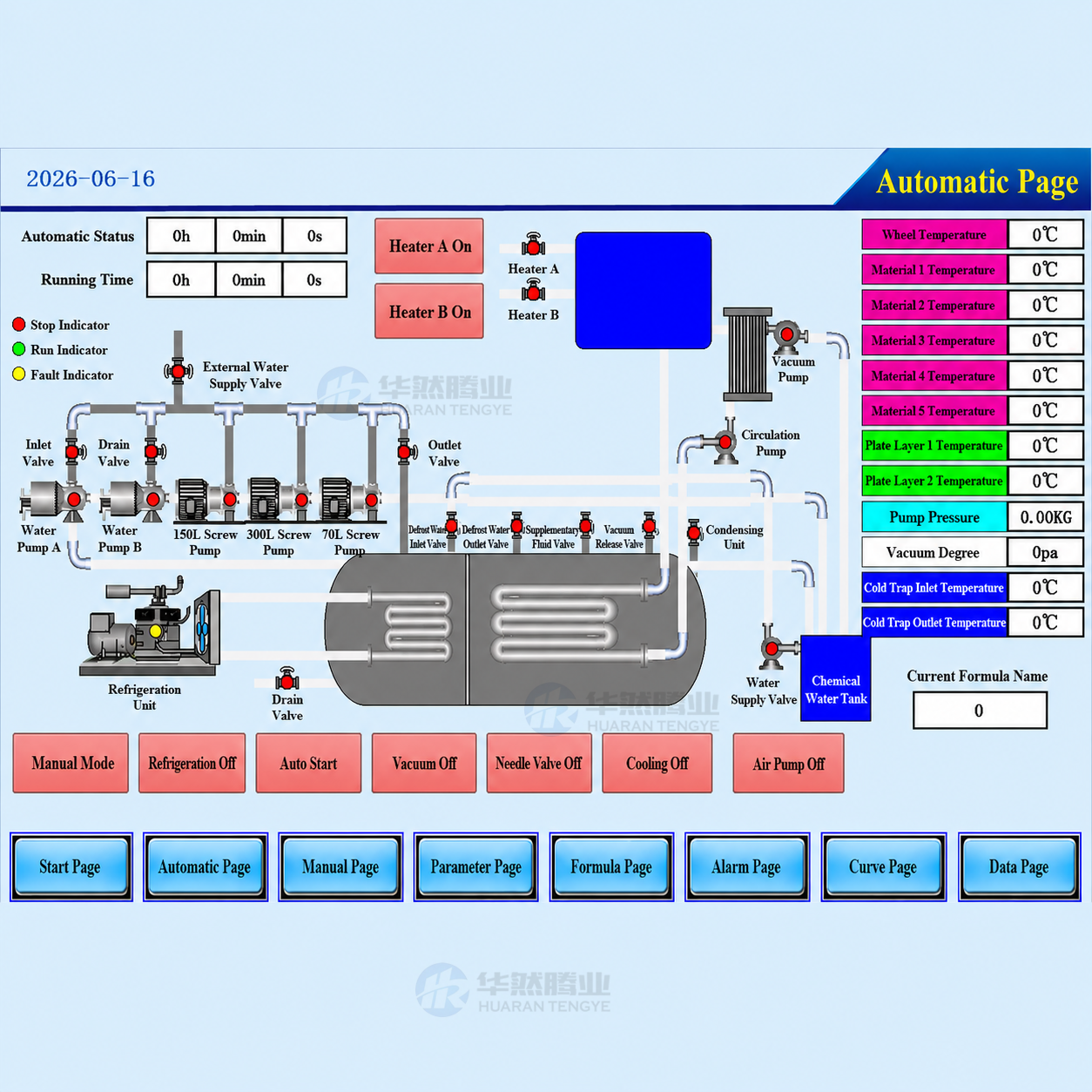
Automation system platform:Main control unit: Siemens S7-1200 PLC, programmable logic controller, unit
Console: 10-inch flat display (Siemens / WEINVIEW), color screen
Run report record: Temperature, pressure, and state of cycle are saved continuously, -export file is either a USB drive or via LAN connection.
Run modes: Full recipe-triggered sequencing / manual operation
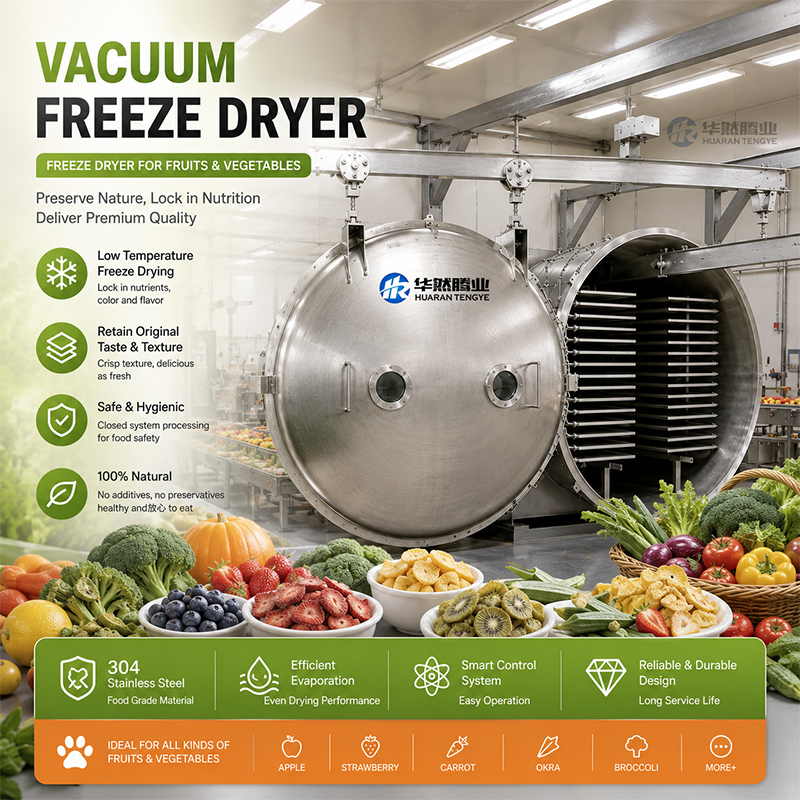
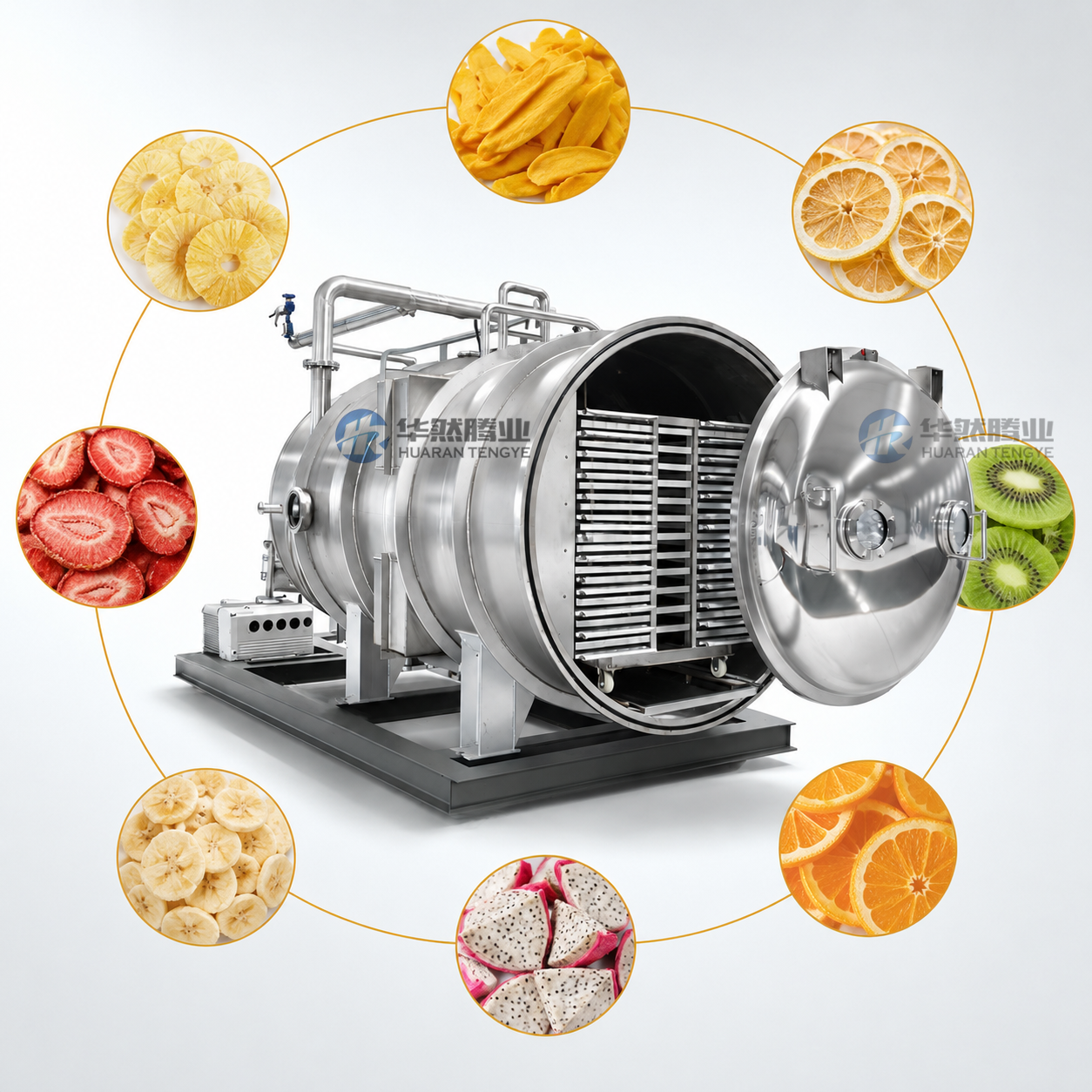
VACUUM CHAMBER:The stainless steel (SUS304) vessel is of food-grade quality.
Surface treatment of interior: The surface was mirror finished (Ra ≤0.8 μm) - it prevents caramelization from mango sugar, and cleaning becomes faster.
Covering: Brushed or with coating (as agreed)
Quiet Swinging Doors with a Silicone Vacuum-tight Seal
Operational Process
The FDG series fruit freeze-drying process consists of three parts:
① Freezing: It slowly drops down, and the temperature rises about 0.5–1.5°C per minute when the fruit is in the supercooling stage, reaching around -38°C to -45°C. By slowing down, it allows micro ice crystals to form, which help protect the cells in compression. Normally the cycle lasts 3–8 hours, depending on slice thickness, sugar content, and fill weight.
② Sublimation: The chamber is kept under a vacuum of 10–60 Pa. After a certain temperature is reached, shelves are heated gradually in stages by PID to -5°C in a staggered sequence. The sublimation of ice results in vapor, which a condenser running at -55°C to -70°C captures. The whole sublimation phase lasts, on average, 12–22 hours, depending on the density of fibrosis and size of fruit pieces.
③ Desorption: This stage is maintained at a constant temperature of 45- 55 °C; then the temperature is increased gradually while the vacuum is kept less than 10 Pa so as to remove remaining residual moisture from the sugar-rich fruit cell wall.
Finally, the moisture level is ≤3%. For this stage, the recommended time range is 3-8 hours to prevent the Maillard effect and color changes. Typically, a slice of fruit takes between 18 and 28 hours for drying. Fruit cut in small pieces, like diced, will take longer, usually between 22 and 32 hours, as does the thicker-cut fruit.
About UsFounded in 2006 (with 19 years of experience)
Factory Area: 18,000 m²
Research & Development Team: 22 engineers
No. of Production Lines: 4
Production Capacities per Year: More than 120 units
Main Suppliers:
International companies like Bitzer,Edwards,Siemens,Emerson...
Certificates:
ISO 9001,ISO 14001,CE,ASME
Markets:
More than 40 countries around the world, such as the US,Germany,South Korea,etc.
Production & Delivery
| Item | Detail |
| Standard lead time | 45 working days from order confirmation (models up to FDG-50) |
| Large models (FDG-75+) | 45–60 working days |
| Installation & commissioning | On-site support available (additional cost, travel expenses separate) |
| Spare parts availability | 48-hour dispatch for critical components |
Design Customization Options
Engineering modifications that are helpful for fruit processing are:
Additional storage that can be used for whole slices, wide cuts, and large-size pieces
A combined CIP watering system for cleaning the sweet residue left by sticky sweet fruit flesh after batch processing
Use of nitrogen gas to keep the dried fruit goldy colored and also stop the discoloration after dehumidification
Commonly used food hygienic GMP finishes to make sure good food safety – a must for quality-controlled facilities that adhere to international standards
Explosion-proof electrical systems for flavor-coating processes that use carrier solvents
Holes drilled in trays which allow gases to escape from heavy fruit flesh and thus help in evaporation
In order to receive a personalized quotation, kindly supply the following info:
Details about the fruit type / cutting style / slice thickness (i.e., specifications)
Dried fruit production rate (total production per day and per batch, measured in kg)
Dimensions of the raw material (peel-off and piece size)
Available factory supplies (type and amount of voltage and current, chilled water temperature, compressed air supply, etc.)
Quotes are valid for 30 days, and if changes in specification occur after technical finalization, the quote will be modified accordingly.
FAQ
Q1: Can the machine handle different fruit varieties?
Yes. The PLC stores up to 100 fruit-specific recipes. Switch from mango
slices to strawberry dices in minutes — with consistent color, texture, and
flavor every batch.
Q2: How is caramelization prevented during drying?
PID-controlled shelf heating keeps temperatures below caramelization
thresholds during secondary drying. The oversized cold trap efficiently removes
moisture while maintaining low thermal stress on sugar-rich fruit tissue.
Q3: What's the delivery time?
45 working days for standard models (FDG-0.5 to FDG-50); 45–60 working days
for large models (FDG-75 and above). Shipping time not included. Custom
configurations may require extended lead time — consult our team for specific
timelines.