Product Introduction
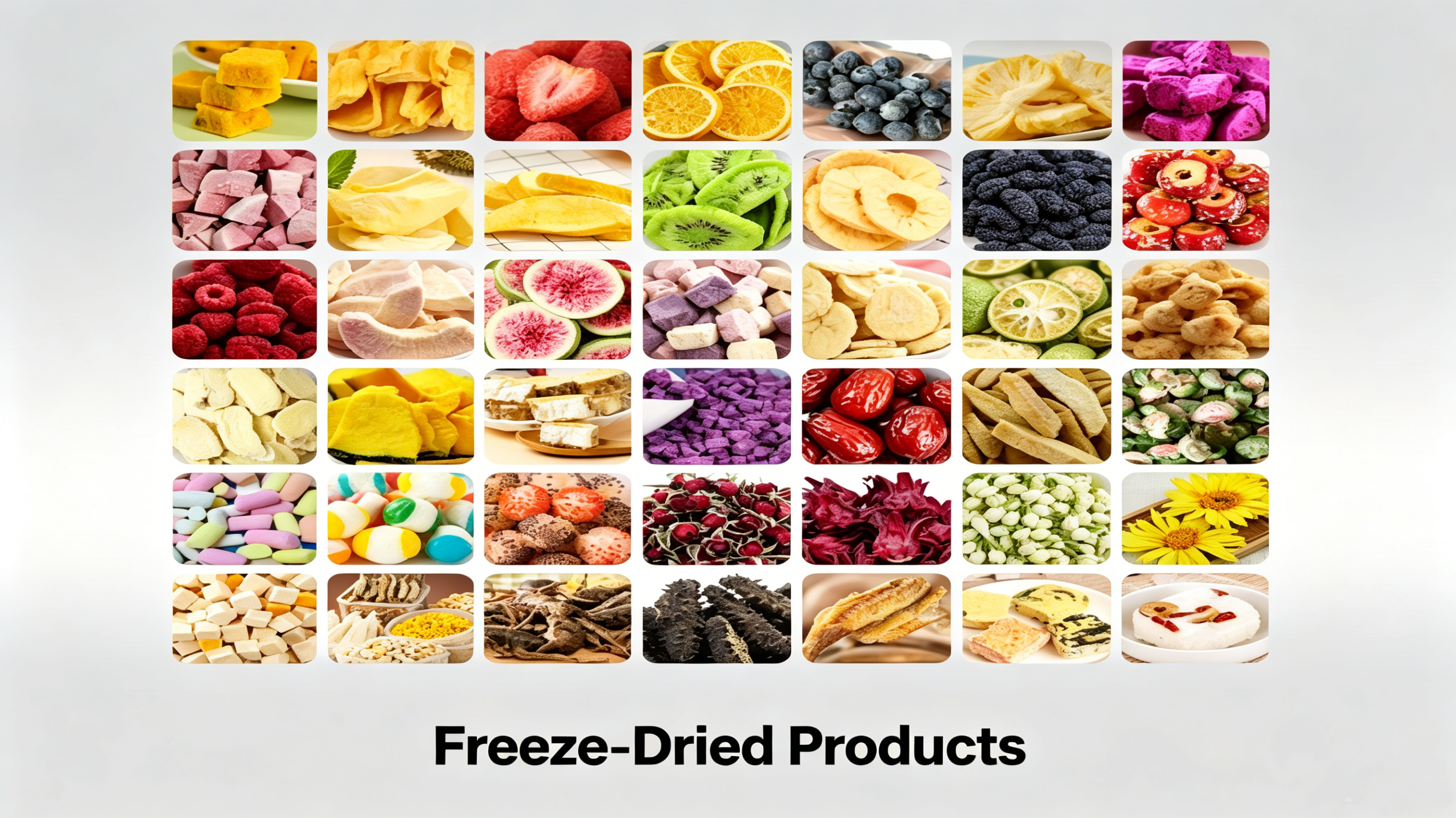
Freeze-drying lemons presents a series of unique challenges that differ from most other fruits. Thanks to its high juice content and a peel rich in volatile oils, lemons become two-part problems when drying, as the flesh readily releases water, whereas the oil-packed peel does not allow sublimation to proceed easily without special conditions to help. When these factors are not carefully controlled, you end up with oil from the peel running out and the fruit shrinking, detaching the flesh from the rind, or even producing an unpleasant aftertaste due to the overheating of the essential oils, which can lead to losing 10-15% of your production in the form of rejection.
In short, the product appears as deformed slices with separated peel, the yellow is washed away so it fades, and there is a loss of the citrusy fragrance which takes away one of the defining characteristics of the ingredient.
Increased variability in cuts causes production difficulties further on.
The reaction of whole-slice (4–6 mm), cocktail wedge, half-lemon round, and peel-on ground lemons to the vacuum condition during the freeze-drying process varies. The cocktail-cut lemons with thicker slices are still holding some moisture in the piths, while the thinner slices get dehydrated and have browning issues if the drying time is not controlled strictly.
Operators without saved programs would just try out a run without having any idea if it's going to be the right settings. In fact, it could mean a waste of entire machine work shifts in the event of working on different cuts. This could cause a delay in fulfilling the orders and a considerable waste of machine-hours.
Our Solution
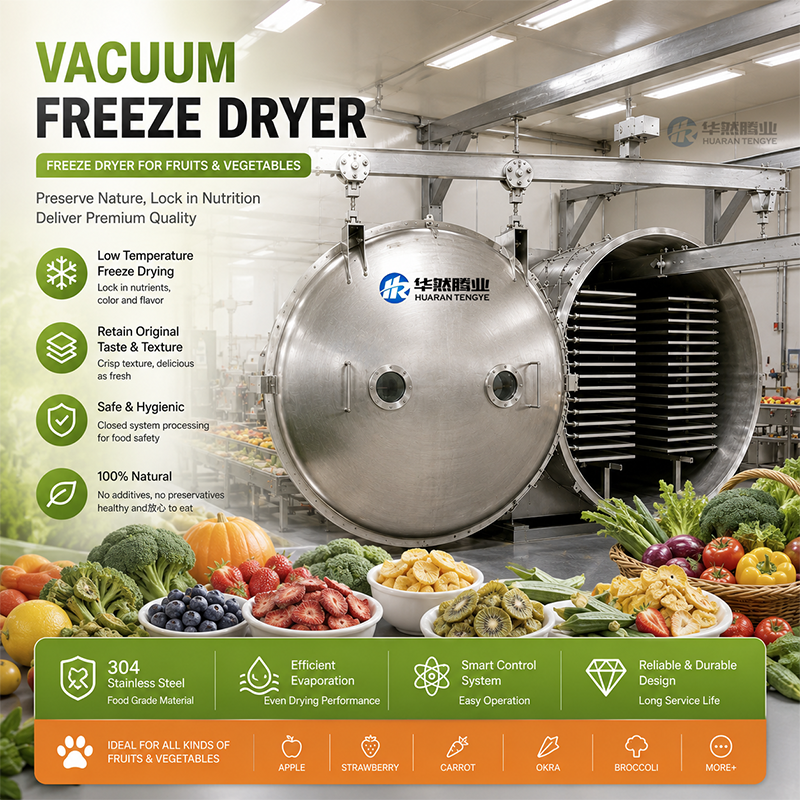
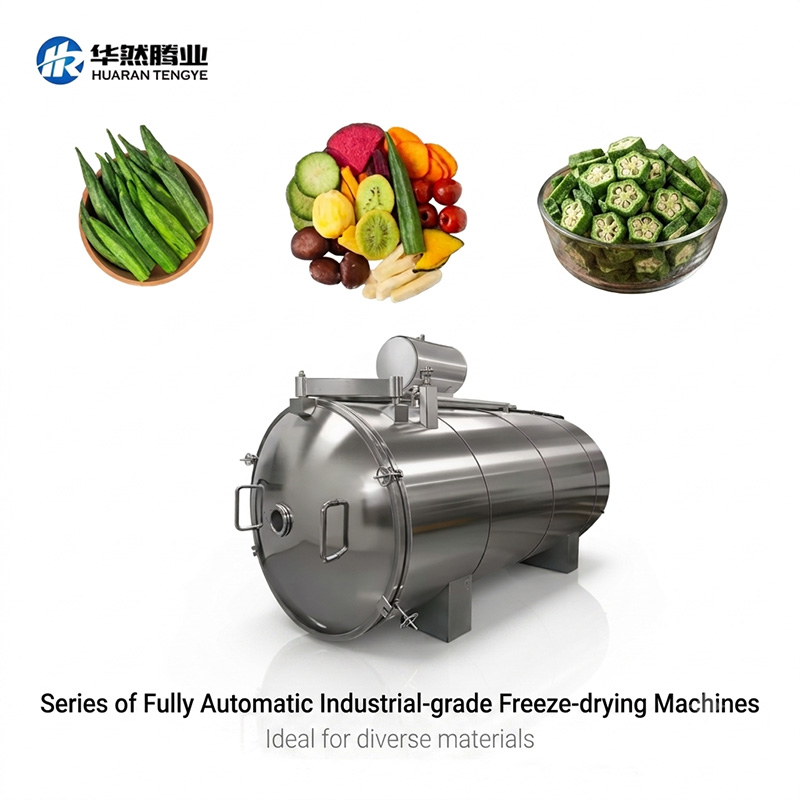
Purpose-built for repeated, good-quality lemon fruit drying, not general fruit drying. The FDG Series is a fruit drying system specially designed for high-quality lemon fruit drying.
There are so many programs for drying fruits like lemons that a PLC memory system will easily hold 100. These programs are specifically written to the needs of the fruit, the cut of the lemons to be dried, and other related factors. So changing from complete slices to cocktail wedge slices takes only a few minutes, and each time you get the same beautiful appearance and great flavor as expected.
The feature that allows each tray area to be separately heated and cooled via PID controllers results in no heat drift throughout the unit regardless of location or tray arrangement. The very fine vacuum control that is provided in the freeze dried machine ensures the drying of juices from the pulp as well as the extraction of vapor from highly oiled areas in the peel so that you avoid things such as peeling off, collapsing, and the change in color between trays.
The production of standard freeze-drying machines under optimal conditions is as follows:
Product yield: >=95%
Time taken to complete a batch (for slices of lemons 5 mm): >=20 to 26 hours
Degree of water in the product: <=3%
Moderate variation in the degree of water loss tray-to-tray: +/-0.5%
With fast changeovers and little supervision, you will achieve higher production output, lower operating costs, and the most out of machine capacity investment.
Core Technical Parameters
| Parameter | Specification | Industry Benchmark |
| Ultimate vacuum pressure | ≤5 Pa (achievable) | ≤10 Pa (typical industry range) |
| Operating vacuum range | 10–50 Pa (sublimation phase) | Standard range |
| Shelf temperature range | -45°C to +80°C | Standard |
| Cold trap temperature | ≤ -65°C | ≤ -60°C (standard) |
| Final product moisture | ≤3% (typical) | ≤5% for most food products |
| Freezing rate | 1–3°C/min (adjustable) | Controlled-rate freezing |
| Defrost method | Hot water circulation | Electric/hot gas/water (varies) |
Caption is design targets. Real outcomes will vary depending upon feedstock properties, filling patterns, and shop floor operations.
Model & Capacity Range
| Model | Shelf Area (m²) | Batch Capacity (kg/cycle)* | Recommended Product Type |
| FDG-0.5 | 0.5 | 5 | R&D / pilot batches |
| FDG-1 | 1 | 10 | Small-batch lemon / citrus |
| FDG-5 | 5 | 50 | Small-scale production |
| FDG-10 | 10 | 100 | Commercial production entry |
| FDG-20 | 20 | 200 | Mid-scale production |
| FDG-30 | 30 | 300 | Full-scale production |
| FDG-50 | 50 | 500 | Large-scale operation |
| FDG-75 | 75 | 750 | Industrial production |
| FDG-100 | 100 | 1,000 | High-volume production |
| FDG-125 | 125 | 1,250 | Industrial scale |
| FDG-150 | 150 | 1,500 | Large industrial line |
| FDG-200 | 200 | 2,000 | Maximum capacity |
Capacity standards are based on the weight of fresh lemons with high water content (approx. 86–90%). The actual speed of the fruit processing equipment is largely contingent on parameters such as slice thickness, processing method (with or without the peel), and packing density. On request, custom-designed storage systems and dedicated loading/unloading solutions are available extra with a price for special tasks.
System Configuration
Cooling circuit:
Compressor unit: Bitzer (German) or similar open-type semi-hermetic model
Refrigerant: R404A / R507 (environment-friendly - complying with regulation)
Thermal disposal: Water or air cooling (to be decided at the moment of order placement)
Vacuum pump:
Pump type: Oil-sealed rotary vane with Roots booster (two-stage extraction)
Optional supplier: Leybold / Edwards or high-grade Chinese competitor
Maximum achievable vacuum: ≤ 5 Pa
Leak tightness: ≤10 Pa·L/s (measured at the factory)
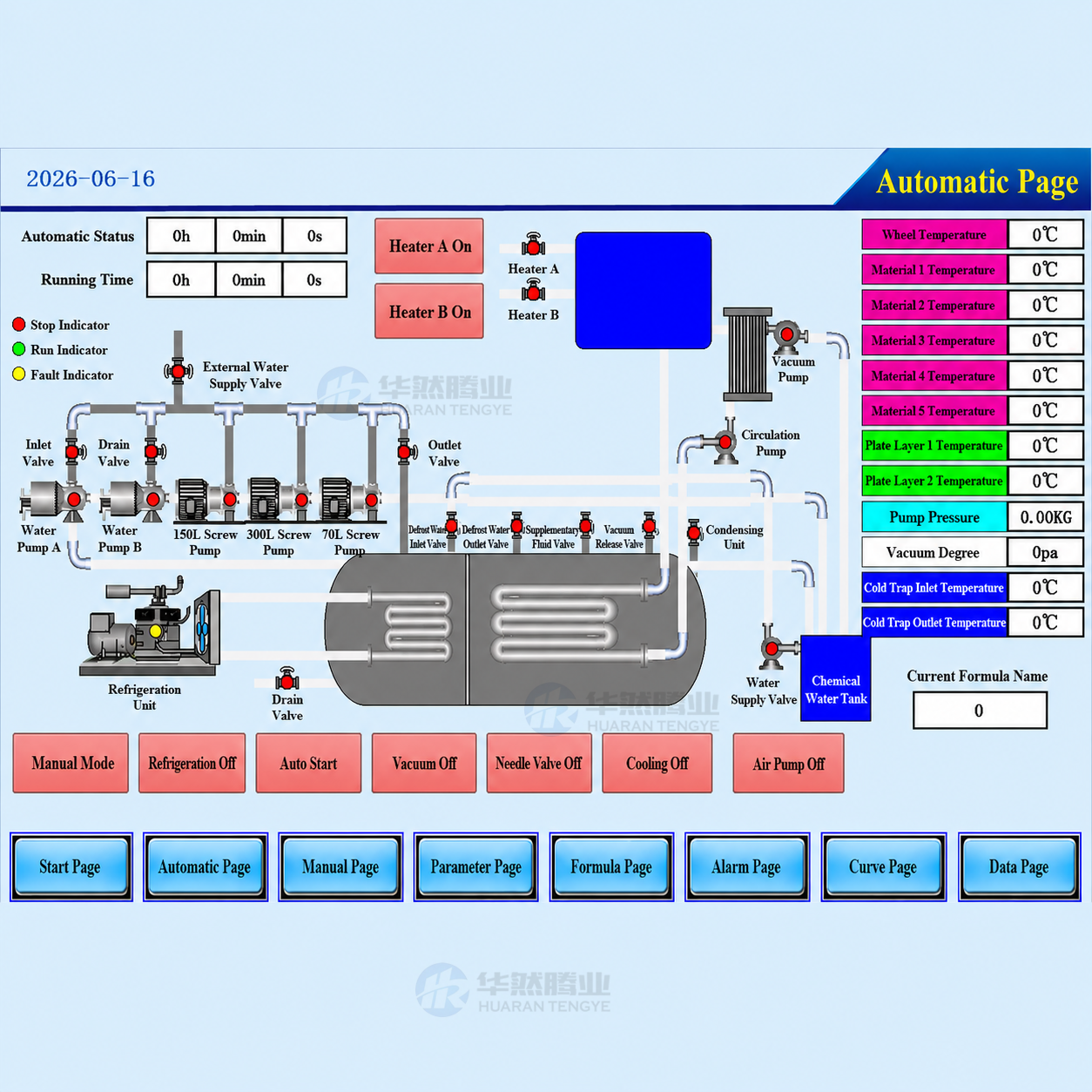
Automation of the process:
Main control device: Siemens S7-1200 PLC system
Display panel: 10" color touch screen (Siemens / WEINVIEW)
Cycle recording: Continuous logging of graphs showing temperature, vacuum, and time; data accessible via USB or network
Operation: Hand operation / fully automatic recipe-driven mode
Tank design:
Main material:SUS304 food-grade stainless steel
Interior finishing:Mirror-polished (Ra ≤0.8 μm); the finishing will help to avoid resin buildup caused by lemon oils and allow for quick cleaning after each batch
Chamber casing:Brushed metal or powder-coated (both finishes offered)
Closure method:Side-opening vacuum gasket made of silicone that is sealed by means of positive vacuum at full vacuum.
Operational Process
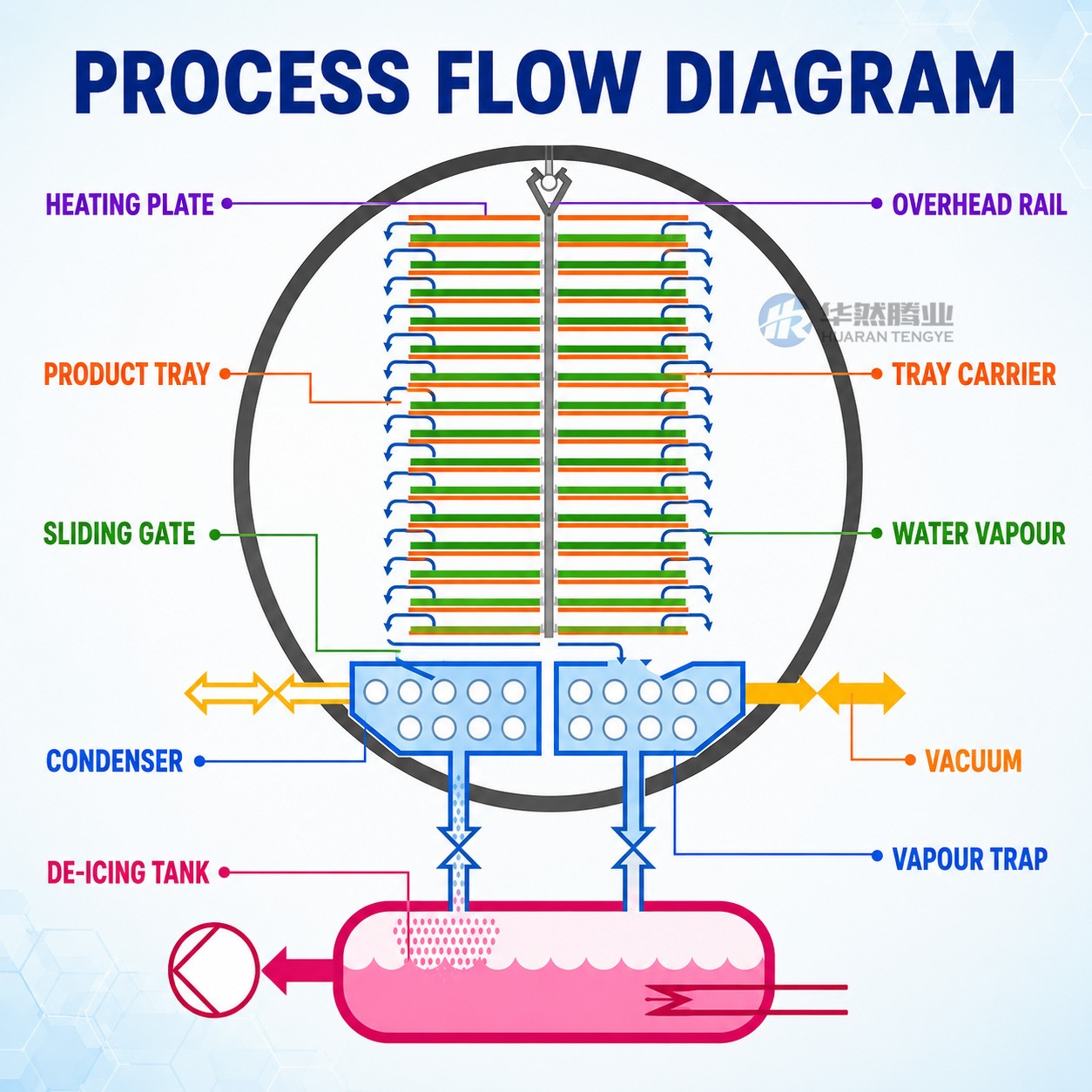
The FDG series works by using a really efficient three-step drying process.
1. Pre-freezing phase: The material's temperature is brought down to a level where it forms a solid and the process becomes irreversible, at the eutectic point. This is done to allow the formation of uniform ice crystals. Typical rate of freezing:1–3°C/min. Freezing time: 2–6 hours (depending on load).
2. Primary drying (sublimation): The first stage of water removal, which is the sublimation of ice to water vapor without passing the liquid state, under vacuum.
The chamber is brought to a pressure of 10- 50 Pa; the shelf temperature is simultaneously ramped up from -40°C to 0°C. The cold trap is used to collect the sublimated vapour generated. Duration: 8 to 24-hours depending on the product's characteristics.3. Secondary drying (desorption) – the heating unit continues raising its temperature, reaching a shelf temperature of 35–55°C under a still existing low-pressure state in order to eliminate moisture which is tightly attached to the surface. A predetermined final moisture target level is usually a moisture level of up to 3% for lemon products.Time: 2–8 Hours.
ABOUT US
Year of establishment: 2006 (already 19 years have passed).
Factory area: The total area of the factory is about 18,000 square meters.
Research & Development team: At present, the R&D team consists of twenty-two (22) engineers.
Production lines: There are four (4) production lines.
Annual production capacity: In one year, it might even reach up to 120 units.
Certifications: Besides other certifications like ISO 9001, ISO 14001, CE, and ASME are also present.
Closing partnerships: Bitzer, Leybold/Edwards, Siemens, Emerson
Export markets: Around 40 different countries have been our customers, with countries such as the USA, Germany, Japan, Korea, Australia, and Brazil just a few among the many.
Exported Units Since 2010: 800+
Quality & Compliance
Compliance certifications for pressure vessel:ASME or Chinese GB150 (the region shall be specified in the order).
Electrical Certification: CE compliant (optional) or Chinese GB standards.
Manufacturing procedures: We conduct pressure and vacuum leakage tests on every pressure vessel.
Warranty period for essential parts:12 months after the installation.Inspection method: Our factory acceptance test (FAT) is scheduled before shipping the items to customers.
Production & Delivery
| Item | Detail |
| Standard lead time | 45 working days from order confirmation (models up to FDG-50) |
| Large models (FDG-75+) | 60–75 working days |
| Installation & commissioning | On-site support available (additional cost, travel expenses separate) |
| Spare parts availability | 48-hour dispatch for critical components |
Design Customization Options
Available engineering adaptations in lemon processing lines include:
Enlarged distance between shelves that allows the placement of whole slices, wedges, and half-lemons without damaging or breaking them
Self-cleaning CIP system (washes away citrus oil residue and sugar deposits after each shift)
Nitrogen flushing (protective measure that prevents peel essential oils from oxidizing and keeps the bright yellow color of the dried peel)
Good Manufacturing Practices hygienic finish accompanied by all the documents needed to certify that equipment meets hygiene standards for export-grade citrus dehydration facilities
Hazardous-area electrical grading of facilities or systems used to infuse odors, surface, etc. through solvents
Tray with holes so that more vapor can circulate around oil-rich surface of rinds during sublimation process
Procurement Information
To develop a formal quotation, you will need to indicate:
Type and cutting specification of Lemon (whole slice, wedge, half-lemon, peel-on powder, diced)
Desired batch processing capacity (kg/cycle)
Dimensions of raw material (slice thickness, fruit diameter range, peel inclusion choice)
Main equipment utilities requirements (mains voltage/ph/ph, cooling water inlet temp, compressed air supply specs)
Compulsory regulatory standards (CE, ASME, GEM, HACCP, etc.)
Each proposal has a validity period of 30 days and is subject to a detailed engineering examination.
FAQ
1. How can one ensure that the vacuum pump of the machine does not get contaminated with lemon essential oil?
There is a large volume cold trap that works at temperature from -55°C to -70°C. It not only takes water vapor but also volatile oil fractions that come from the peel after the evaporation. This protects the oil in the vacuum pump and at the same time provides good vacuum integrity over and over.
2. Will lemon slices that are freeze-dried still have that brilliant yellow color?
Undoubtedly. The heating of the shelves is gently controlled by PID, and it prevents damage to the natural carotenoids in the rind by heat. In order to have the best preservation of color, we suggest adding the package with nitrogen backfill as an extra, which prevents oxygen at the moment of opening and makes a perfect visual appearance in the packaging.
3. Is there a possibility to use the machine for processing both thin tea slices and thick cocktail wedges?
Without doubt. There are 100 validated recipes stored at PLC level with each recipe having its own freezing rate, vacuum level, and drying time. Changing from 3 mm tea slices to 15 mm cocktail wedges is a mere few minutes, which results in the same product quality over and over the process.
4. How much time differs between freeze-drying processes of peel-on lemons from peeled lemons?
Peel-on is a longer process because the oil-rich rind is a barrier to vapor migration, and it takes about 20-28 hours. The peeled ones are quicker because of moisture being released directly from the peeled fruit, and they take about 16-22 hours. In our recipe files, the optimized processes for both types have already been preset.
5. What is the standard manufacturing time?
FDG-0.5 to FDG-50: 45 working days.
FDG-75 and above :60–75 working days.
Sea or air transportation time not included.
6. Do you offer installation and after-sales service?
We do offer after-sales and installation services. These include on-site commissioning, trial runs with the lemon fruits supplied by your company, operators' training, etc., that is within the service scope.
We also support remote-assisted video start-up. The warranty lasts 12 months since the machine is commissioned. Urgent supply of crucial spare parts is done within 48 hours. Requested extended service, agreements, preventive maintenance, etc., would be available on demand.