Product introduction
Our Solution
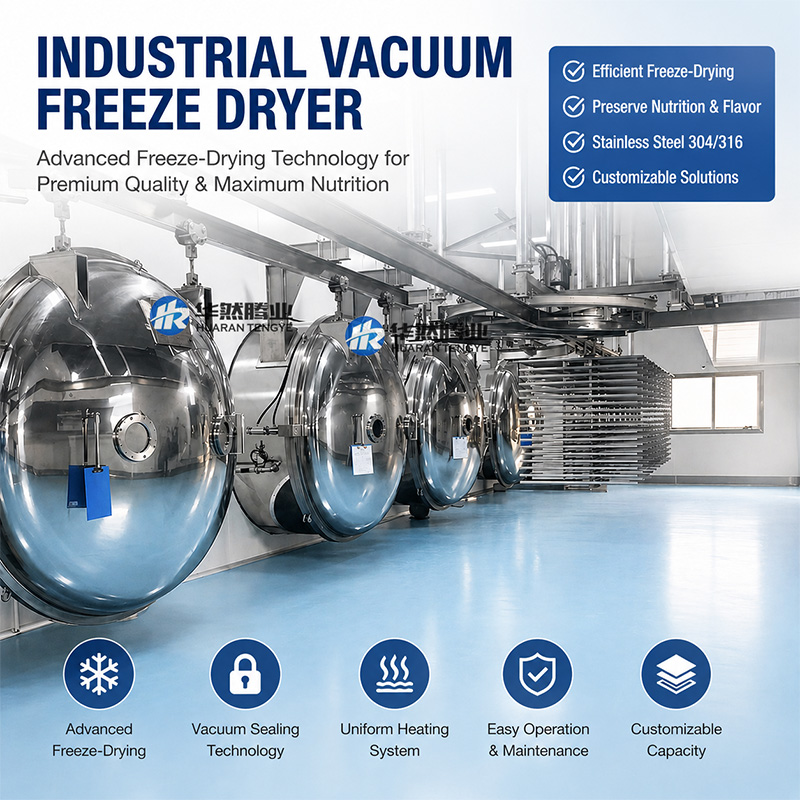
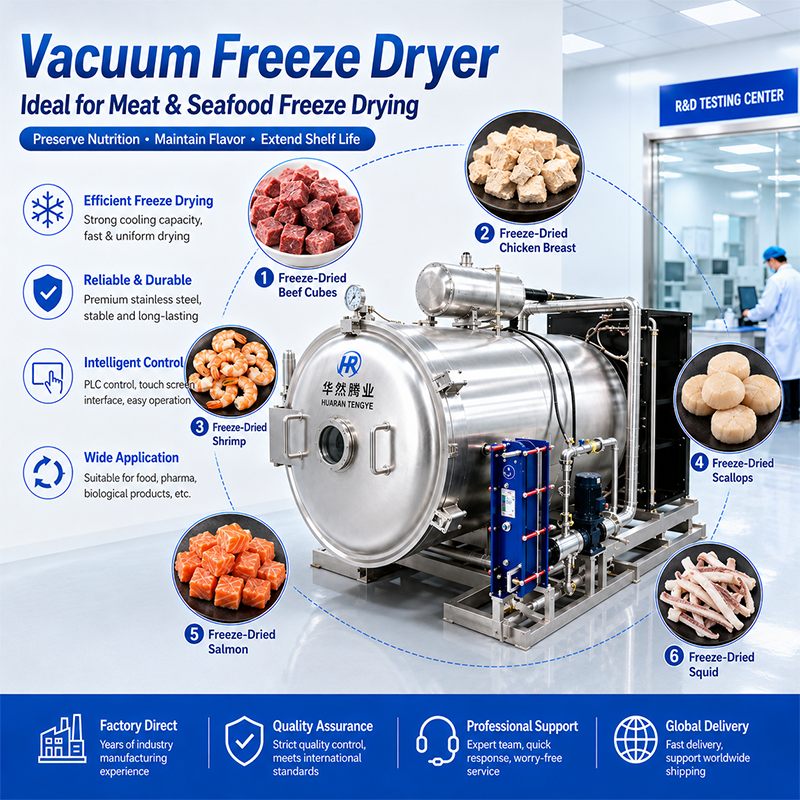
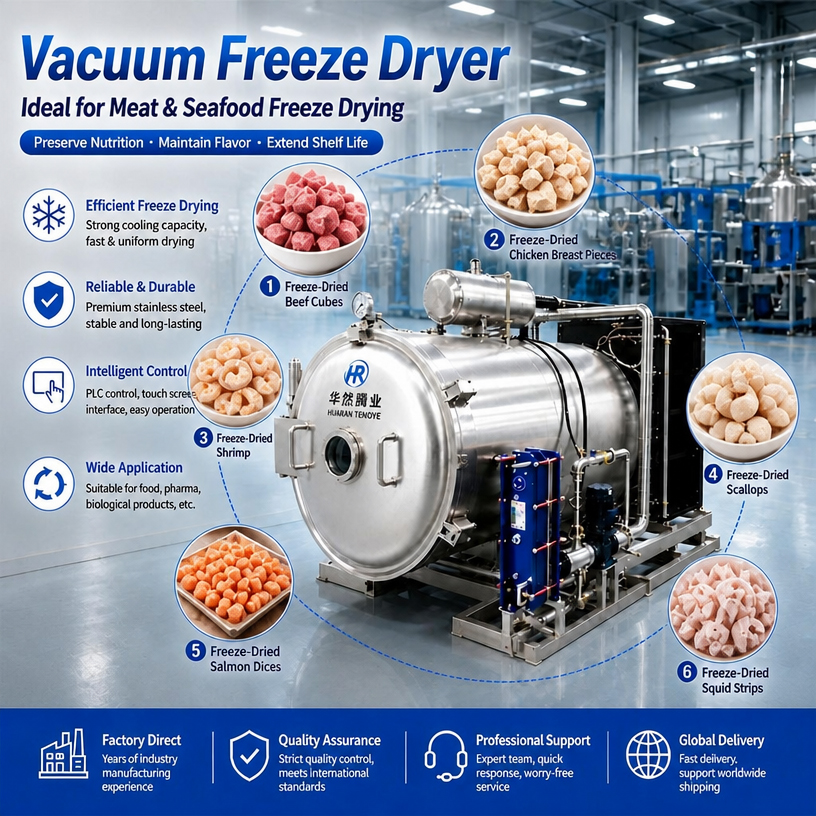
The FDG Series was specifically designed for large scale drying of raw pet food - it is not just a normal freezer that has been adapted.
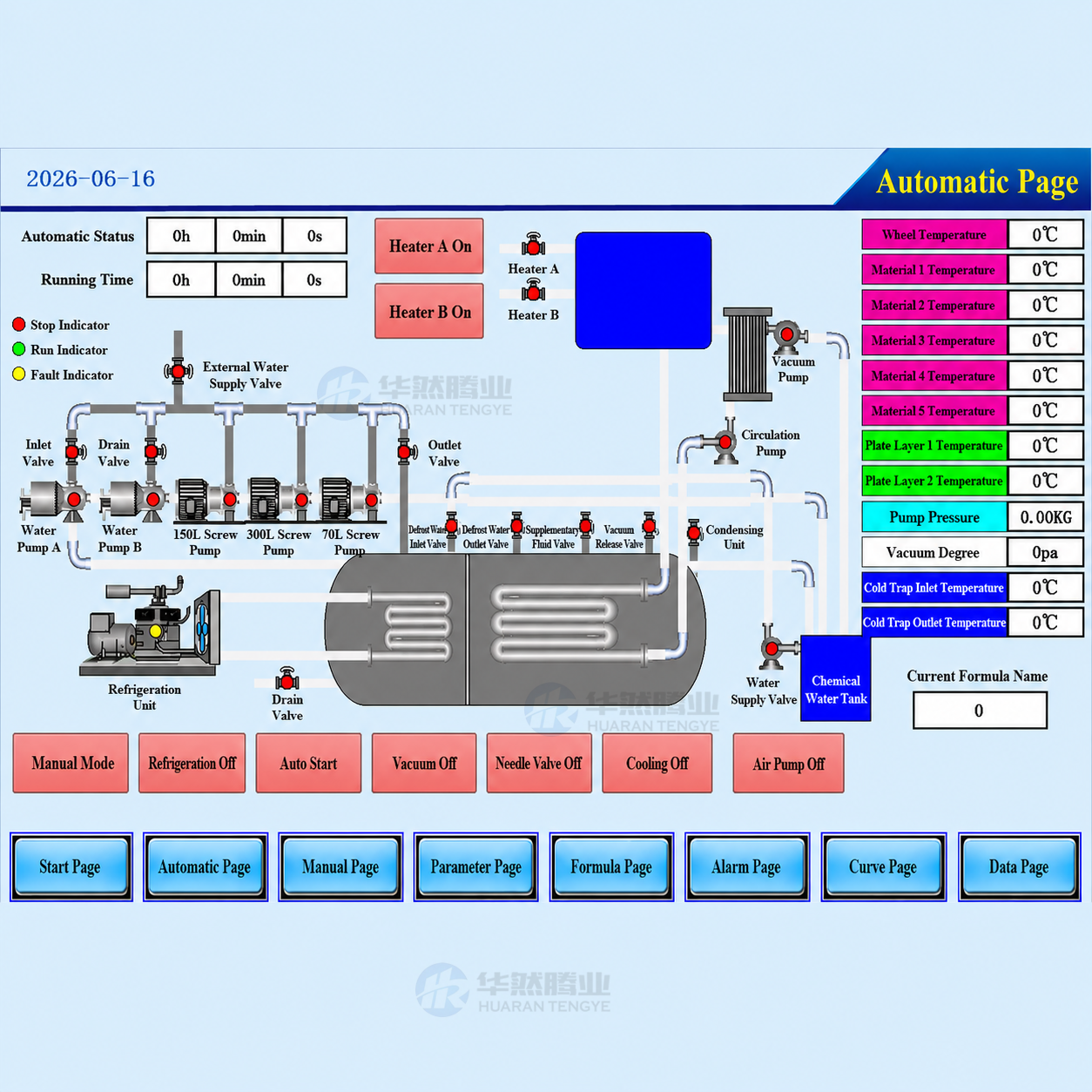
The PLC keeps more than 100 sets of parameters for one protein bite, single organ smoothie mixture and multi-ingredient patty, and these formulas and target moisture levels have been double-checked thoroughly.
This is how it works: you can switch the treat from chicken nuggets to beef liver very rapidly, and this is the product standard maintained consistently through every run that we produce. With this shelf-by-shelf independent PID control system, you are capable of thoroughly eradicating temperature gradients between different rows of shelves and at the same time, through vacuum modulation, an equal amount of vapor layer will be removed evenly from one end of the drying chamber up to the other end which is another means of preventing cracks and empty spots of fat and making all items in the batch identical. If the optimal settings are applied, then the outcomes are:
- The last product yield is: ≥95%
- The whole batch cycle of a normal patty lasts 20-30 hours
- The moisture level of the final stage is ≤3%
- Difference in moisture between the trays is ±0.5%
Switching from recipe to recipe and the small amount of labor required to operate the dryer significantly ease the labor force's workload, on the other hand, the dryers can be operated for a much longer daily period which otherwise would have been the case.
| Parameter | Specification | Industry Benchmark |
| Ultimate vacuum pressure | ≤5 Pa (achievable) | ≤10 Pa (typical industry range) |
| Operating vacuum range | 10–50 Pa (sublimation phase) | Standard range |
| Shelf temperature range | -45°C to +80°C | Standard |
| Cold trap temperature | ≤ -65°C | ≤ -60°C (standard) |
| Final product moisture | ≤3% (typical) | ≤5% for most food products |
| Freezing rate | 1–3°C/min (adjustable) | Controlled-rate freezing |
| Defrost method | Hot water circulation | Electric/hot gas/water (varies) |
Note:
| Model | Shelf Area (m²) | Batch Capacity (kg/cycle)* | Recommended Product Type |
| FDG-0.5 | 0.5 | 5 | R&D / pilot batches |
| FDG-1 | 1 | 10 | Small-batch pet treat |
| FDG-5 | 5 | 50 | Small-scale production |
| FDG-10 | 10 | 100 | Commercial production entry |
| FDG-20 | 20 | 200 | Mid-scale production |
| FDG-30 | 30 | 300 | Full-scale production |
| FDG-50 | 50 | 500 | Large-scale operation |
| FDG-75 | 75 | 750 | Industrial production |
| FDG-100 | 100 | 1,000 | High-volume production |
| FDG-125 | 125 | 1,250 | Industrial scale |
| FDG-150 | 150 | 1,500 | Large industrial line |
| FDG-200 | 200 | 2,000 | Maximum capacity |
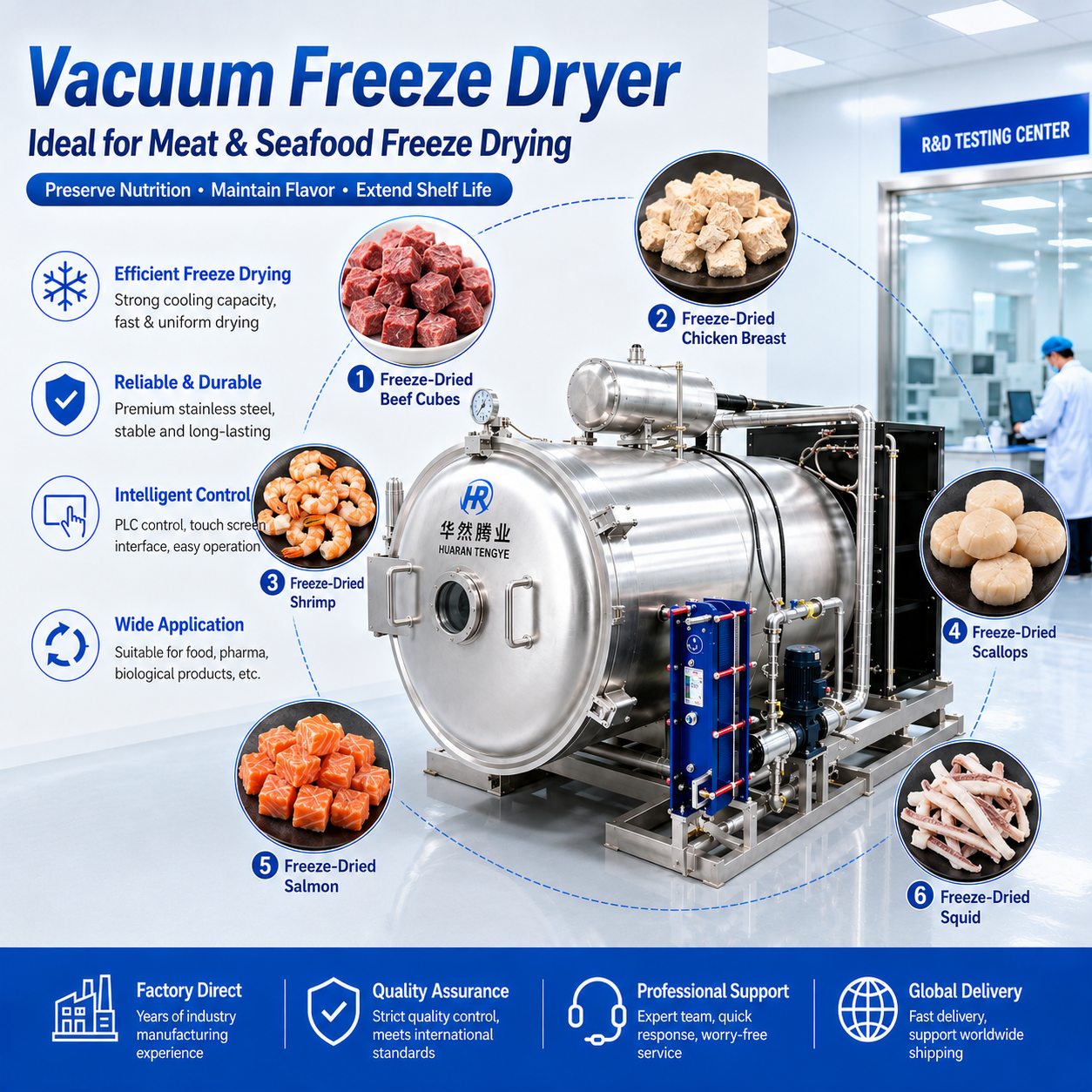
Compressor: Bitzer (made in Germany) or any equivalent open-type semi-hermetic
Refrigerant: R404A / R507; environmentally friendly alternatives are also available
Cooling method of refrigeration system: Water-cooled or air-cooled fans as chosen
Chamber manufacturing:
Detailed specification of the manufacturing material: Food-grade SUS 316L
Treatment inside: Highly reflective, super-smooth surface with mirror finish (Ra ≤ 0.8μm)
Operational Procedure:
The product is freeze-dried by gradually lowering the temperature. At first, it is cooled slowly to -35°C, then further frozen to a temperature of -45°C. The slow heating of the environment, on the other hand, helps the water molecules in the food to be in the same phase of ice and prevents the structure from breaking up. This usually takes 5-12 hours, depending on the food size. Main stage (sublimation) - The chamber vacuum is around 10 - 50 Pa, and the warm cabinet PID temperature is controlled from -35 to -5 °C at that time. Water ice that is trapped in muscles, organs, marrow, and other cells goes from solid to vapor phase straightaway, and that is captured by the condenser that works at subzero temperatures, i.e., -55 to -70°C. This drying step requires, on average, a waiting time of 16 to 32 hours depending on the patty's thickness, fat layers, and how the trays are loaded. Final (desorption) drying - The temperature of the shelves is increased gradually until the food is fully dry so that bone particles and highly water content lipid areas are nearly completely devoid of moisture. At that vacuum (less than 10 Pa), the shelf temperature will rise to about 40 ~55°C. Moisture requirements for pet food: ≤ 3%; for ambient retail formats, & lt; 2%. The time required would be approximately between 4 and 12 hours, which is kept short to prevent oxidation of fat and food degradation. Overall, the cycle duration would be from a minimum of 24 hours for small patties and nuggets up to 30–48 hours for big blocks and products with a number of different ingredients, possibly even longer depending on various factors.
Annual capacity: more than 120 units/year
Quality environmental management system certifications cover:
We also offer certifications such as ISO 9001 and ISO 14001Quality & Compliance
Production & Delivery
| Item | Detail |
| Routine build schedule | 45 working days post-order (FDG-0.5 to FDG-50 range) |
| High-tonnage models (FDG-75+) | 60–75 working days |
| Field installation and training | Available as a charged service (travel costs quoted separately) |
| Emergency replacement parts | 48-hour air dispatch |
Design Customization Options
Procurement Details
What kinds of products with your formulations? e. g. single protein bites, mixed patties, bone-on chunks, seasoned varieties
Preset batch target capacity in kg/cycle
SRC material description - e. g. piece - weight, bone on/off, fat content range
Facility support data - e. g. main voltage/phase, cooling water temperature, compressed air pressure
Needed certificates like (CE, ASME, GMP, HACCP, etc.)
We send quotation based primarily from the provided information within no more than 30 days of it issuance and might change before the final
confirmation.
FAQ
What's the delivery time?
45 working days for standard models (FDG-PF-0.5 to FDG-PF-50); 60–75 working days for large models (FDG-PF-75 and above). Shipping time not included.”