Product Introduction
Mango freeze-drying presents different challenges that you won't see while drying most other fruits. Due to the dense, fibrous nature of the fruit, it holds moisture rather unevenly — the outer layer dries quickly while the inner core near the stone (endocarp) remains wet. At the same time, this mango being naturally so sweet, that sweetness will reduce the freezing point of the solution inside. That may lead the tissue to become very soft and even collapse if the vacuum is not in perfect synchronization with heat input from above.
A mistake, for example, will result in pieces that are shrunken, darkened, or the center of the snack will end up chewy instead of being crunchy, with a minimum of 10–15% loss in the whole batch.
Results achieved are slices with brown-edged coloration, a structure that has been collapsed, an inconsistent texture of a bite, and a product that simply cannot be considered as a snack of premium quality.
It is the differences of the varieties and cutting methods that bring even more complications. Kent, Alphonso, and Tommy Atkins mangoes differ in their physical characteristics like fiber density, level of sweetness (sugar), and thickness of the pulp. In addition, there are different cuts, such as — 6 mm slices, 10 mm strips, and 15 mm dices — for which each combination requires a particular freezing curve together with a separate sublimation profile. Without saving such parameters, an operator will be running test batches of different fruits all day long, thus slowing down downstream packing, which has an impact on production time.
Our Solution
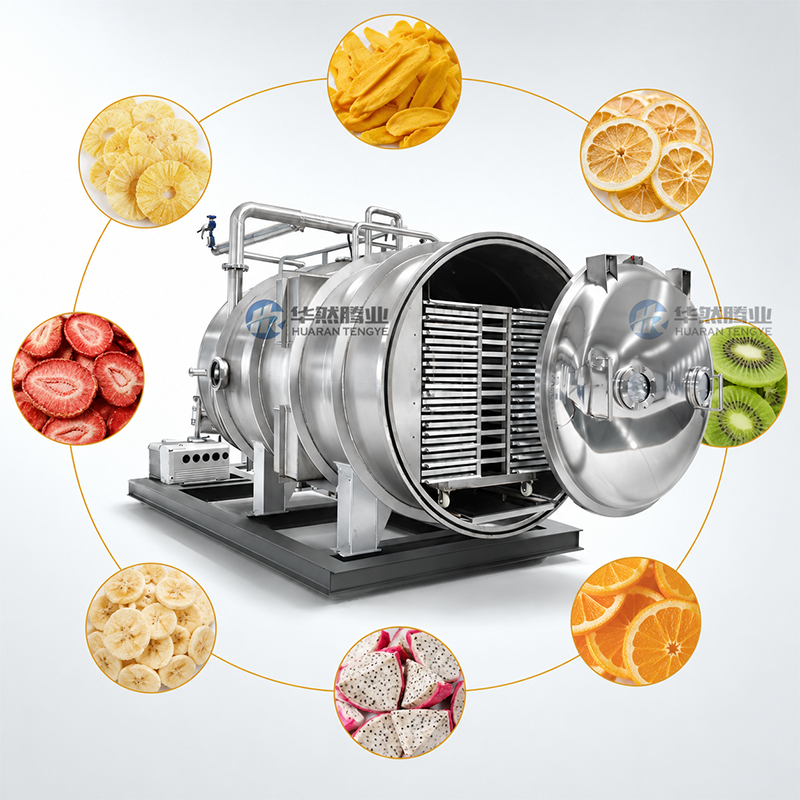
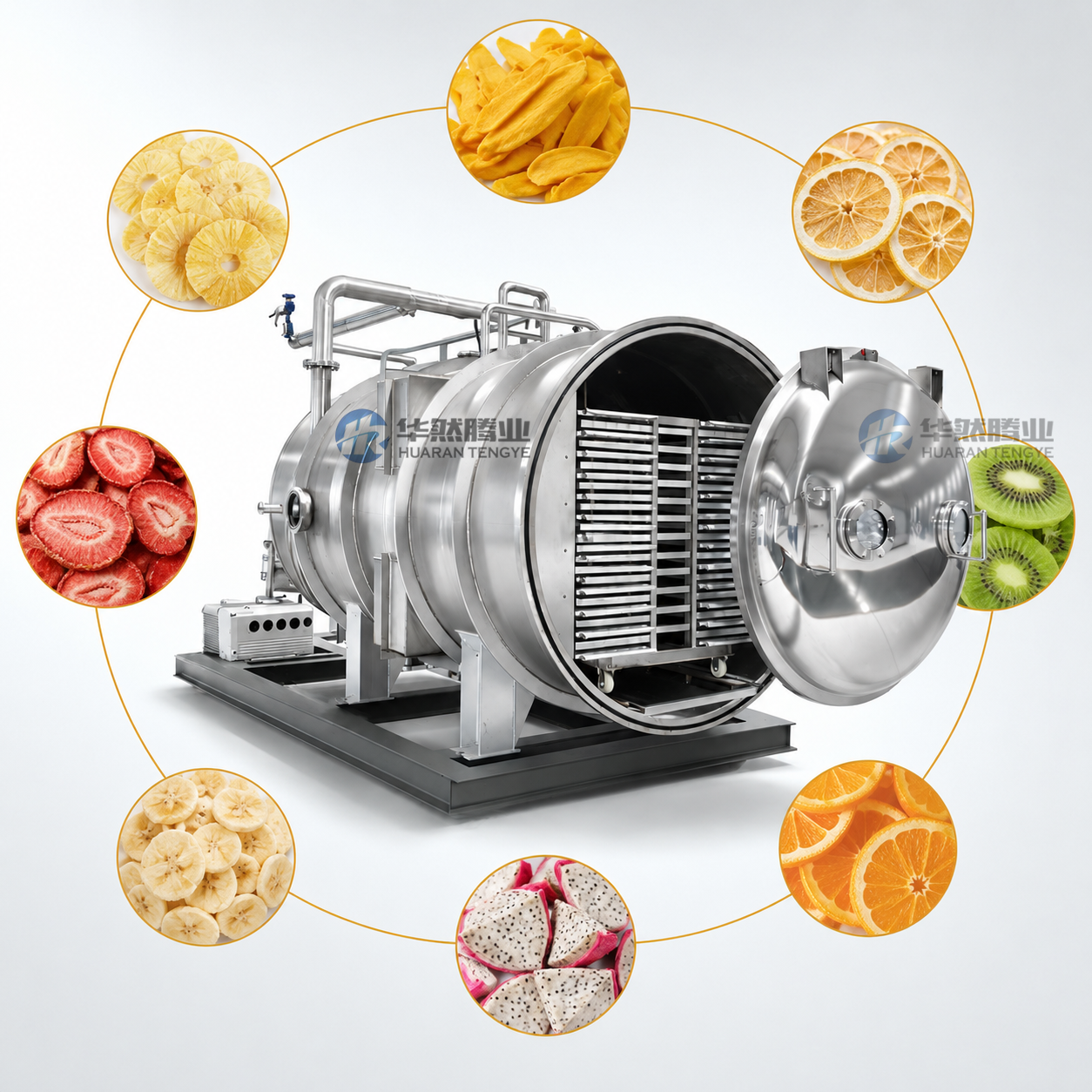
The FDG Series line has been developed specifically for lyophilizing mangoes consistently and in large volumes — no compromise, generic drying of fruits.
The PLC is capable of holding up to 100 mango drying programs for the fruit drying industry — these are the ones that have been tested in the field, covering all common mango varieties, cutting formats, as well as moisture targets.
Switching in only minutes from Kent slices to Alphonso dices would be possible - the end results would keep the very same golden color as well as crisp texture.
The control of independent PID regulation of shelf plates allows there to be no thermal drift between different trays, whereas stable vacuum modulation makes sure vapor extraction is even throughout the outer part of the piece, which dries fast, and the inner part, which is solid, thus preventing the skin from becoming dry and discolored, also from the skin being dark colored and from batch-wide quality fluctuation。
Here is how production will look with programs running and adjusted according to the situation:
Product yield after processing: ≥95%
The drying time per batch (using mango slices of 6 mm): 18 hours to 26 hours
The moisture level at the end phase will be below the water level of 3%
Moisture variation among trunks from one to another will be ±0.5%
Pretty quick changing between different kinds of mangoes and styles of cutting, plus the need for the operator to monitor the work only minimally, will lead to greater efficiency in daily work, lower cost with human labor, and better investment returns on equipment.
Core Technical Parameters
| Parameter | Specification | Industry Benchmark |
| Ultimate vacuum pressure | ≤5 Pa (achievable) | ≤10 Pa (typical industry range) |
| Operating vacuum range | 10–50 Pa (sublimation phase) | Standard range |
| Shelf temperature range | -45°C to +80°C | Standard |
| Cold trap temperature | ≤ -65°C | ≤ -60°C (standard) |
| Final product moisture | ≤3% (typical) | ≤5% for most food products |
| Freezing rate | 1–3°C/min (adjustable) | Controlled-rate freezing |
| Defrost method | Hot water circulation | Electric/hot gas/water (varies) |
All figures reflect design-phase engineering targets. Product output depends on factors such as biomass characteristics, pile arrangements, and operation performance.
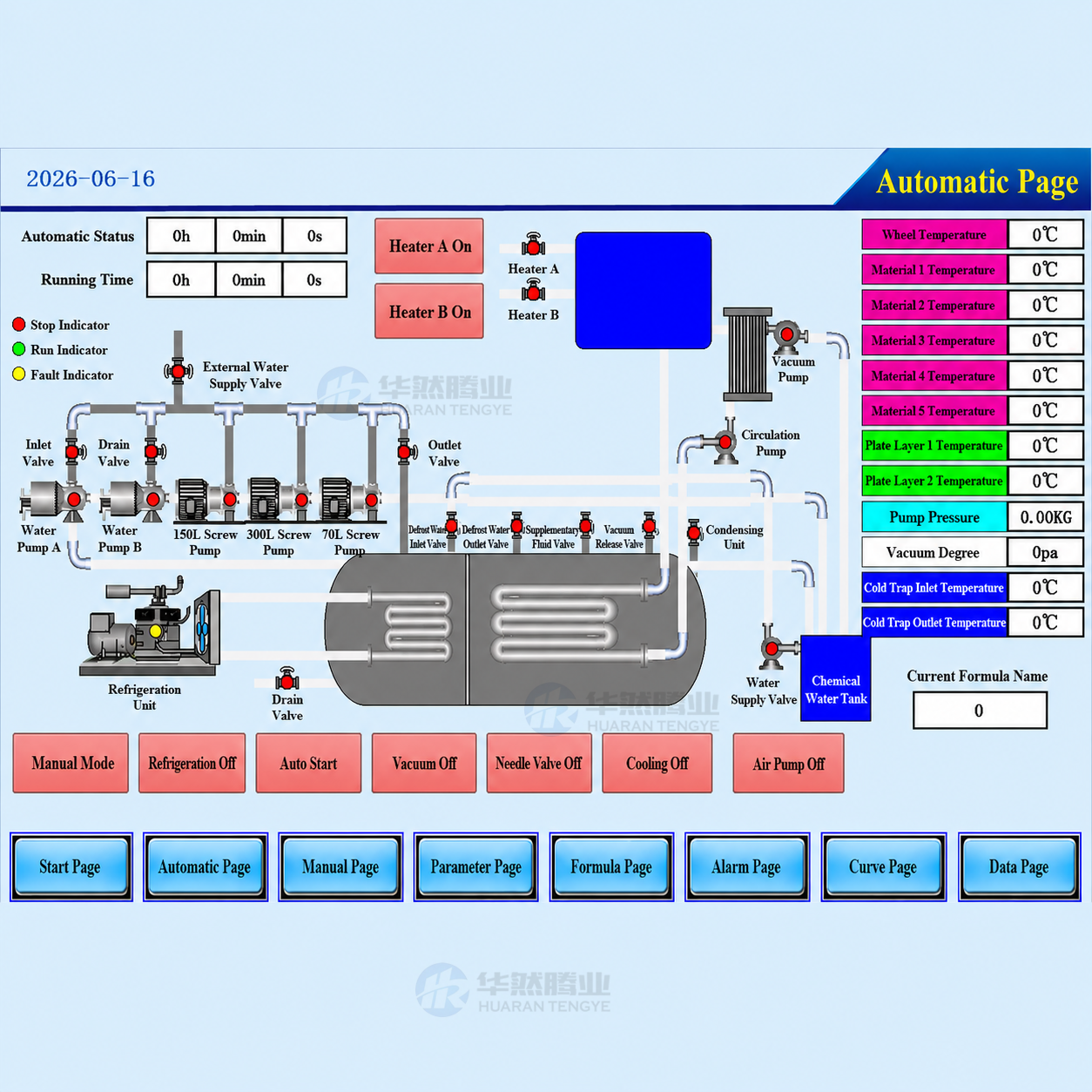
Model & Capacity Range
| Model | Shelf Area (m²) | Batch Capacity (kg/cycle)* | Recommended Product Type |
| FDG-0.5 | 0.5 | 5 | R&D / pilot batches |
| FDG-1 | 1 | 10 | Small-batch premium candy |
| FDG-5 | 5 | 50 | Small-scale production |
| FDG-10 | 10 | 100 | Commercial production entry |
| FDG-20 | 20 | 200 | Mid-scale production |
| FDG-30 | 30 | 300 | Full-scale production |
| FDG-50 | 50 | 500 | Large-scale operation |
| FDG-75 | 75 | 750 | Industrial production |
| FDG-100 | 100 | 1,000 | High-volume production |
| FDG-125 | 125 | 1,250 | Industrial scale |
| FDG-150 | 150 | 1,500 | Large industrial line |
| FDG-200 | 200 | 2,000 | Maximum capacity |
Capacity benchmarks take mango with high water content (~82-88%) as the basis for measurement. Batch weights realistically achievable are determined by the fiber density of the variety, the cut size, and the chamber packing method. Customized shelves and holding equipment are supplied for non-standard operations.
System Configuration
Vacuum subsystem:
The pump is a vacuum pump composed of an oil-free vacuum vane stage, followed by a Roots booster stage. It has a dual-level vacuum drawing method.
Options from manufacturers: Leybold / Edwards / premium domestic equivalent
At floor level, vacuum: ≤5 Pa (pressure units)
Leak point: ≤10 Pa·L/s (factory-confirmed)
Automation system platform:Main control unit: Siemens S7-1200 PLC, programmable logic controller, unit
Console: 10-inch flat display (Siemens / WEINVIEW), color screen
Run report record: Temperature, pressure, and state of cycle are saved continuously, -export file is either a USB drive or via LAN connection.
Run modes: Full recipe-triggered sequencing / manual operation
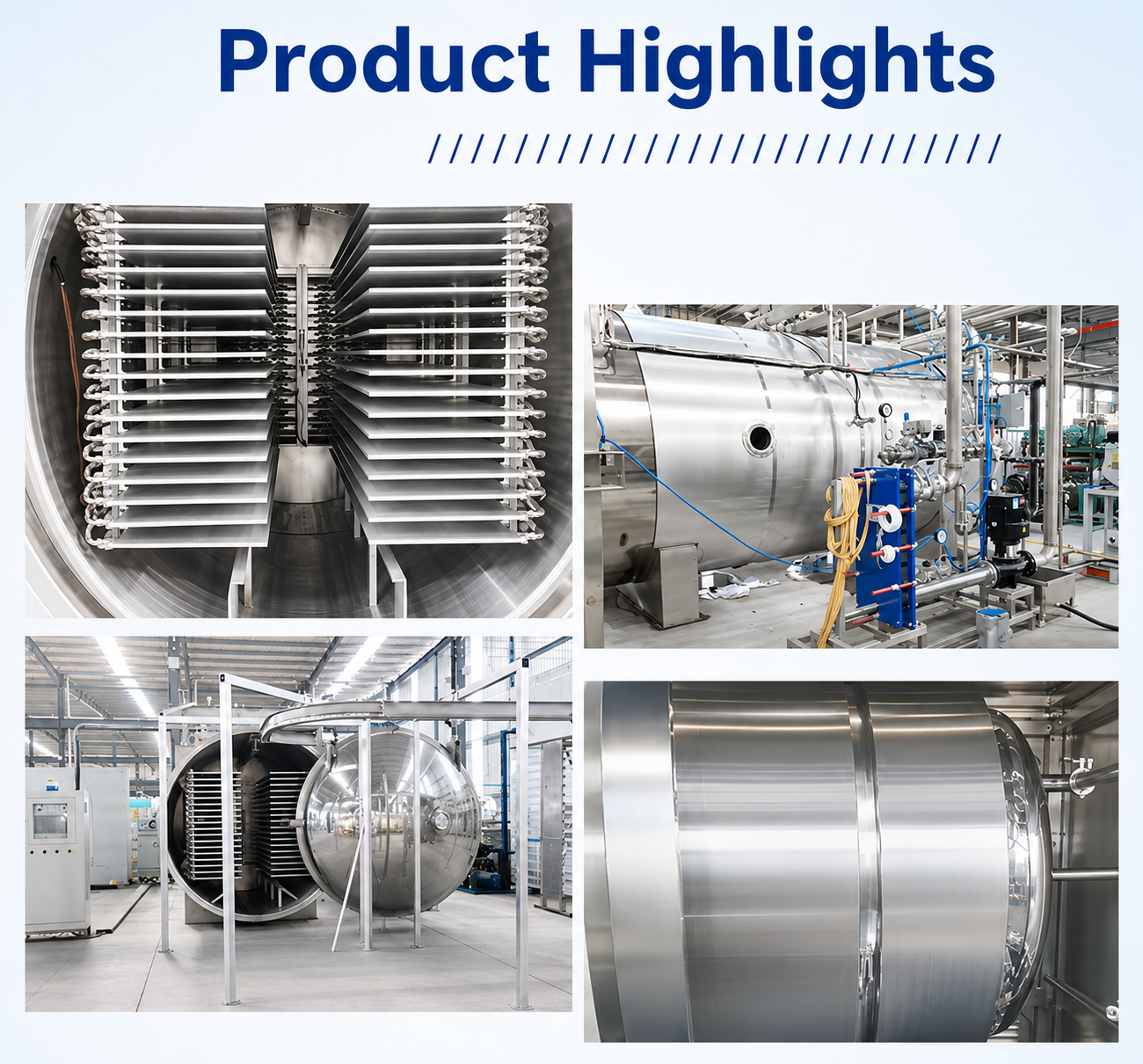
VACUUM CHAMBER:The stainless steel (SUS304) vessel is of food-grade quality.
Surface treatment of interior: The surface was mirror finished (Ra ≤0.8 μm) - it prevents caramelization from mango sugar, and cleaning becomes faster.
Covering: Brushed or with coating (as agreed)
Quiet Swinging Doors with a Silicone Vacuum-tight Seal
Operational Process
The FDG series mango freeze-drying goes through the following three phases:
①Freezing: Starting temperature for each phase varies, with an increase in the temperature from 0.5 to 1.5°C per minute until the mango reaches supercooling at approximately -38°C to -45°C. The temperature drops so slowly that micro-ice crystals are allowed to form that help preserve the mango cell structure from being compressed. A normal cycle is approximately between 3 and 8 hours, depending on the mango slice thickness, sugar content, and fill weight.
② Sublimation: The vacuum in the drying chamber is adjusted to be between 10 and 60 Pa; the shelves are then heated in a PID step to -5 °C in a staggered manner, one after another, when temperatures reach -38 °C. By sublimation, the ice water becomes vapor, which is then captured by the condenser running cool at -55 °C to -70 °C. Average operation time is 12 -22 hours for mango, depending on the fiber density and mango piece sizes.③ Desolation: First, the temperature is kept constant at 45-55 °C and then gradually increases. The vacuum degree is kept under10 Pa to remove the residual moisture in the sugar-dense mango matrix. Required moisture at the end is ≤3%. The average running time is 3-8 hours to prevent Maillard coloring and to maintain the color. The total drying time for sliced mango is normally about 18-28 hours. For diced mango and thicker cuts, it's 22-32hours.
About Us
Founded in 2006 (almost 20 years of experience)
Factory Area: 18,000 m²
Research & Development Team: 22 researchers and engineers
No. of Production Lines: 4
Production Capacities per Year: More than 200 units
Main Suppliers:
International companies like Bitzer,Edwards,Siemens,Emerson...
Certificates:
ISO 9001,ISO 14001,CE
Markets:
More than 40 countries around the world, such as the US,Germany,South Korea,etc.
Production & Delivery
| Item | Detail |
| Standard lead time | 45 working days from order confirmation (models up to FDG-50) |
| Large models (FDG-75+) | 45–60 working days |
| Installation & commissioning | On-site support available (additional cost, travel expenses separate) |
| Spare parts availability | 48-hour dispatch for critical components |
Design Customization Options
Types of engineering adaptations that are beneficial for mango processing are the following:
Extending storage space to accommodate different types of cutting and slicing, e.g., whole slices, wide cuts, and large-size cuts
Combined CIP water spraying to remove the sweet residue remaining in the sticky mango flesh after batch processing
Inert gas filling with nitrogen to retain the golden colour of the dried fruit and prevent it from becoming discoloured after dehumidifying.
Standard Food Hygienic GMP Finish that helps to maintain the safety of foods with the food safety hygienic finish. This is especially suitable for quality-controlled and certified fruit processing facilities that meet international standards.
Explosion-proof electrical systems mainly for the flavour-coating process with some amounts of carrier solvents.
Drilled trays that aid evaporation by allowing the mango gases to vent from the dense flesh.
Kindly get in touch with us if you are interested by giving the following detailed information to get the appropriate price quotation:
Mango specifications (mango type/cutting style/ thickness of the slices)
Production capacity (in kg, number of times per time)
Raw material size (peel-off/piece dimension, etc.)
Factory available utilities (voltage / current type, chilled water temperature, air supply for compressed air)
Our quote will remain only valid for 30 days if there is no change in the quote, and only after that, you receive it following your technical finalisation.
FAQ
A - Different mango varieties
Is it possible for the same machine to take advantage of mango varieties in processing?
Totally yes! Since the PLC system embedded in the equipment enables the storage of up to 100 different process recipes, a change from fibrous Kent slices to the soft Alphonso dice would take almost no time, with the confidence that each mango variety produced would be consistent and high quality.
B - Caramelisation
How is the sweet sucrose in the mango prevented from turning into caramel during the dehydration process?
Towards the end of the drying process, the shelf temperature is kept with PID in such a way that it does not reach the stage of caramelisation. Besides, the large sized cold trap makes efficient extraction of the moisture by allowing it to escape while the sugary rich tissues are still kept at lower temperature levels.
C - Delivery Schedule
NORMAL:FDG-0.5 to FDG-50: approx 30 working days. FDG-75 and above: 45 - 60 working days. The time for shipping has been excluded.