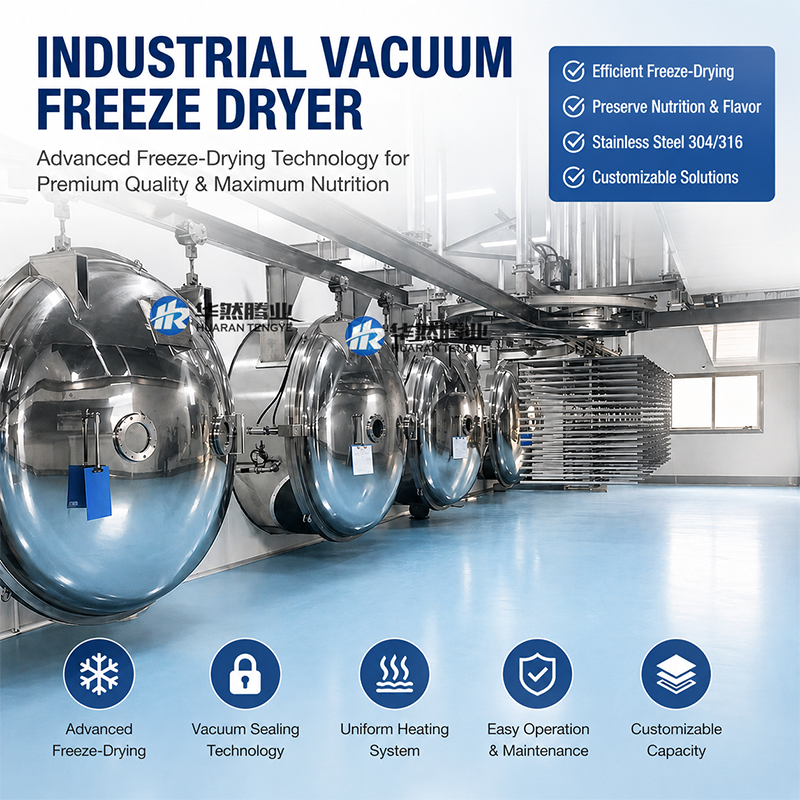
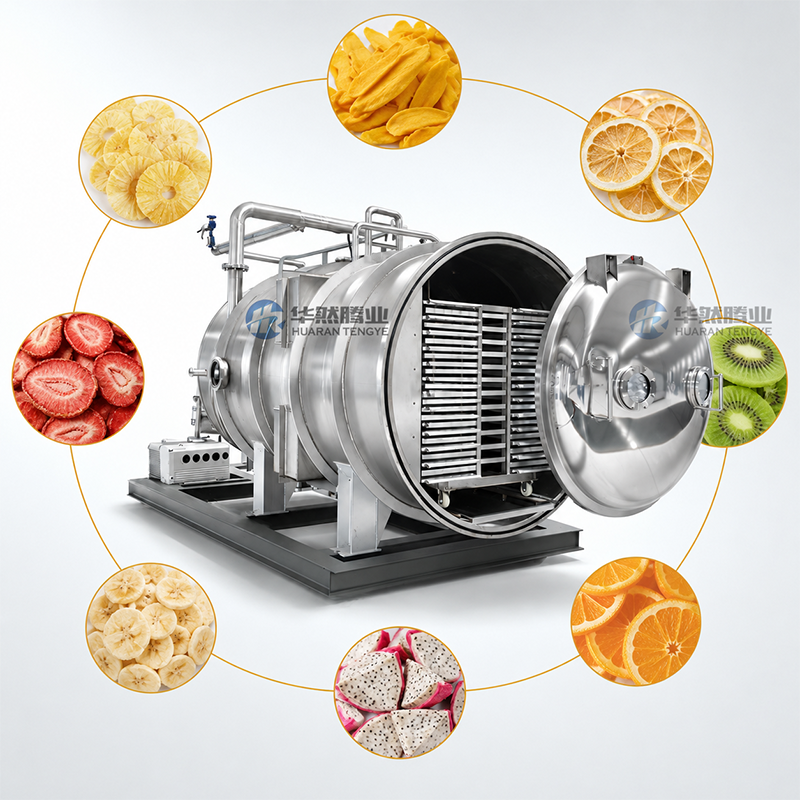
Our lyophilizers are backed and operated by only the manufacturers who have a GMP-certified facility and have 15+ patents.
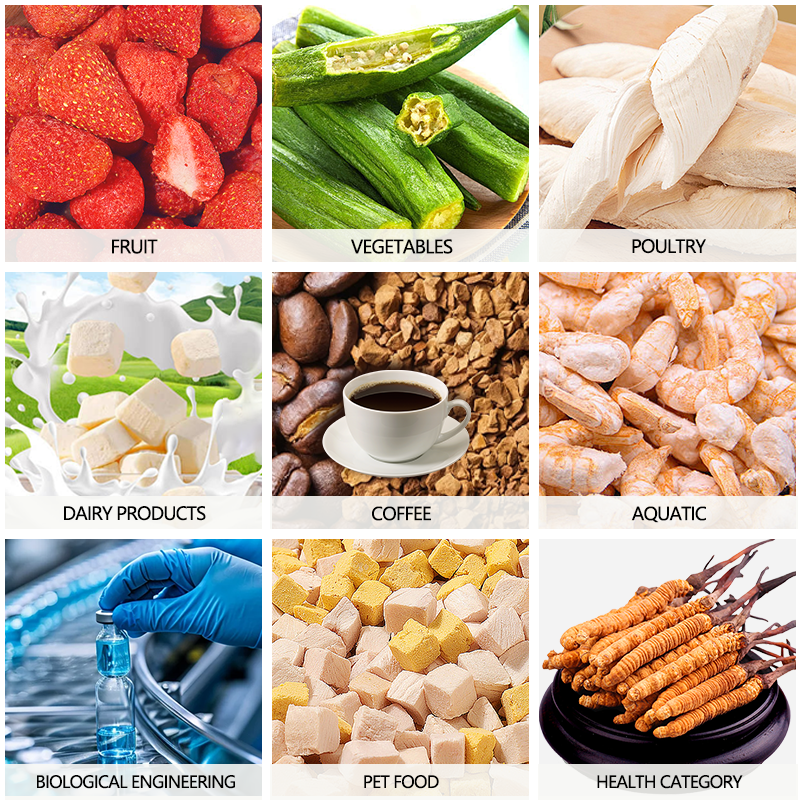
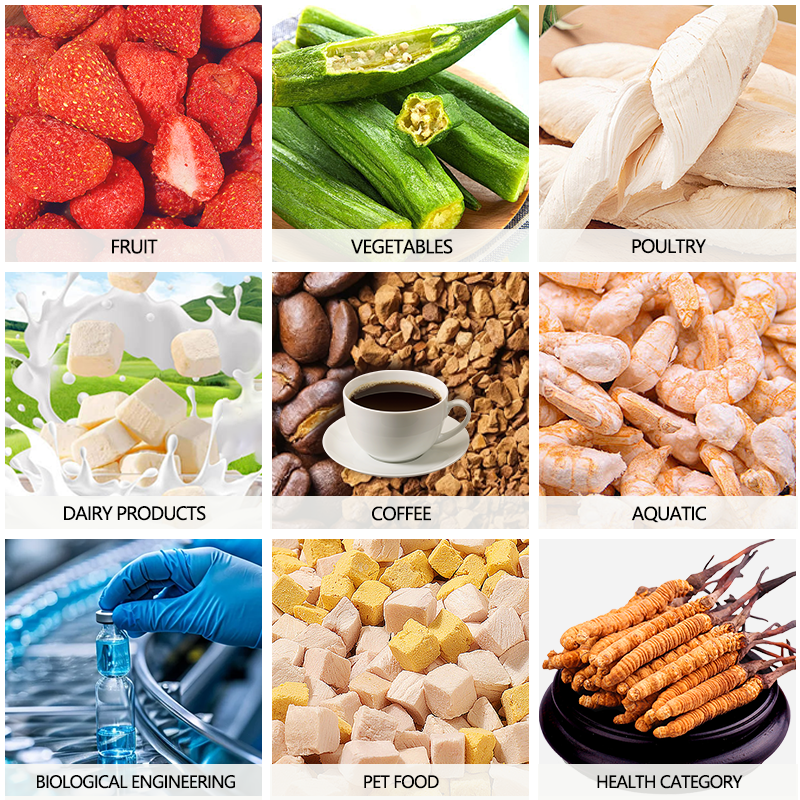
Our process allows us to keep more active living material of the probiotics, such as live bacteria, collagen, and herbal extracts, for longer times, so they are not easily spoiled and their qualities still remain very potent and effective.
This has been verified by over 200 nutraceutical brand clients all over the world.
Under heat stress conditions, oxidation of the components takes place, which in turn brings about major chemical changes in bioactive therapeutic pharmaceutical agents originally intended to be delivered whole to the system. The issue is that one cannot get stable product batches; their shelf life is reduced, and it is also very costly to reformulate products to a level that meets the expiry label content requirements. Formulations with a rich biodiversity make the overall task even more challenging. A common case is the production line switching between microencapsulated probiotics, liquid herb extracts, hydrolyzed collagen, and vitamin premixes - all products with different glass transition temperatures and drying endpoints. If the company does not have the stored parameters of the previous successful runs of the same product, the process engineers will lose several days per SKU doing trial runs. They will compress the available time slots for production and delay the product launch of the goods. Solution from us FDG-N Series freeze dryer is a production-scale validated freeze dryer with a design and testing done by us that fits very well the needs of freeze dried nutraceutical ingredients and dietary supplements, with the active ingredient being the most important feature. It is possible to input 100 freezing - drying recipes into the PLC. Some of the features that can be set here are: multi-stage freezing curves, primary drying targets with a vacuum control cascade logic, secondary drying endpoints either triggered by the pressure or the temperature check of the product. Changing from making probiotic powders to collagen powders in just a little time, while keeping the batch-to-batch similarity on a very high level With Multi-Zone Shelf temperature control that is achieved through PID temperature zoning (±0.5°C tray uniformity), you remove both hot and cold spots that cause meltback or partial drying. Accurate vacuum settings at a level that aligns with the material's eutectic point stop structural collapse and are, at the same time, very good at preventing the loss of porous cake structure needed, for example, to achieve rapid ingredient release and stability. The freeze dryer system is compliant with cGMP regulations and also the Data Integrity provisions set forth under Section 11 of Subpart B Title 21 CFR, such as, for example, audit trail, signature. Besides CIP/SIP features, the production environment of the freeze dryer is very easily set to meet the requirements of a quality audit for a contract manufacturing unit in record time. Outcomes usually achieved during production with well-tuned programs Active ingredient strength preservation - up to98%; The length of batch operation (probiotics): 24-36 hours; The level of moisture remains very low: 2% max; Degree of similarity between samples: 0.3% max. Getting rid of having to add excessive active ingredients, in addition, reducing the number of batches of products with quality issues that could be rejected would immediately improve profitability while maintaining your brand's prestige - delivering each one of your batches at 100% potencies.
Core Technical Parameters
Parameter
Specification
Industry Benchmark
Ultimate vacuum pressure
≤5 Pa (achievable)
≤10 Pa (typical industry range)
Operating vacuum range
10–50 Pa (sublimation phase)
Standard range
Shelf temperature range
-45°C to +80°C
Standard
Cold trap temperature
≤ -65°C
≤ -60°C (standard)
Final product moisture
≤3% (typical)
≤5% for most food products
Freezing rate
1–3°C/min (adjustable)
Controlled-rate freezing
Defrost method
Hot water circulation
Electric/hot gas/water (varies)
These performance figures represent the rated capacity. In practice, output depends greatly on feedstock characteristics, arrangement of trays, and the adjustment of cycle programs.
Model & Capacity Range
Model
Shelf Area (m²)
Batch Capacity (kg/cycle)*
Recommended Product Type
FDG-0.5
0.5
5
R&D / pilot batches
FDG-1
1
10
Small-batch nutraceutical powders
FDG-5
5
50
Small-scale production
FDG-10
10
100
Commercial production entry
FDG-20
20
200
Mid-scale production
FDG-30
30
300
Full-scale production
FDG-50
50
500
Large-scale operation
FDG-75
75
750
Industrial production
FDG-100
100
1,000
High-volume production
FDG-125
125
1,250
Industrial scale
FDG-150
150
1,500
Large industrial line
FDG-200
200
2,000
Maximum capacity
The system capacity is determined based on the processing of standard nutraceutical feedstocks, including probiotic cultures, hydrolyzed proteins, etc., at a typical level of initial moisture. The throughput is determined by characteristics of the active ingredient and by vial or tray fill density. Custom configurations are being offered to suit unusual shelf setups, lyobag loading procedures, or specific containment standards.
System Configuration
Refrigeration system:
Compressor: Semi-hermetic Bitzier (Germany) or similar unit, low-temperature rated for -55 °C / -75 °C; condenser Refrigerant: R404A/R507, environmental standard conforming, alternative - R449A, also available upon request Condenser: Water or air cooled - choose your heat rejection method when you order
Vacuum system:
Pump configuration: 2-stage rotary-vane (piston) + vane rotary booster (Roots Pump) with isolation valve The pump is supplied by Leybold, Edwards, or a first-tier Chinese certified manufacturer as an equivalent option. Minimum Vacuum: ≤5 Pa Leak Rate: ≤5 Pa·L/s (Leak Detection by a Pressure Rise Test) Support for cleaning and steaming procedures by providing extra ports for clean-in-place and steam-in-place (CIP/SIP), which are additional ports that allow validated cleaning between campaigns
Control system:
PLC: Siemens S7-1200 / S7-1500 series PLCs
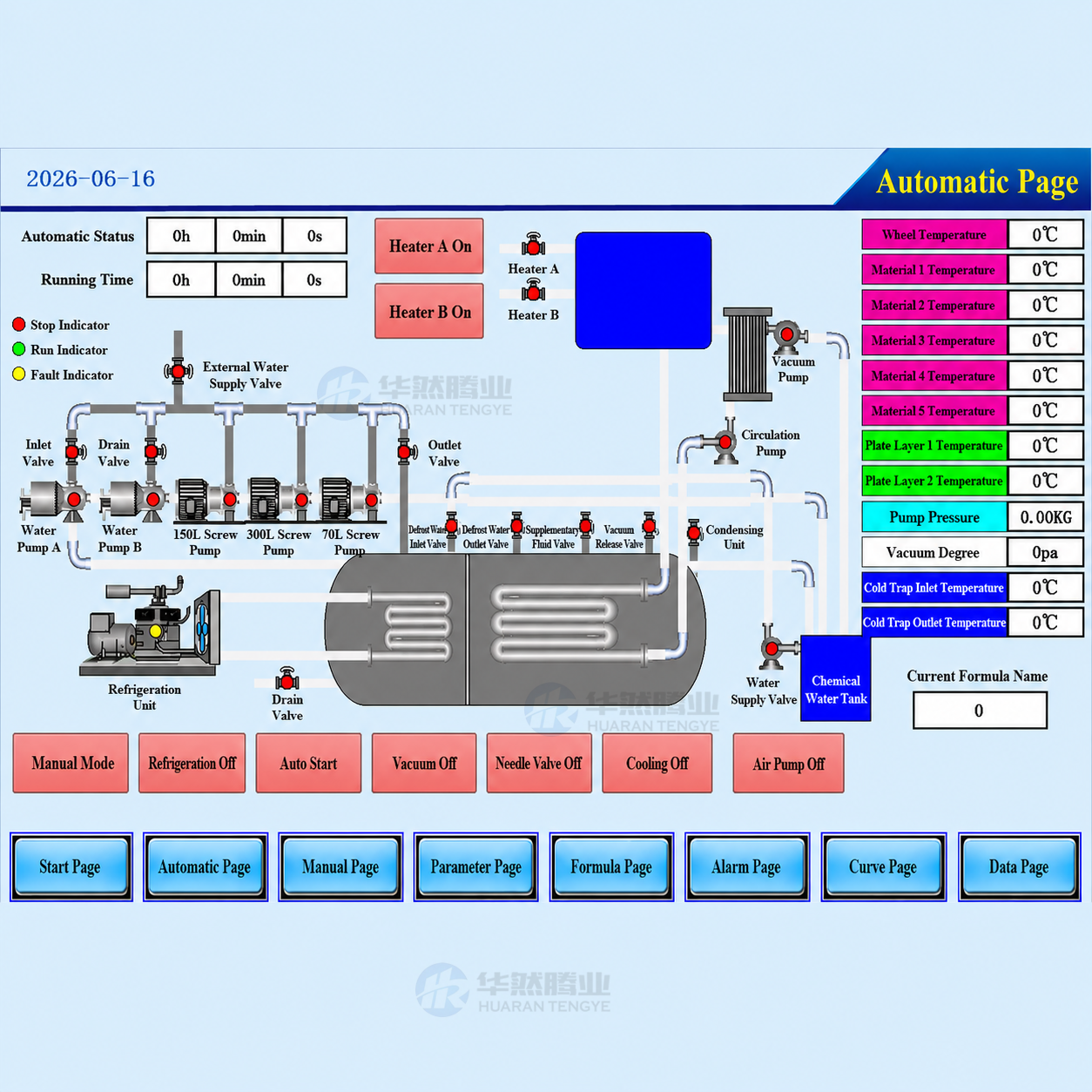
HMI: Touch panel larger than 10-inch (such as Siemens or WEINVIEW)
Data management: The system stores secure logs of temperature, pressure, and time data along with curves; it supports data export via USB, Ethernet, or SCADA integration
Recipe control: It enables a complete cycle execution with manual overriding as well. A user can store 100 different formulae for the product
Compliance-ready: Optional 21 CFR Part 11 data integrity (audit trail, electronic signatures)
Chamber construction:
Material: pharmaceutical quality SUS316L stainless steel Interior finish: mirror polish, Ra ≤ 0.6 μm Exterior finish: brased or painted as required Door: swing-open, hinged with a vacuum lock, mechanically locked, and a medical-grade silicone sealing gasket Cleanroom compatibility : Flush-wall or through-wall mounting configurations are options.
Operational Process
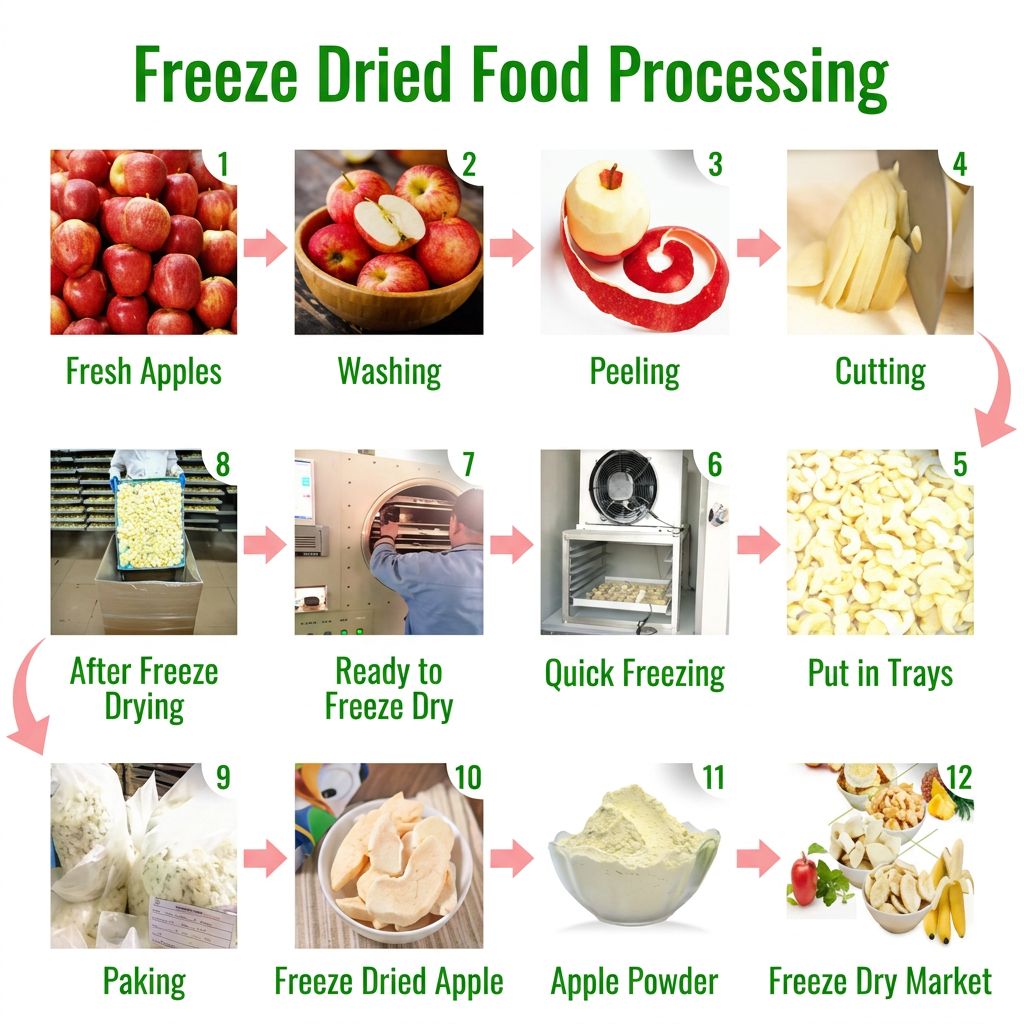
The FDG-N range carries out a fully automated freeze-drying method in three steps: ① Freezing: Sample is kept at a lower temperature than its glass transition or eutectic temperature, with the freezing ramp (0.5–2°C/min) being programmable in order to maintain cell survival and protein integrity. Freeze shelf temperature: -45°C to -55°C. Time: 3–8 hours, depending on the fill and formulation.
② Primary drying (sublimation): Vacuum level 5–30 Pa under a cascade vacuum system Chamber. Freeze shelf temperature is slowly increased from about -40°C toward -5°C, which means that ice will sublime, while keeping the product's collapse temperature as a safe limit. Water vapour is condensed and collected on the cold finger, which is at -65°C to -75°C, thus preventing recondensation. Time: 12–30 hours, depending on product form.
③ Secondary drying (desorption):
Here, freeze shelf temperature is slowly increased to 25–40°C under an extremely low vacuum so that moisture that has desorbed can escape from the surface of the cake matrix without any thermal denaturation of the biological products. The endpoint of the process will be either when the pressure decrease ceases or the product temperature becomes stable. The goal is to obtain <2% water as residue. Approximately 3–10 hours.
Total freeze-drying time (a standard process) is 24–48 hours for probiotic and enzyme preparations and 18–36 hours for hydrolyzed protein and peptide powders.
ABOUT US
Year established: 2006 (19 years of experience)
Factory area: 18,000 m²
R&D team: 22 engineers
Production lines: 4 assembly lines
Annual production: over 120 units / year
Quality and environmental management certifications: ISO 9001, ISO 14001; CE, American Society of Mechanical Engineers standard (ASME) certifications
Important suppliers: Bitzer, Leybold/Edwards, Siemens, Emerson
We have export markets in more than 40 countries, e.g., the USA, Germany, Japan, South Korea, Australia, Brazil
The number of units exported since 2010: more than 800
Quality & Compliance
Boat/Ship compliance: Depending on the end market's requirements, we can provide compliance with either ASME Section VIII, PED, or GB150 standards.
Please notify us at the time of ordering
We can supply the chamber with a CE marking (on request) in addition to being in compliance with GB standards; a hazard area certificate is also possible for the solvent-based formulation upon requirement. Production quality assurance: All products are first pressure tested, leak checked by the use of helium, and vacuum chamber tested prior to delivery.Customer service: Main parts come with a 12-month warranty calculated from the time of installation; on demand, we are also able to extend your coverage with regard to the compressor, vacuum pump, and PLC services.Post-delivery verification: Factory Acceptance Test (FAT) conducted at our facility before crating.
Production & Delivery
Item
Detail
Standard lead time
45 working days from order confirmation (models up to FDG-50)
Large models (FDG-75+)
60–75 working days
Installation & commissioning
On-site support available (additional cost, travel expenses separate)
Spare parts availability
48-hour dispatch for critical components
Factory design customization options Factory-engineered alterations include, for instance:
• adjustable custom shelf space for lyobags, bulk trays, and deep vials
• Clean-in-Place/Sterilize-in-Place (CIP/SIP) system suitable for multi-product contract manufacturing
•nitrogen overlay system that protects sensitive bioactives by keeping oxygen exposure to a minimum
•Good Manufacturing Practice(GMP)-compliant finish(interior 316L, flush-wall mounting, full documentation package)
• A loading interface for isolators used in aseptic processing. Procurement information Changes made at the factory level:Please send us the following details in order to issue a formal quote: Active ingredient type and usual formulation Batch size in kg or vials per cycle Main packaging(vial size,tray dimensions,bulk container) Utility data at the site(power supply,cooling water temperature, compressed air,cleanroom class) Certifications required(21 CFR Part 11,ASME,CE,cGMP,etc.)Our offers are valid for 30 days and are subject to an engineering assessment.
FAQ
1. What is our normal lead time? We generally deliver pilot-scale modules (FDG/N 0.5 to FDG/N 20) in four days; it takes 8-10 days in the case of industrial-scale variants. Freight is excluded from the lead time.
2. Do you give installation assistance and calibration? We do. We provide on-site installation of the equipment, execution of the IQ/OQ document, performing of trial batches with your material, and training to the personnel. 3. Kindly list the documents that will be issued DQ/IQ/OQ documents, materials specs (SUS316L, gaskets, lubricating oils), vessel pressure certs, electrical drawings, PLC copy, and operation guidelines, all in English. 4. Does the unit have the capacity to run solvent formulas? Possible. There are explosion prevention systems installed, the whole electric circuitry is explosion-proof, and the option of an inert atmosphere, as well as a solvent condenser for alcohol or ketones, is provided. 5. What is your after-sales support offering? 12 months warranty from the handing over of the project. If a spare part is classified as an emergency, we will deliver it to you within 2 days. Extended warranty, annual service, and remote diagnostic contracts are available.