| Parameter | Specification | Industry Benchmark |
| Ultimate vacuum pressure | ≤5 Pa (achievable) | ≤10 Pa (typical industry range) |
| Operating vacuum range | 10–50 Pa (sublimation phase) | Standard range |
| Shelf temperature range | -45°C to +80°C | Standard |
| Cold trap temperature | ≤ -65°C | ≤ -60°C (standard) |
| Final product moisture | ≤3% (typical) | ≤5% for most food products |
| Freezing rate | 1–3°C/min (adjustable) | Controlled-rate freezing |
| Defrost method | Hot water circulation | Electric/hot gas/water (varies) |
Note:
The data presented is based on factory design baselines. The possible results of the processes will be influenced by the use of raw materials formulation, loading patterns, and the level of operational discipline being maintained on a day-to-day basis.
| Model | Shelf Area (m²) | Batch Capacity (kg/cycle)* | Recommended Product Type |
| FDG-0.5 | 0.5 | 5 | R&D / pilot batches |
| FDG-1 | 1 | 10 | Small-batch premium candy |
| FDG-5 | 5 | 50 | Small-scale production |
| FDG-10 | 10 | 100 | Commercial production entry |
| FDG-20 | 20 | 200 | Mid-scale production |
| FDG-30 | 30 | 300 | Full-scale production |
| FDG-50 | 50 | 500 | Large-scale operation |
| FDG-75 | 75 | 750 | Industrial production |
| FDG-100 | 100 | 1,000 | High-volume production |
| FDG-125 | 125 | 1,250 | Industrial scale |
| FDG-150 | 150 | 1,500 | Large industrial line |
| FDG-200 | 200 | 2,000 | Maximum capacity |
Capacity benchmarks assume that raw okra is being fed into the processor with 88-92% moisture.
Depending on pod quality, processing method, and the way the product is loaded, the throughput actually can fluctuate. Custom-designed shelf systems and tools for loading, which are made to satisfy particular customer requirements, are provided.
Compressor: Bitzer from Germany or the semi-hermetic open-type compressor. They are of the same quality. Working fluid: R404A / R507 (a green alternative). Heat rejection: Water or forced air cooling. You can state your choice at the moment of delivery
Vacuum System:
Vacuum pump combination: Oil-sealed rotary vane vacuum pumps with Roots boosters, two step vacuum removal Pump manufacturer: Leybold / Edwards / top Chinese alternativeMax vacuum: ≤5PaLeakage rate (vacuum Integrity): ≤10 Pa·L/s, factory certified
Control system:
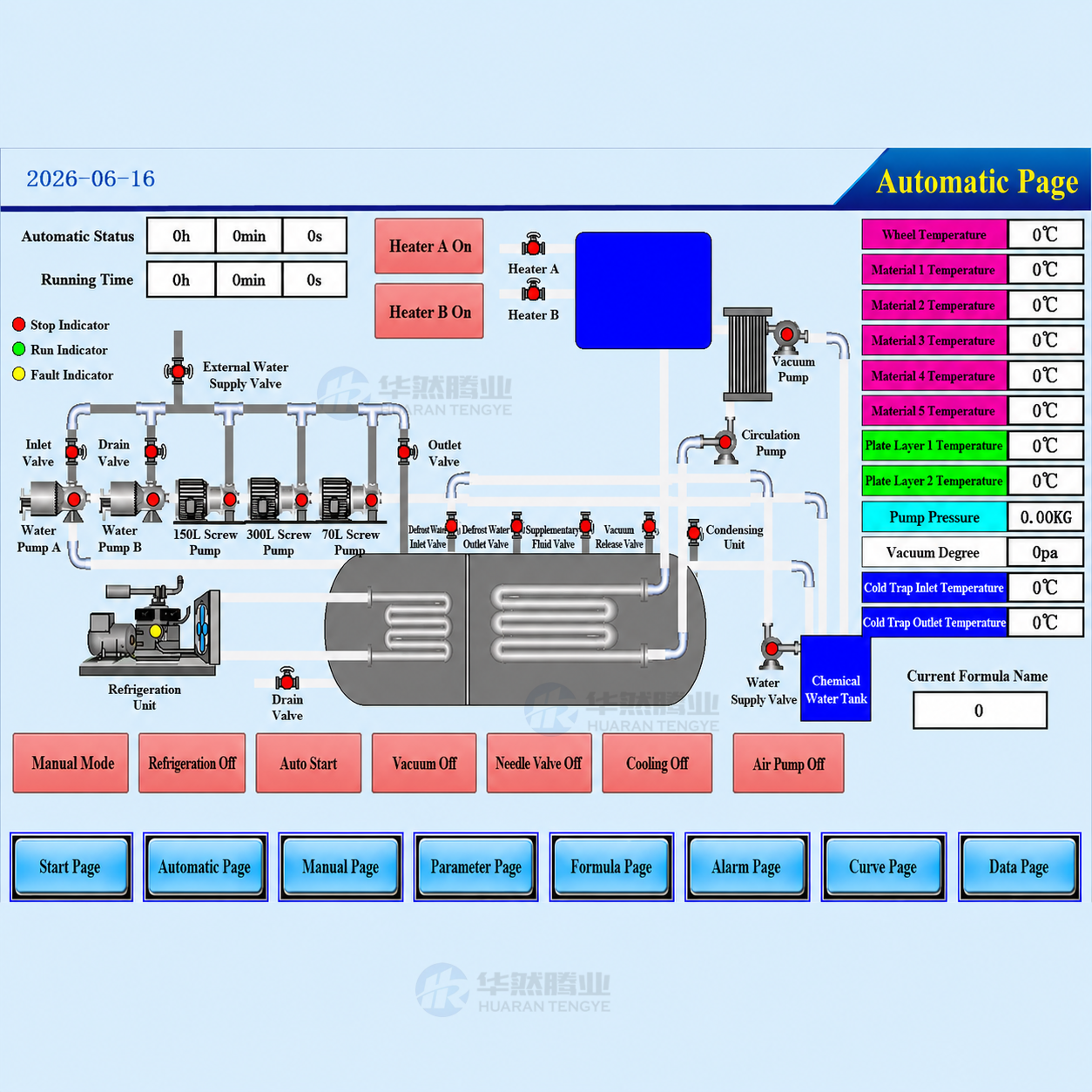
Control unit type: Siemens S7-300 PLC-based (replacing the S7-1200)Graphics panel: Touch screen color 10” (Siemens) / WEINVIEW /Data logging: Real-time drawing of processed temperature curve, vacuum level and dwell time, which can be backed up via USB or networkOperation modes:Manual andfully automatic (based on recipes)
Pressure vessels:
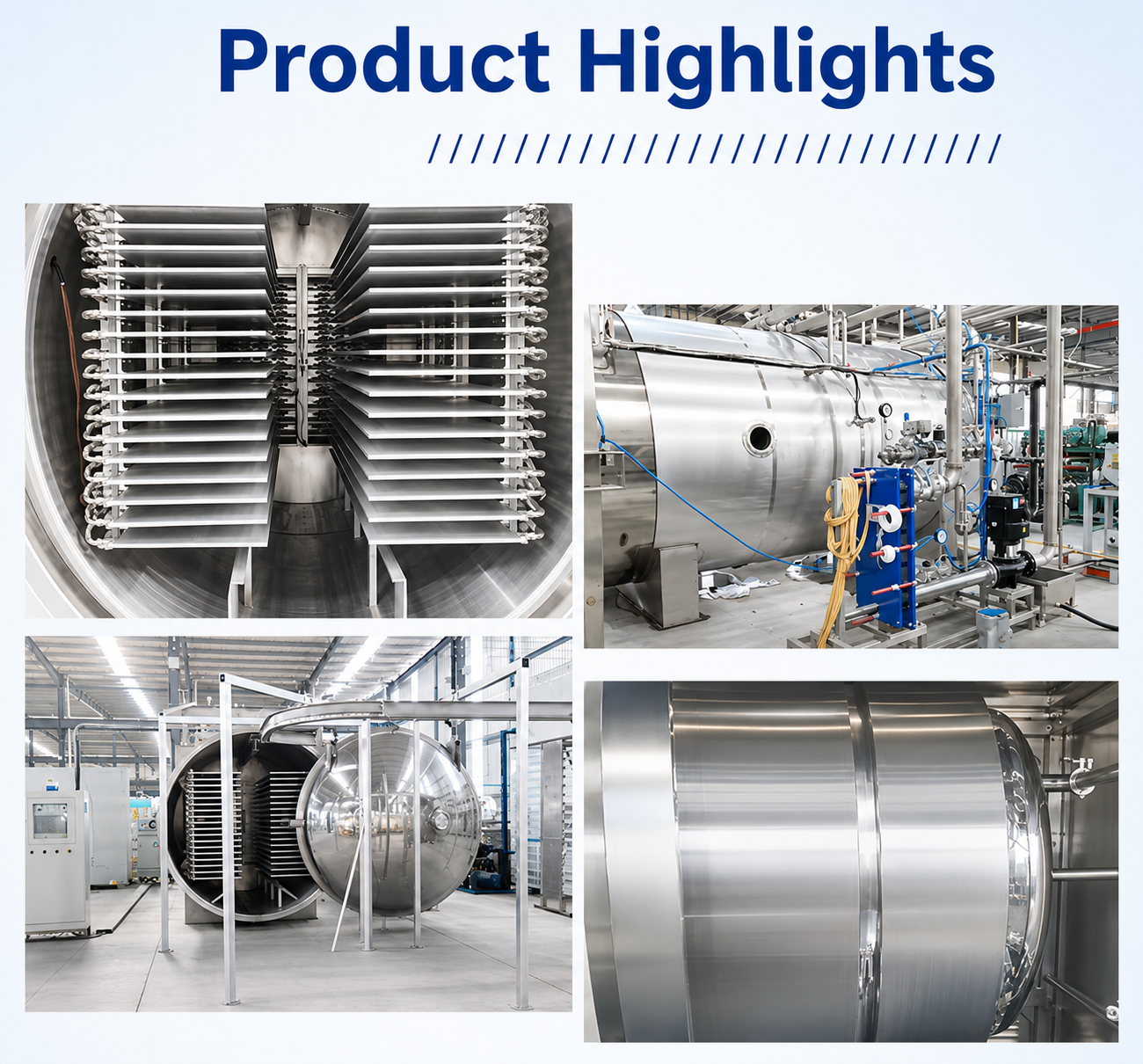
Material:Food grade stainless steel (FDA approved), SUS 304Inside surface: mirrorpolishes (Ra ≤0.8 μm) - this helps to easily clean the mucilage of okra outside the treatment:Brushed or powder-coated (both finishes are optional)Opening mechanism:A vacuum silicone gasket that is also a seal on the side of the door.
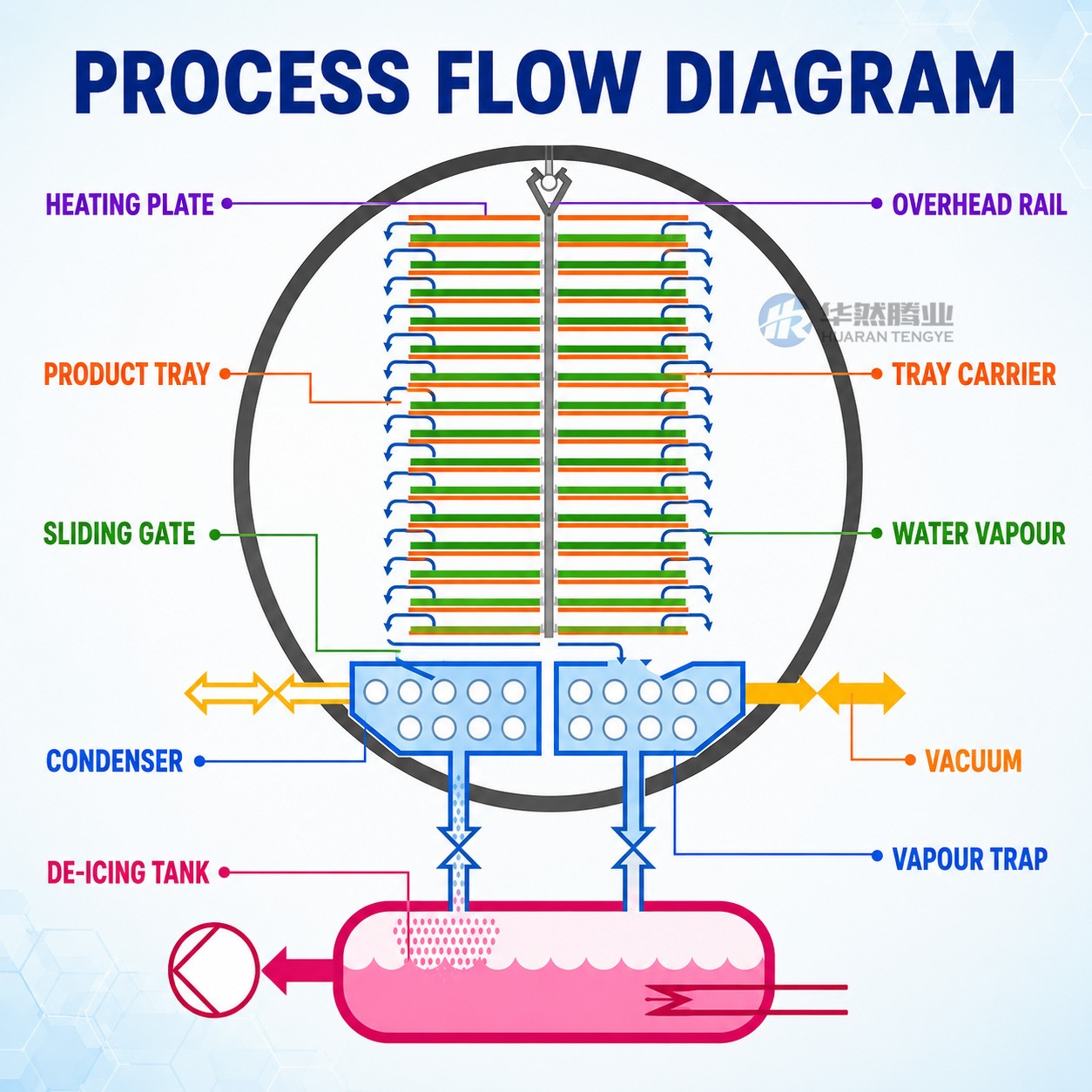
The FDG series takes a multi-point approach to drying (a freezing, drying, and a reheating process):
①Freezing (Okra-specific): The whole pods should be frozen for a longer time period (4-8 hours) to ensure that the empty seed cavity is completely frozen to its core temperature of -40°C to -45°C.
. Sliced rounds will freeze sooner (2–4 hours). Ramp rate: 0.5–1°C/min for the whole pods (this rate prevents internal ice crystal damage), 1–2°C/min for slices.| Item | Detail |
| Standard lead time | 45 working days from order confirmation (models up to FDG-50) |
| Large models (FDG-75+) | 60–75 working days |
| Installation & commissioning | On-site support available (additional cost, travel expenses separate) |
| Spare parts availability | 48-hour dispatch for critical components |
Design Customization Options
Engineering adaptations available for okra processing:
Increased shelf clearance for whole-pod loading and bulk sliced configurations
Integrated CIP washdown system for mucilage residue removal between batches
Nitrogen atmosphere backfill to maintain color and prevent oxidation
GMP hygienic finish with full documentation ready for export-grade vegetable processing lines
Hazardous-area electrical classification suitable for flavor-seasoning or coating operations using solvents
Varying tray perforation patterns enabling optimal vapor extraction from hollow pods
Procurement Information
If a detailed proposal is what you desire, then kindly provide the following:
Okra product specification (whole pod, sliced rounds, halves, cut thickness, cultivar)
Daily batch throughput (kg per processing session)
Raw material size (pod length, diameter range, whole or sectioned)
Facility information (power supply details - voltage & phase, cooling water inlet temperature, compressed air availability)
Standards that the machines have to meet (CE, ASME, GMP, HACCP, etc.)
Your proposals will remain valid for a period of 30 days, subject to a final technical inspection by the engineering department.
Mucilage pre-filter system: An optional inline filter to be placed between the material input and the condenser to capture any mucilage coming out of the okra - this will prevent the vacuum line from becoming fouled and also extend the life of the pumps between each batch. It is advised specially if one is going to process large quantities of whole-pod.
FAQ
1. How does this machine deal with okra's sticky mucilage while it is being processed? The SUS304 mirror-polished interior (Ra ≤0.8 μm) does not provide a lot of area for the mucilage to stick to, whereas the optionally available integrated CIP system carries out the wash down in between batch runs - it gets the shelf, chamber walls, and drain channels clear of the leftover mucilage and eliminates your need for manual scrubbing.
2. Does the green color of the okra remain the same even after the freeze-drying process? Indeed. By strictly adhering to the right temperature during the freeze-drying phase, there is a minimum chance for chlorophyll loss, and the optional nitrogen atmosphere filler displaces oxygen from the room before opening is done - therefore you get a nice green-packed product that can be stored on the shelf for quite some time.
3. What if a machine that allows for processing both whole and sliced pieces at a time is not available? It is definitely possible. The user can choose and run up to a hundred different processing profiles from the PLC that can include freezing ramp times, vacuum level setpoints, freezing duration and so on for each cut type. Changing from whole pods to sliced rounds will take very few minutes and at the same time deliver consistently good results.
4. How long does it take on Average to get this machine out to the factory for manufacturing?
FDG-0.5 through FDG-50: 8 weeks. FDG-90 and above: 9 -10 weeks. Delivery lead time by sea or air is additional.
5. Will I get your on-site commissioning support, etc. if I purchase from you? We do. Our service includes, in addition to commissioning on the site, a demonstration of running the machine using your okra, and giving your operators hands-on training. Any related expenses like air/sea transportation and per-diem etc. will be charged. We also have a remote startup guided by Video-conferencing which can be very useful for many. The 12-month warranty period from the machine commissioning will also include, for very crucial spare parts, that those will normally be available from the warehouse for next day or maximum 48 hours dispatch.





