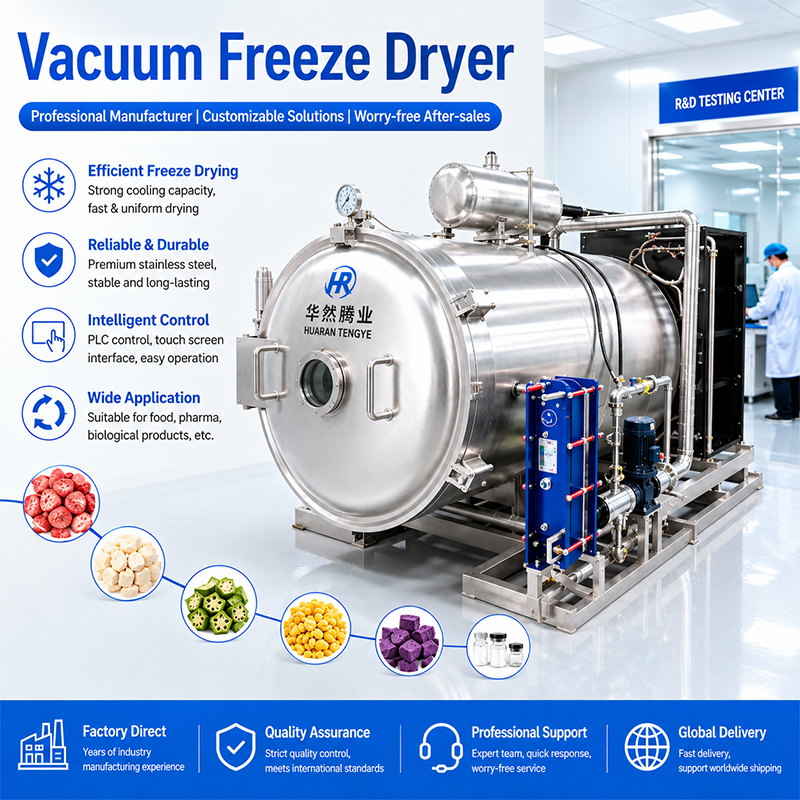
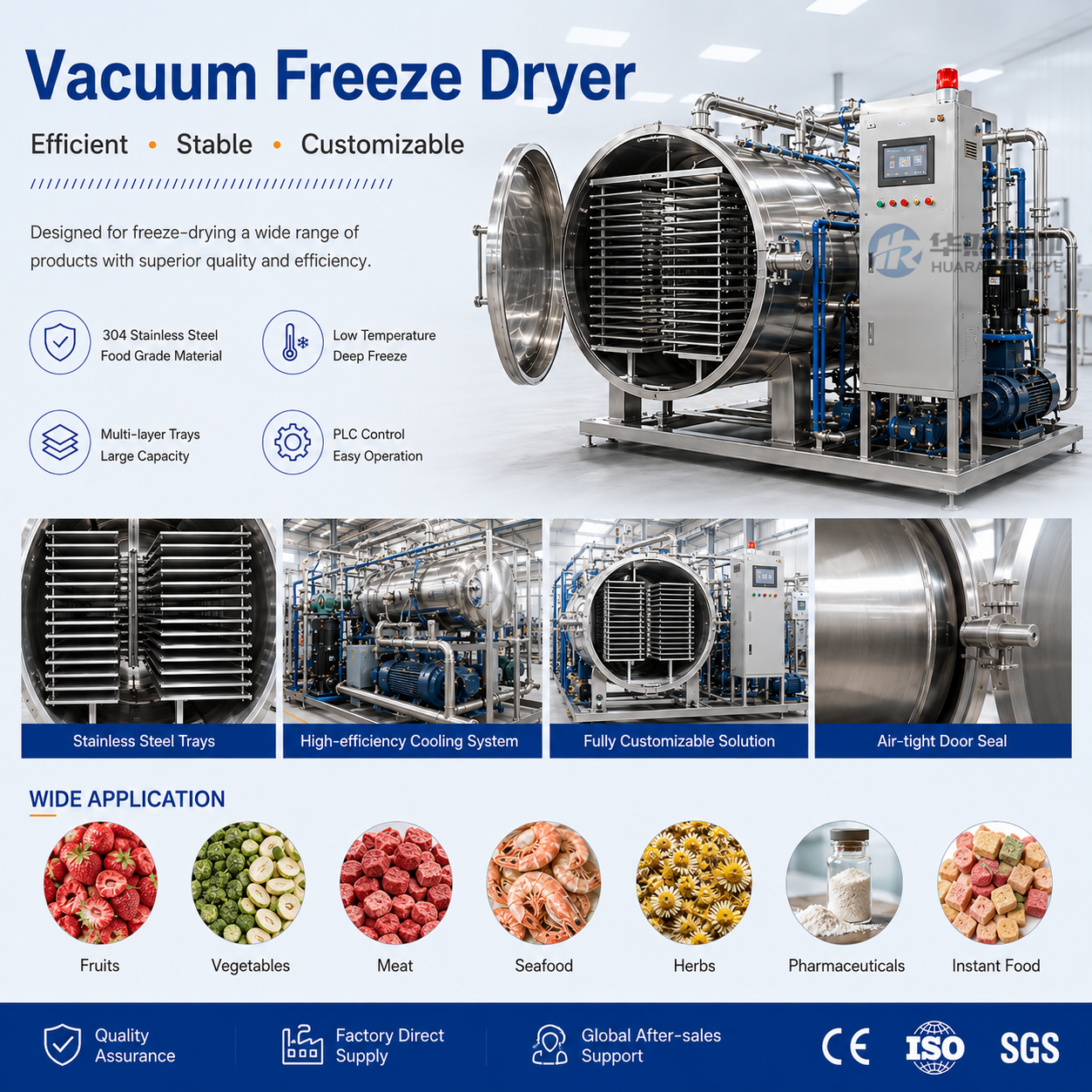
Product Introduction
Freeze-drying probiotic powder is, perhaps, one of the most difficult types of drying processes because these products have very low moisture levels, which make them very delicate in handling. Active strains are really sensitive to heat and vacuum fluctuation, while the organic nutrient matrix and high cell viability load work against the sublimation process altogether. A mismatch between drying parameters and the particular formulation usually leads to: strain degradation, a sharp decline in the numbers of viable cells, or material clumping and spoilage.
It's the same scenario: activity levels fluctuate, quality checks fail, and batches of high-value raw materials are lost between 15% and 20%.
The diversity of a formula contributes greatly to the complexity of the freezing process. Lactobacillus, bifidobacterium, compound powders, and fermented bacterial powders are raw materials requiring different heating and drying patterns. Workers will have to conduct trial runs, producing the products in small batches many times, before they get ready recipes, which could sometimes take several days. Only when they confirm that the quality of the product is consistent will they stop the experiments, and production resumes. Herein lies the problem: during the time when no experiments are being done, the machines are still running, waiting for experiment results, leading to product loss.
Our SolutionThe FDG Series is a range of freeze-drying equipment made exclusively for the speedy large-scale freeze-drying of probiotics, and in that way it completely gets rid of the uncertainties in the manufacturing process.
With the PLC system allowing for storage of up to 100 different probiotic formulas, it is definitely very user friendly as well.
The system will have temperature ramps, vacuum setpoints, and staged drying durations that are exact for each formulation. Switching between single-strain and compound production is made easy in minutes — every batch consistently produces a high-activity result.
Individual PID-controlled shelf heating limits temperature deviation to practically nothing in all trays.
Together with a steady vacuum level control, this ensures the sublimation is evenly distributed in the freezing chamber and minimizes the deterioration of the material through strain activity, drying defects, and inconsistency within the batch."
The Performance of Freeze-Drying Production on the Optimized Programs
Percentage of finished products: Over 97%. Drying cycle batch for bacterial powder: From 18 to 24 hours. The quantity of moisture after the drying process: Under 3%
Moisture variation between the trays is within ±0.5%
Ease of changing the product and minimal involvement of the operator can bring about a reduction in downtime and the cost of labor. As a result, the equipment will achieve the highest level of utilization and production capacity.
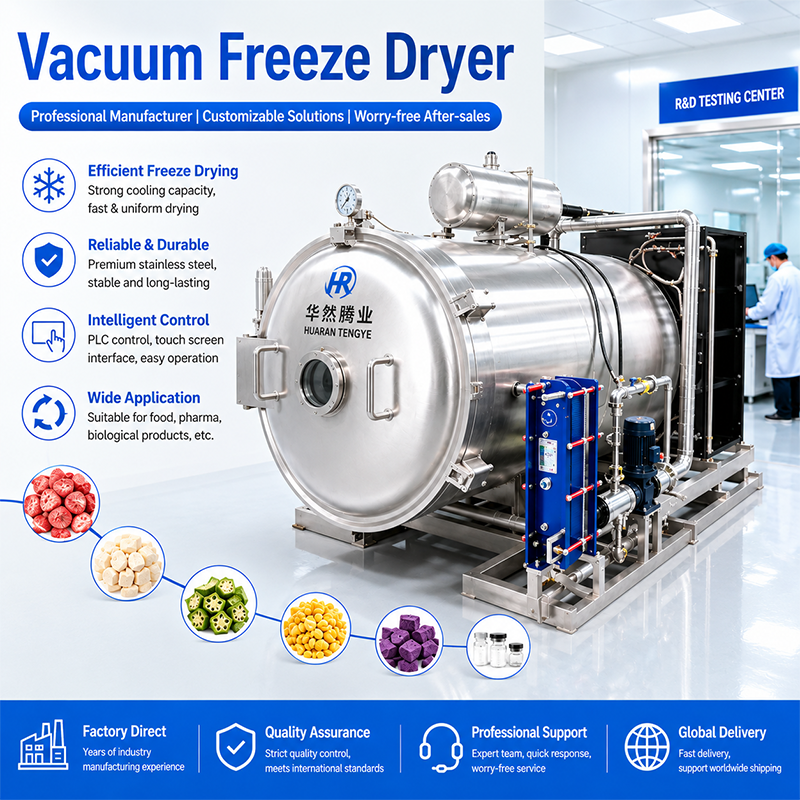
Core Technical Parameters
| Parameter | Specification | Industry Benchmark |
| Ultimate vacuum pressure | ≤5 Pa (achievable) | ≤10 Pa (typical industry range) |
| Operating vacuum range | 10–50 Pa (sublimation phase) | Standard range |
| Shelf temperature range | -45°C to +80°C | Standard |
| Cold trap temperature | ≤ -65°C | ≤ -60°C (standard) |
| Final product moisture | ≤3% (typical) | ≤5% for most food products |
| Freezing rate | 1–3°C/min (adjustable) | Controlled-rate freezing |
| Defrost method | Hot water circulation | Electric/hot gas/water (varies) |
These are ideal or design benchmarks and do not signify what you can realistically expect in terms of operational performance.The performance on the ground mainly relates to the formulations of the material, the quantity loaded in the tray, and the other operation requirements related to the site-specific.
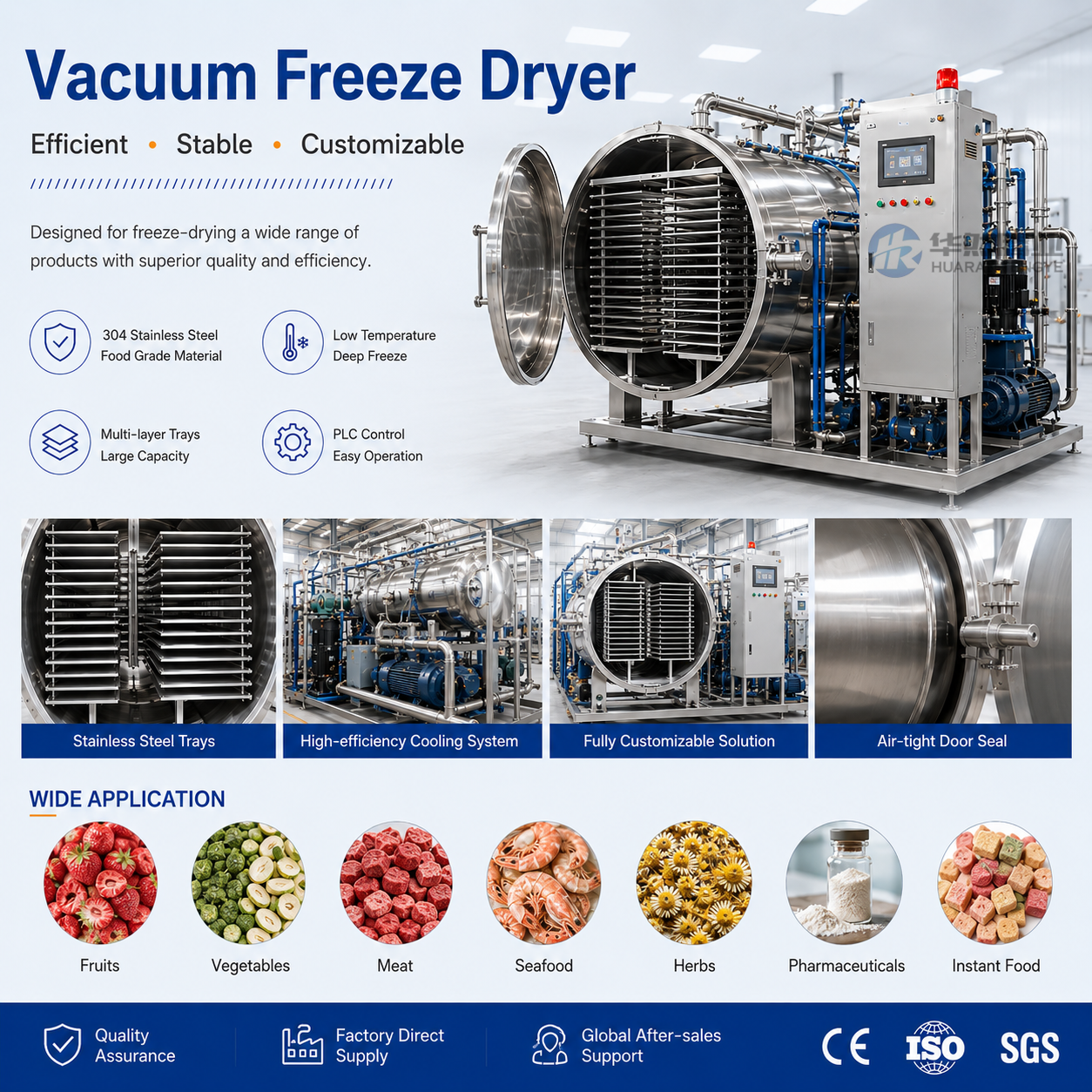
Model & Capacity Range
| Model | Shelf Area (m²) | Batch Capacity (kg/cycle)* | Recommended Product Type |
| FDG-0.5 | 0.5 | 5 | R&D / pilot batches |
| FDG-1 | 1 | 10 | Small-batch premium candy |
| FDG-5 | 5 | 50 | Small-scale production |
| FDG-10 | 10 | 100 | Commercial production entry |
| FDG-20 | 20 | 200 | Mid-scale production |
| FDG-30 | 30 | 300 | Full-scale production |
| FDG-50 | 50 | 500 | Large-scale operation |
| FDG-75 | 75 | 750 | Industrial production |
| FDG-100 | 100 | 1,000 | High-volume production |
| FDG-125 | 125 | 1,250 | Industrial scale |
| FDG-150 | 150 | 1,500 | Large industrial line |
| FDG-200 | 200 | 2,000 | Maximum capacity |
The capacity of a freeze dryer is calculated considering usual probiotic preparations with an initial water content level of 80-95%. The actual quantity of a freeze dry powder can vary quite significantly due to factors like the microbial strain used, the kind of carrier material utilized, and the degree to which the material is packed into the freeze dryer trays. We offer our own customized freeze dryer models, which we have developed for unusual shelves sizes and for the special handling of micro-encapsulated probiotics that require certain particular processing.
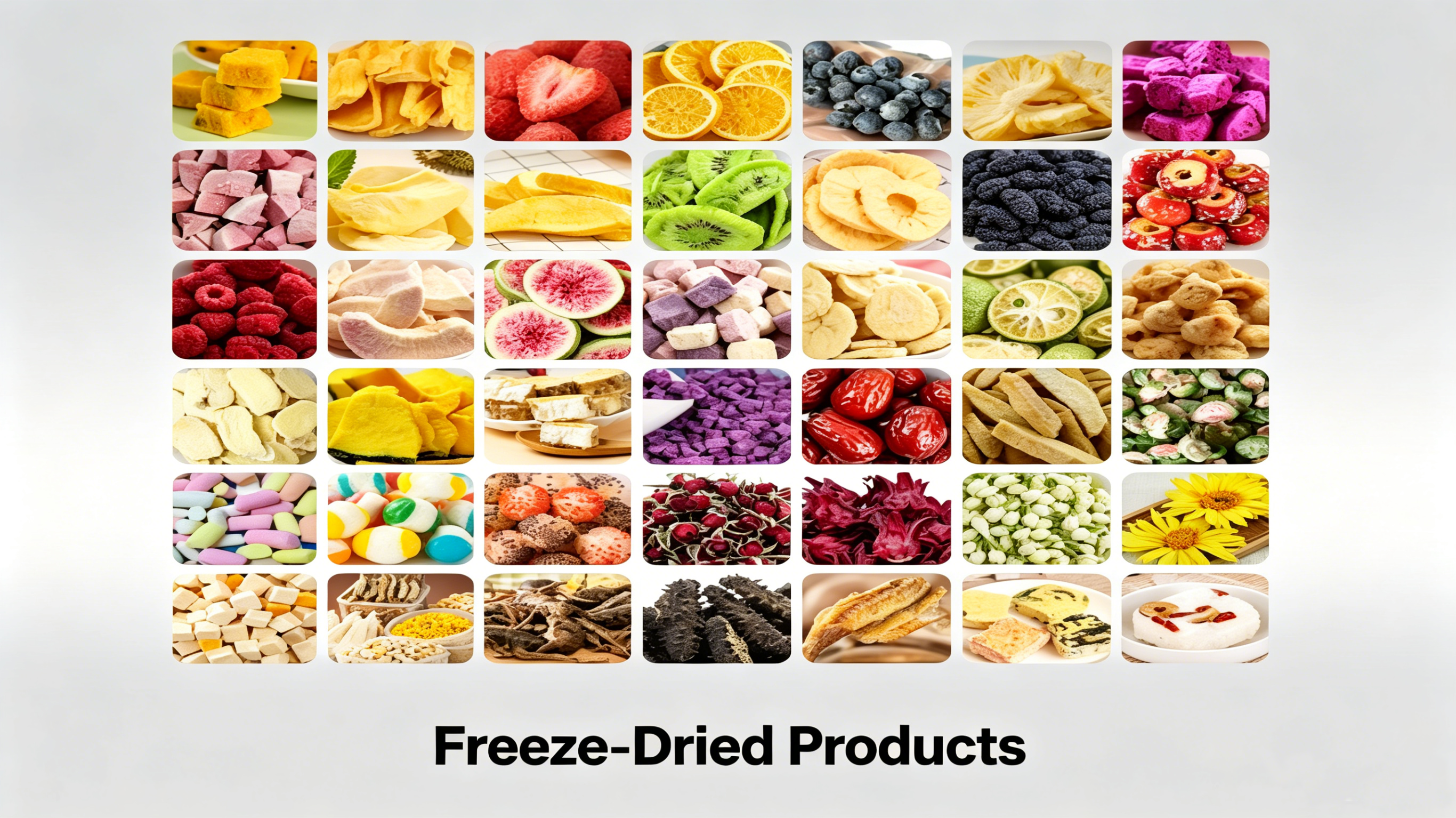
System Configuration
Refrigeration system:
Compressor: Bitzer (Germany) or equivalent semi-hermetic open-type, engineered for ultra-low-temperature probiotic lyophilisation.
Refrigerant: R404A / R507 — food- and pharma-grade green refrigerant.
Cooling way: Water-cooled or air-cooled; water-cooling is recommended for high-throughput probiotic batch drying.
Vacuum system:
Pump set: Rotary vane pump paired with a Roots booster (second-stage), optimized for sublimating moisture from concentrated culture media.
Pump make: Leybold / Edwards / top-tier Chinese equivalent.
Ultimate vacuum: ≤5 Pa, ensuring stable, long-duration cycles that preserve probiotic viability.
Leak rate: ≤10 Pa·L/s — integrity is rigorously verified for pharmaceutical-grade aseptic production.
Control system:
PLC: Siemens S7-1200 series
HMI: 10" touchscreen, Siemens or WEINVIEW
Data Recording: Temperature, pressure, and time curves available for batch traceability of probiotics and GMP documents to export via USB or Internet.
Operational modes: Manual handling, or fully automated, recipe-oriented cycles through pre-stored programmes suitable for various probiotic strains.
Chamber design:
Material: FDA- and pharma-compliant SS304 stainless steel that is aseptically resistant to corrosion in the interior part.
Interior Treatment: Surface highly polished (Ra ≤0.8μm) to achieve excellent non-stick and easy-clean performance even during and after handling concentrated culture suspensions.
Exterior Treatment: Choice between a brushed finish and a painted one (painted ones are an option).
Lid: Swing open full-door with vacuum gasket made of high-quality silicone that ensures fast loading and hygienic sealing.
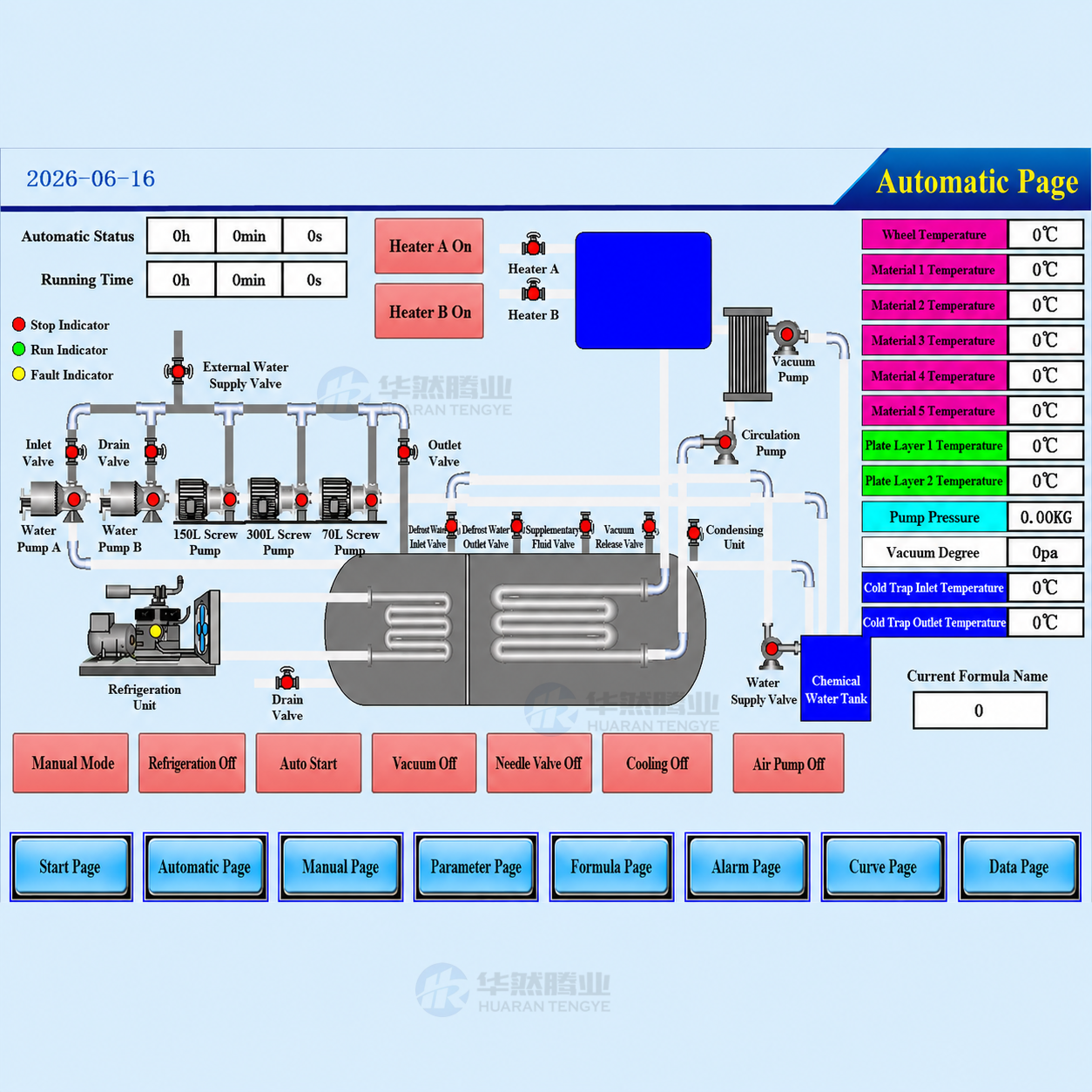
Operational Process
The FDG series utilizes a three-step drying process.
① The pre-freezing stage: The material temperature is decreased to below the eutectic point at different cooling rates (1–3°C/min) so that a layer of uniform ice crystals is formed. Freezing time usually is around 2–6 hours depending on what is being freezing.
② First drying (sublimation stage): Pressure within the chamber is lowered to 10–50 Pa, and the temperature of the shelves is raised from -40°C to 0°C step-by-step. Ice is turned into vapor directly, which is captured and held in the cold trap. Time needed: 8–24 hours depending on the type of good.
③ The second drying (stage of desorption): A very high shelf temperature (40–60°C) is applied for prolonged periods of time (2–8 hours) to ensure all bound water is removed and thus moisture content reaches the desired level (usually ≤3% for candy and fruit products).
Overall process time (average): Fruit products: 16–36 hours; Candy products with high sugar content: 20–40 hours.
ABOUT US
Year of establishment: 2006 (having 19 years of experience)
Factory area: 18,000 square meters
R&D department: 22 engineers
Production capacity: 4 assembly lines
Annually, the company produces 120+ units.
Standards certifications: ISO 9001, ISO 14001, CE, ASME
Main parts suppliers: Bitzer, Leybold/Edwards, Siemens, Emerson
Export destination countries: More than 40 countries including: USA, Germany, Japan, South Korea, Australia, and Brazil.
Export units from 2010: 800+
Quality & Compliance
Pressure vessel certification: Equipment certified according to either of two internationally recognized industry standards - ASME (Americas) and China GB 150 (Asia-Pacific).
Electrical specifications - The machine complies with European CE standards for electrical safety (optional) or can be built to specifications suitable for GB domestic wiring requirements.
Manufacturing standards: Every single reactor is subjected to highly rigorous testing of pressure resistance and vacuum leakage detection before being dispatched from the production factory.
Genuine guarantee on major components: Equipment owners can rely on 12 months long full warranty, starting right after installation and commissioning of the machine.
Quality checks: Detailed Factory Acceptance Tests (FAT) can be carried out and results recorded before shipping the unit to the client.
Production & Delivery
| Item | Detail |
| Standard lead time | 45 working days from order confirmation (models up to FDG-50) |
| Large models (FDG-75+) | 60–75 working days |
| Installation & commissioning | On-site support available (additional cost, travel expenses separate) |
| Spare parts availability | 48-hour dispatch for critical components |
Design Customization Options
Professional Engineering Modifications
We customize engineering features for large-scale probiotic freeze-drying: • Shelf spacing tailored to accommodate varying vial sizes, bulk trays, and multi-layer loading configurations • Integrated CIP (Clean-in-Place) systems enable automatic sterilization between formula changeovers, eliminating cross-contamination risk • GMP-compliant finishing to meet pharmaceutical-grade hygiene standards for processing live probiotic strains and high-purity bacterial powders • Procurement Information
For a formal quotation, please provide:
We are interested in knowing what type of target probiotic strain you are going to use (single-strain, compound blend, or fermented bacterial powder) and the carrier type/formulation you want. How many kilograms do you wish to produce in each batch? What kind of packaging do you intend to use (e.g., the size of vials, the bulk tray’s size and the multi-well plate configuration)?
You should also tell us what you have available in terms of utilities such as electricity supply (voltage/phase), cooling water temperature, and compressed air. Do you need to get your equipment certified for anything - CE, ASME, GMP, etc.?
All quotations are valid only for a period of 30 days, which means they may change after further technical review.
FAQ
1. How long does it take to deliver the machines?
We need 45 workdays for making machines FDG-0.5 to FDG-50. FDG-75 and models of a larger size need 60–75 workdays. Freight cost is an extra.
2. Do you install the machines?
Our engineers conduct the setup, carry out tests on-site, and train users. Travel costs are charged separately. We also have remote video support.
3. What's the warranty period?
12 months free repair service with the possibility to dispatch major spare parts overnight. We are selling extended warranty and contracts for periodic checks.
4. May you alter the design of the machine?
Of course. We are ready to change vial/tray design, integrate CIP/SIP, nitrogen fillback, apply GMP surface finishing, and optimize cycles for viability of probiotic. Please send your ideas to us for feasibility assessment.