Product Highlights
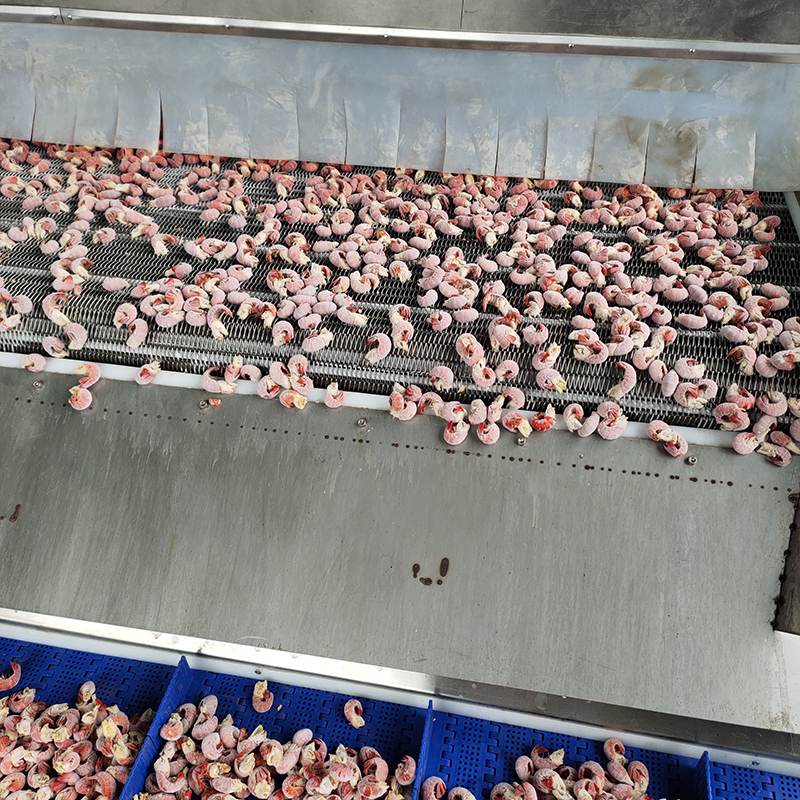
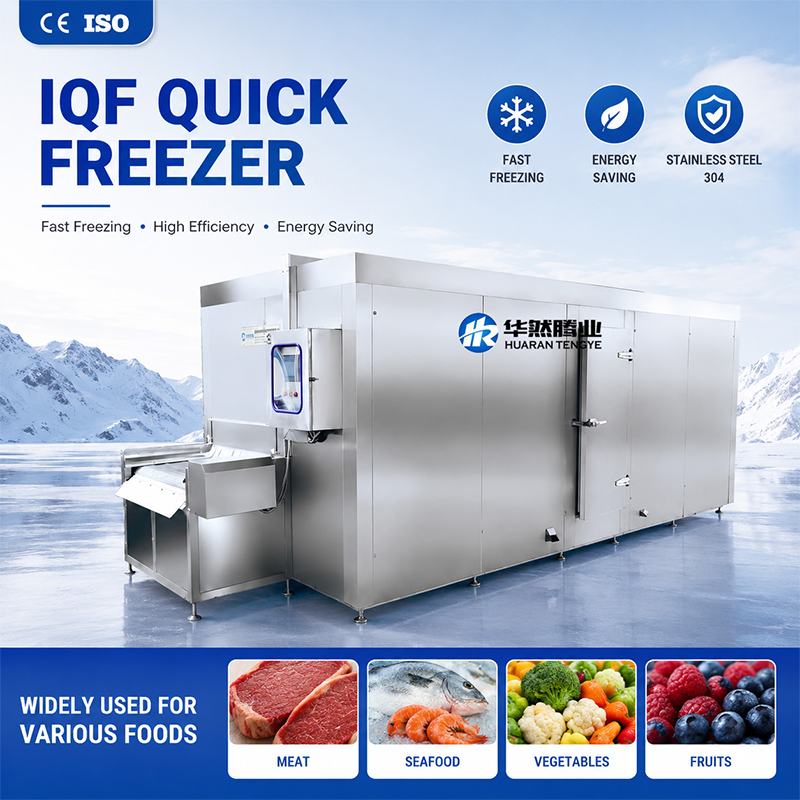
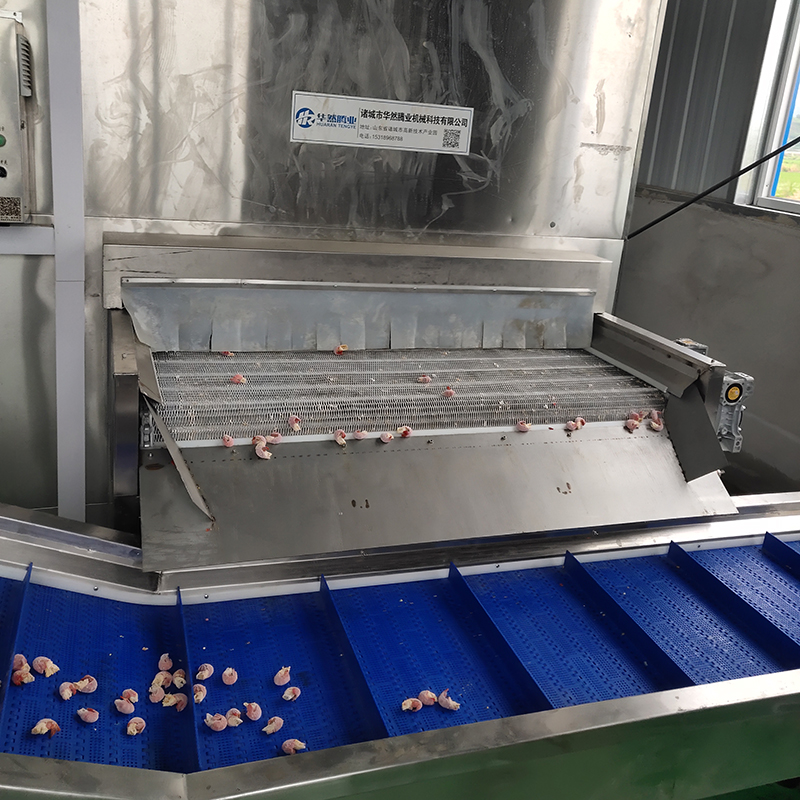
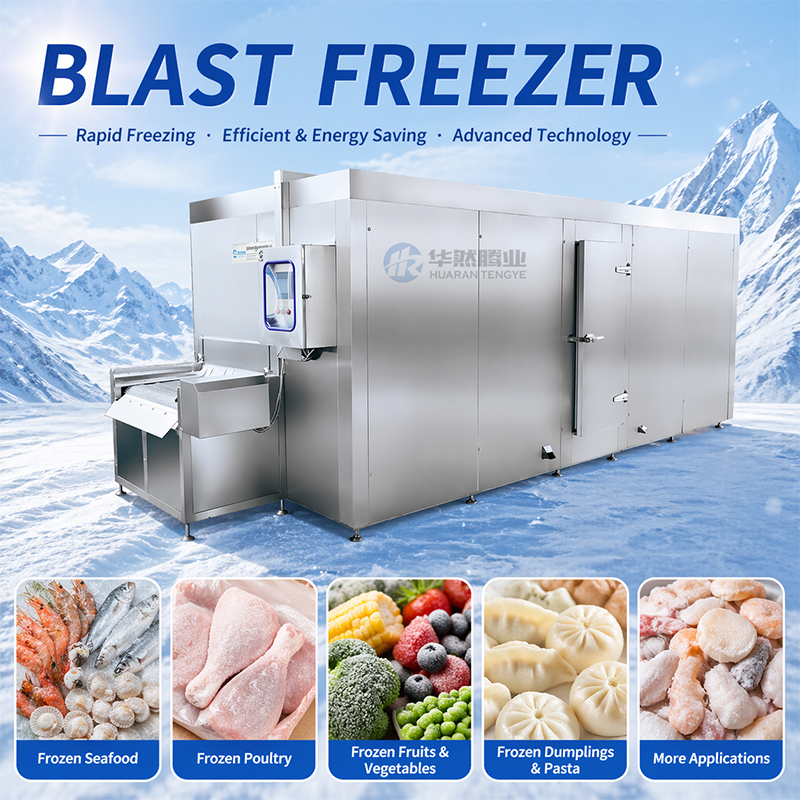
Our seafood IQF freezers, specifically designed for shrimp, scallops, squid rings, and fish fillets, use very cold, fast-moving air at the brine point to preserve the sea flavor. 300+ seafood plant operators in 40 countries have trusted the freezers. The standard capacity is 500 to 5,000 kg/h.
The issue is that the protein structure, cell breakdown, and excessive loss of juice due to unequal air exposure on the conveyor belt are the problems.
Fish are physically dissolving into liquid; shrimp shells blacken and become mushy, the seawater preservative that prevents scallops from running away from the saline environment disappears when a scallop is immersed in the saline seawater, the IQF squid goes to big chunks, which no one could possibly consider to buy. At every failed batch, you lose 15%. A different type of fish means a different kind of difficulty, which is not helping. During one shift, the crew changes the production line from whole peeled shrimp to shrimp marinated fillets to squid rounds, which all require drying periods and different airflow profiles depending on the type of product.
The operators can barely start to make these fine-tuning adjustments, for which they are left with no guidance.
Our equipment is designed specifically to deal with all these issues.
Our Solution
Precision impingement system with VFD-controlled fan units eliminates all the hot spots from the belt width completely under variable running conditions.In fact, with the ability of a PLC controller to store one hundred different species-specific recipe programs, there is a really quick and easy setup to make a product change from one to another.
The system allows storage of all main parameters (belt speed, fan frequency, evaporator setpoint, and dwell time) for the production recipes into the PLC memory.
Therefore, we do not have to run trial batches; the production will give the same core temperature results if we change from whole shrimp, squid tubes, marinated fillet, and similar products. In addition, the centrifugal fans with special blade design ensure uniform airflow, which is directed along the belt width, preventing hot spots, thus preventing protein degradation and discoloration of the shells. Moreover, the air-cycle sequential defrost technique is applied to the refrigeration system that enables the condenser to operate efficiently with high heat transfer without producing problems of sticking or drying of the fish skin and flesh, which is still wet and delicate at -18°C. The following are the production data using the optimized recipes program: Core temperature at discharge: ≤ -18°C Piece separation: ≥99% Drip loss after thawing: ≤2% Throughput variation during species changeover: ±3%
Core Technical Parameters
Parameter
Specification
Industry Benchmark
Freezing temperature range
-35°C to -45°C (evaporator)
-30°C to -40°C (standard)
Product core temperature at discharge
≤ -18°C
≤ -18°C (minimum compliance)
Belt speed range
0.5–12 m/min (inverter-controlled)
Fixed or 2–3 speed settings
Air velocity across bed
3–8 m/s (adjustable via VFD fans)
3–5 m/s (common)
Freezing time (IQF pea/diced veg)
6–12 minutes
10–18 minutes
Drip loss after thawing
≤2%
≤5%
Defrost method
Sequential hot gas / water spray (auto-cycling)
Manual or timed electric
Bed depth capacity
Up to 80 mm (product-dependent)
40–60 mm (typical)
Note:
The actual output would rely upon catch species, belt load, and plant utility conditions.
Benchmarks for the design only. Output actually will depend on the type of marine product, the depth of the belt, and the site setup characteristics.
Model & Capacity Range
model
size(mm)
Conveyor belt width(mm)
Length of the feed inlet(mm)
Outlet length(mm)
Cooling load(P)
SSD-100
6600*2300*2200
1200
900
600
22
SSD-200
9300*2300*2200
1300
900
600
40
SSD-300
11500*2500*2200
1400
900
600
58
SSD-400
13800*2500*2300
1400
1000
800
75
SSD-500
15800*2600*2300
1500
1000
800
90
SSD-750
17800*3100*2400
2000
1000
800
135
SSD-1000
19200*3700*2400
2600
1200
1000
170
SSD-1500
22500*4100*2500
3000
1500
1000
220
SSD-2000
24500*4900*2500
3800
1500
1000
320
The capacity rating is measured using standard seafood products - whole shrimp, squid tubes, fish fillets - and a normal belt loading. The throughput is mainly dependent on the size of the fish caught, the layer thickness, and the desired core temperature.
System Configuration
Refrigeration system COMPRESSOR Bitzer (Germany) or equivalent screw/reciprocating, rated for -42°C evaporator Refrigerant: R404A/R507; natural refrigerant on request Cooling: Water-cooled or evaporative condenser (to be specified at order)
Control system PLC: Siemens S7-1200/S7-1500 HMI: 10" screen, Siemens or WEINVIEW Logging of data: Core temperature, air flow, belt speed, evaporator performance by USB/Ethernet Operation: Manual or with auto-cycle, containing 100 recipes specific to the species stored
Operational Process
① Pre-cooling and loading: The items are brought into the facility at room or cold temperature, after which they enter the loading belt via a conveying system.
Vibration distributors or turning distributors evenly distribute the feed material onto the belt. Settings for belt speed and material depth will be made automatically according to stored recipes.
② Freezing at extreme speed: Products rapidly freeze as they traverse the freezer's narrow passageway, hit by the air blasts at speeds exceeding 240000 m³/h from the top, the bottom, and four sides. The freezing temperature range is set between -35 °C and -42 °C, with multi-zone freeze control ensuring a progressive heat removal — first the surface is frozen, forming no crust, then the interior is rapidly cooled — this freezing method minimises the loss of moisture and retains the structure of the food in a perfect way. ③ Post-freeze processing and product discharge: The product will reach the discharge point with a core temperature of not more than -18°C, the temperature has been monitored by the inbuilt IR sensor or the sampling process using the probe. For individual freezing products, the separation between the products has to be maintained during the whole batch freezing. It will be automatic from here to the weighing, the packaging, or the cold storage conveyor. ④ Defrost process: Defrosting of heat exchanger coils via hot-gas or water-spray cycles is initiated periodically after production stops, or by evaporator pressure differential, as preset. This ensures that we keep the maximum heat transfer efficiency throughout the process without a drop. ABOUT US Founded: 2006 (with 19 years in the industry) Factory size: 18,000 m² R&D team: 22 engineers Production lines: 4assembly lines Annual capacity: 120+ units/year Certifications: ISO 9001, ISO 14001, CE, ASME Component cooperation: Bitzer, Leybold/Edwards, Siemens, Emerson Export countries: over 40, including the USA, Germany, Japan, South Korea, Australia, Brazil Number of equipment delivered since 2010: more than 800 Quality & Compliance Pressure vessel certification:ASME / Chinese GB150 (the region shall be specified when placing the order) Electrical standards:CE (optional), Chinese GB Manufacturing process: all equipment is pressure and vacuum leak tested before shipment Guarantee period of main parts: it is 12 months from the end of the installation Inspection: FAT (Factory Acceptance Test) must be conducted prior to the dispatch of goods
Production & Delivery
Item
Detail
Standard lead time
45 working days from order confirmation (models up to SSD-500)
Large models (SSD-750+)
35–45 working days
Installation & commissioning
On-site support available (additional cost, travel expenses separate)
Spare parts availability
48-hour dispatch for critical components
Design Customisation Services
Factory modifications offered:
Extended tunnel or multi-zone layout for higher throughput on shrimp and fillet lines
Belt selection: stainless steel mesh for whole shrimp/squid; plastic modular for marinated or coated seafood
Pre-freezing zone for delicate items (scallops, soft-shell products)
CIP belt-wash with sanitise cycle for allergen control between species runs
IQF fluidised bed for free-flowing products (peeled shrimp, shellfish meat, calamari rings)
Purchase Details
For a quotation, kindly share:
Species processed and average piece dimensions / weight
Target throughput per line (kg/h)
Product temperature at infeed and desired core discharge temperature
On-site utilities: power specs, cooling water temp, floor space
Certification requirements (CE, ASME, etc.)
Quotations stand for 30 days, pending technical confirmation.
FAQs
1. What's the delivery time?
45 working days for standard models (SSD-100 to SSD-500); 35–45 working days
for large models (SSD-750 and above). Shipping time not included.
2. Do you provide installation support?
We do: on-site commissioning, trial freezing with your goods, and train operators (local). Travel expenses extra. We can also provide remote support.
3. How long is your warranty?
We offer a 12-month warranty on the compressor, fans, and large parts from the date of startup. We will ship the spare parts within 48 hours. Extended insurance packages can be purchased too.
4. Are products with sticky or with a coating allowed, and will they not get a build-up on the machinery?
Yes. Sequential defrost and optional non-stick belting will ensure smooth operation of your marinated fillets, coated calamari and glazed shrimp without build-ups.