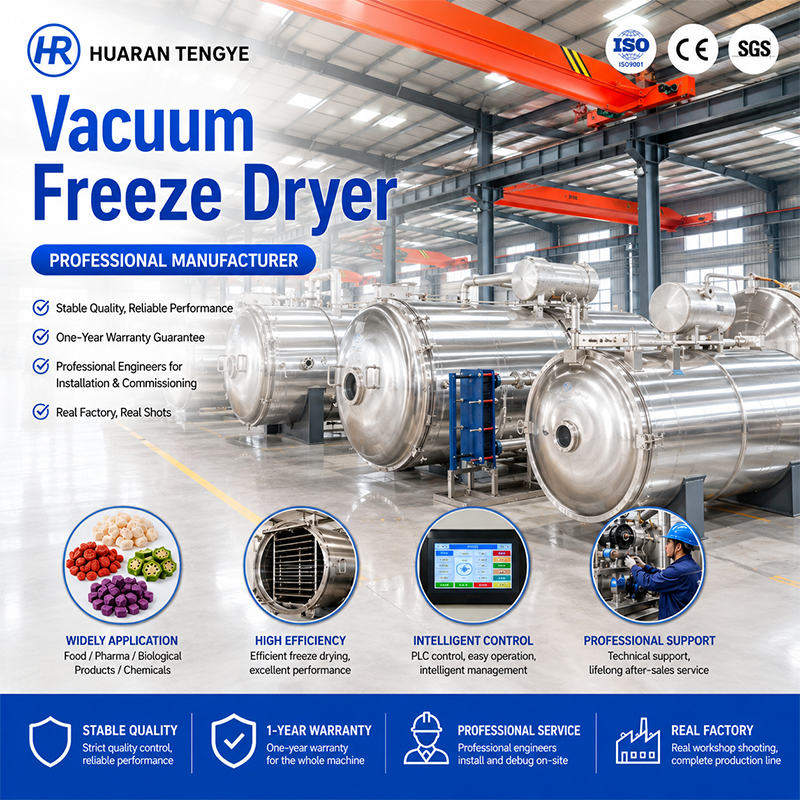
Product Introduction
Fundamentals of freeze-dried milk processing involve unique challenges. A high content of fat and protein creates a firm matrix that is moisture-resistant, whereas lactose-rich milk products easily collapse if the glass transition temperature is crossed. Without properly controlled temperature ramping and vacuum, the outcome is usually structural collapse, fat oxidation, or a poor, chalky, powdery product, which accounts for 12–18% batch loss per production run.
With respect to a product change, complexity level further increases. Whole milk, skim milk,colostrum, milk fermented (yogurt/kefir), and infant formula mixtures have different freezing rates, setting of vacuum points, and drying pathways. If there are no stored parameters, operators will be running test cycles for hours – sometimes days – to bring product quality up to the required level before it is packed, which results in delaying fulfillment and idling equipment.
Our Solution
Frozen dry milk freeze-drying using the FDG Series does not depend on luck, but on scientifically and repeatedly tested procedures — it is not about making mistakes and changing course every time.
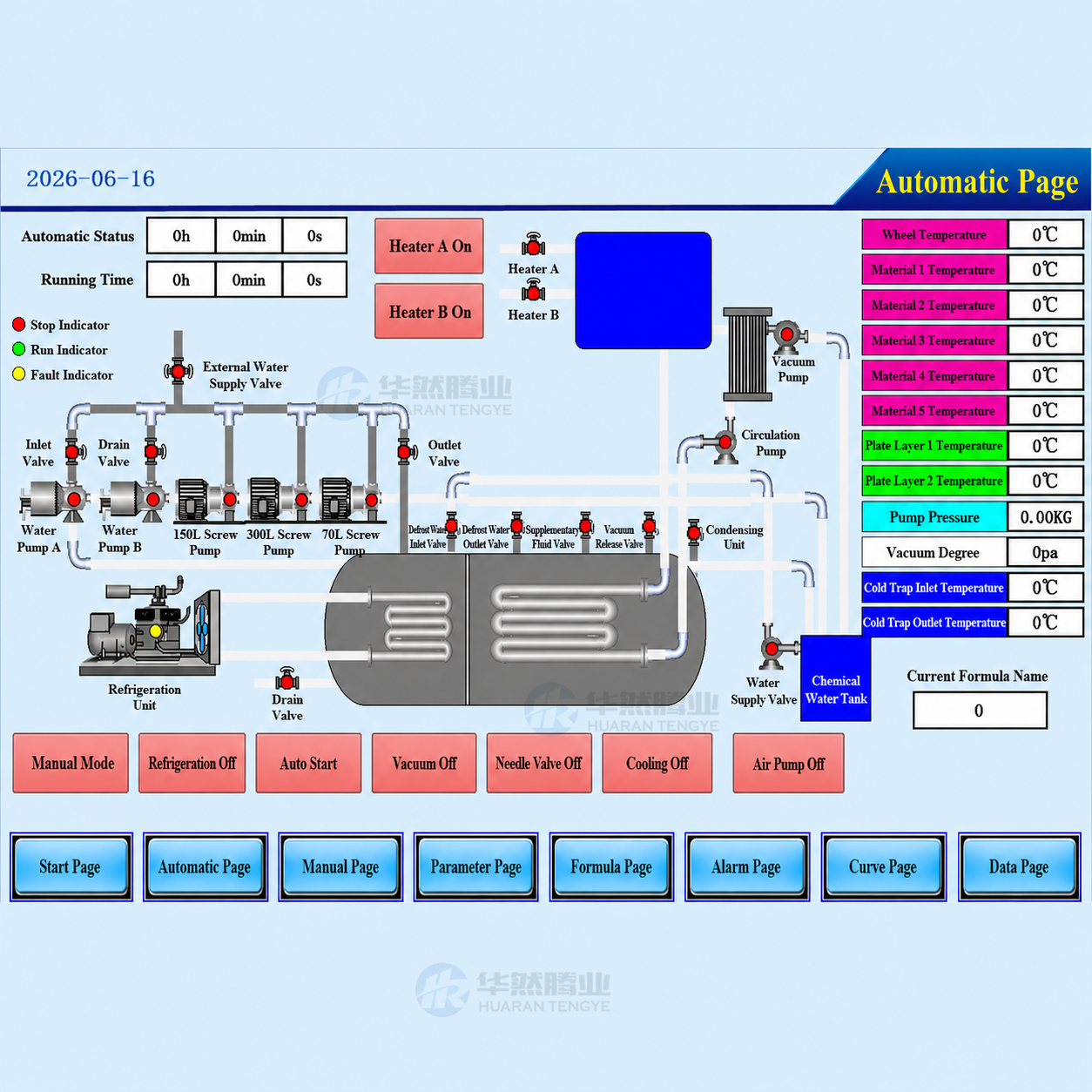
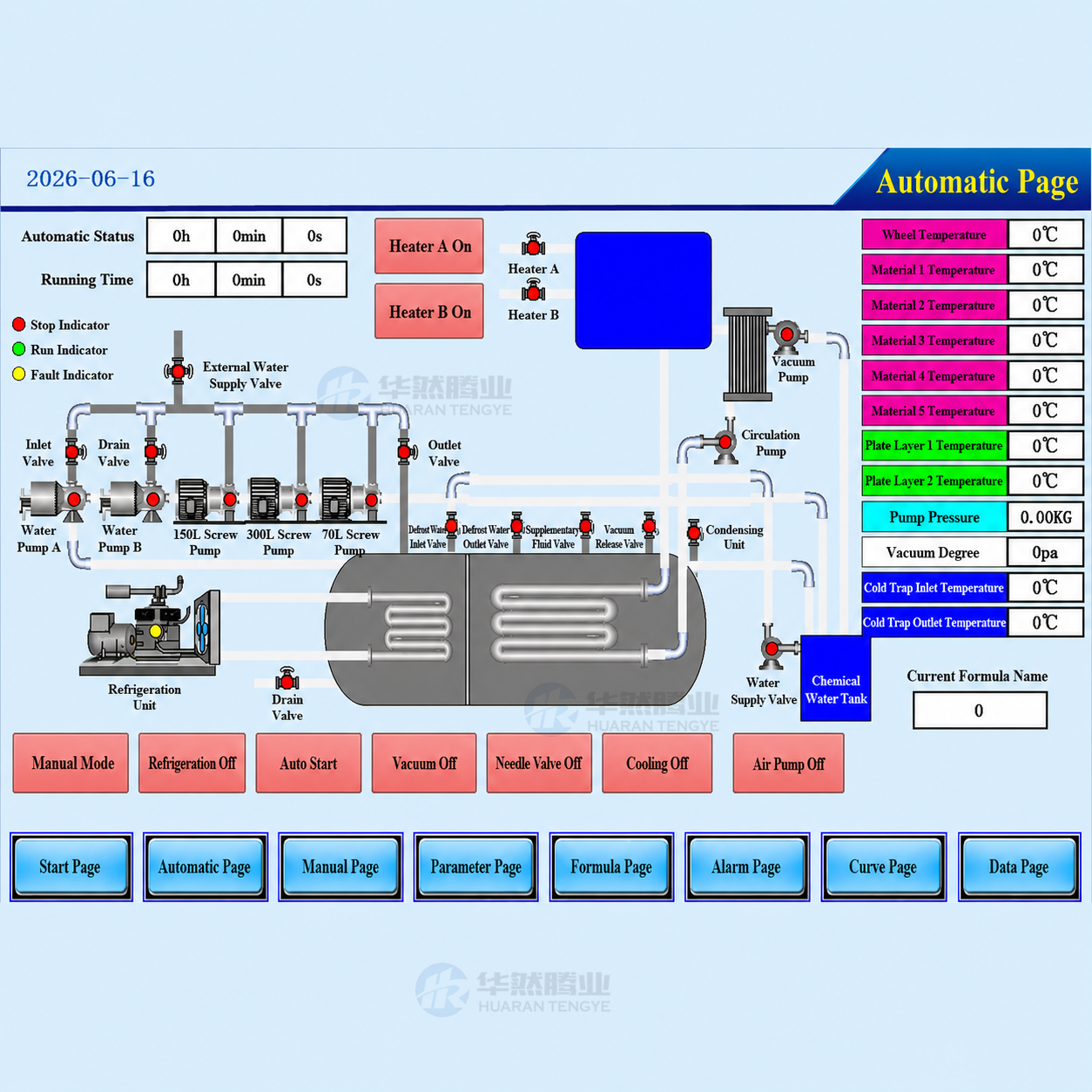
Using the PLC system, freeze curves, vacuum levels, and stage duration together can be stored for at least 100 validated recipes. In just a few minutes, you can change, for example, whole milk to probiotic yogurt without sacrificing the same verified results every way you go.
A dedicated temperature-controlled shelf heating (PID-controlled) ensures that no matter which tray you take, the temperature should remain constant, and that is the point where temperature drifts normally occur. In addition to a well-regulated vacuum and an oversized cold trap, this combination of the two features ensures the whole chamber carries out the sublimation step evenly, so that not the product collapses nor is it overheated, and there aren't any tray-to-trray differences. The results of a typical optimized production: Total yield: ≥96% Batch cycle of whole milk:20–28 hours Final moisture content: ≤2.5% Moisture variation from tray to tray: ±0.5% Besides cutting down product downtime and the need for a smaller team of operators, these improvements mean that the staff levels can be adjusted according to the product needs only; so you achieve a bigger quantity of products being made with a minimum of downtime and at the full capacity.
Core Technical Parameters
| Parameter | Specification | Industry Benchmark |
| Ultimate vacuum pressure | ≤5 Pa (achievable) | ≤10 Pa (typical) |
| Operating vacuum range | 10–50 Pa (sublimation phase) | Standard range |
| Shelf temperature range | -45°C to +80°C | Standard |
| Cold trap temperature | ≤ -65°C | ≤ -60°C (standard) |
| Final product moisture | ≤2.5% (whole milk); ≤2% (infant formula) | ≤3% |
| Freezing rate | 0.5–1.5°C/min (adjustable) | Controlled-rate freezing |
| Defrost method | Hot water circulation | Electric/hot gas/water |
Model & Capacity Range
| Model | Shelf Area (m²) | Batch Capacity (kg/cycle)* | Recommended Product Type |
| FDG-0.5 | 0.5 | 5 | R&D / pilot batches |
| FDG-1 | 1 | 10 | Small-batch dairy / milk powder |
| FDG-5 | 5 | 50 | Small-scale production |
| FDG-10 | 10 | 100 | Commercial production entry |
| FDG-20 | 20 | 200 | Mid-scale production |
| FDG-30 | 30 | 300 | Full-scale production |
| FDG-50 | 50 | 500 | Large-scale operation |
| FDG-75 | 75 | 750 | Industrial production |
| FDG-100 | 100 | 1,000 | High-volume production |
| FDG-125 | 125 | 1,250 | Industrial scale |
| FDG-150 | 150 | 1,500 | Large industrial line |
| FDG-200 | 200 | 2,000 | Maximum capacity |
Capacity based on milk concentrate or liquid dairy with 87-92% moisture content (typical for whole milk, skim milk, and yogurt). Actual throughput varies with dairy type (fat content, solids concentration), loading thickness, and recipe settings. The product's output depends on its composition and degree of loading (how dense it is). We may provide customers with customized services like, for instance, storage of products having irregular dimensions, and special care required for certain products that are more delicate.
Unique shelf sizes and the manner of loading the shelves are provided for unusual dairy processing.
System Configuration
Refrigeration system:
·Compressor: Bitzer (Germany) or other brand for semi-hermetic open-type equivalent
·Refrigerant: R404A / R507 (eco-friendly)
·Heat discharge: Water-cooled or air-cooled - you can check with us at purchase for confirmation
Vacuum assembly:
·Pump configuration: Rotary vane + Roots booster (dual-stage)
·Pump origin: Leybold / Edwards / premium Chinese equivalent
·Final vacuum: ≤5 Pa
·Vacuum integrity: ≤10 Pa·L/s (factory-tested)
Automation & controls:
·Controller: Siemens S7-1200 series PLC
·Operator screen: 10” color touchscreen (Siemens / WEINVIEW)
·Data logging: Continuous recording of temperature, pressure, and cycle time — USB or Ethernet data export
·Operation: Manual override / fully automatic recipe-controlled cycles
Chamber build:
·Material of body: SUS304 stainless steel (safe when in contact with food items)
·Surface inside: mirror polished (Ra ≤0.8 μm)
·Finish outside: brushed or powder coated (optional)
·Door: hinge swing-out type with rubber-sealed vacuum gasket
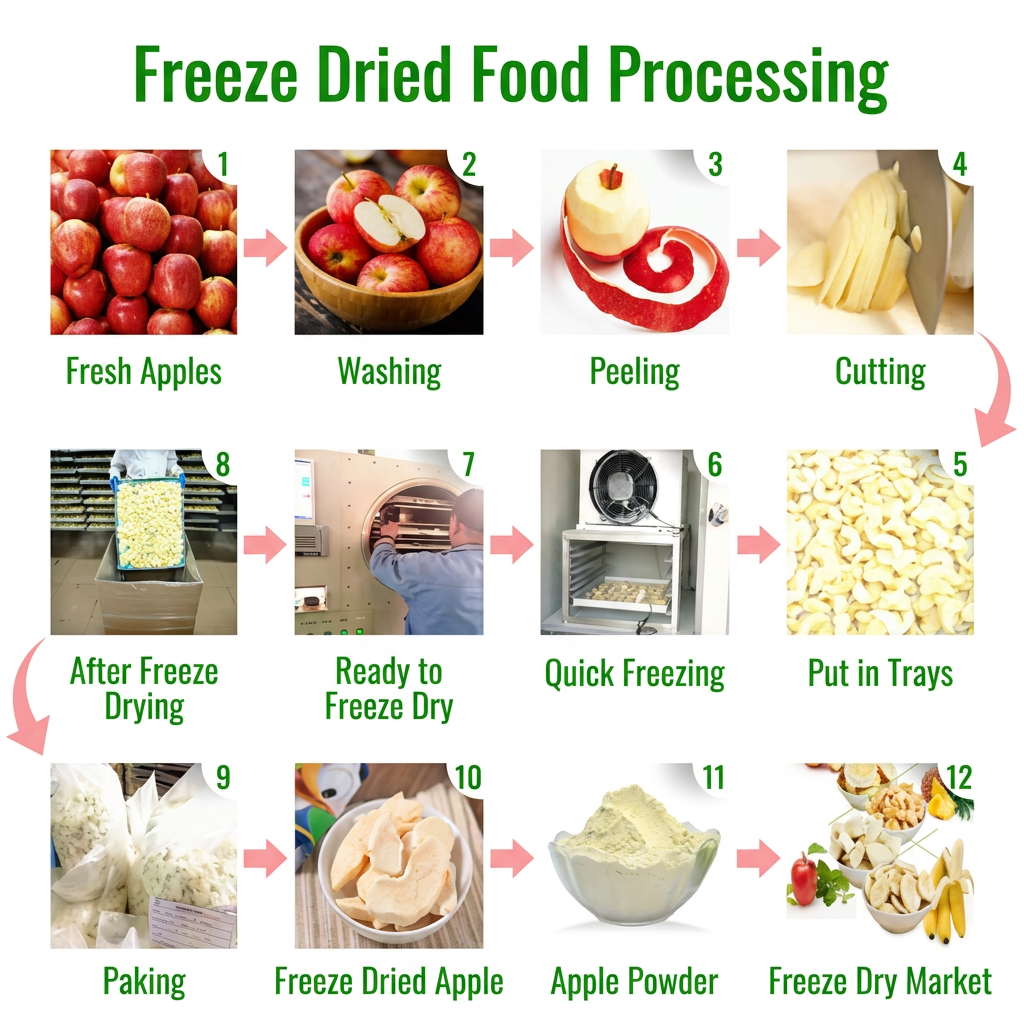
Operational ProcessThe FDG series carries out product drying using three distinct stages:
① Pre-freezing: Here, the product is cooled at controlled ramp rates of 0.5–1.5°C/min to temperatures of -40°C to -50°C. This operation results in transformation, solidification, and distribution of ice crystals of water content, while the milk proteins' structure remains undamaged. This kind of pre-freezing usually takes 4–10 hours depending on fill volume and milk solids concentration.
② Primary drying (sublimation): Here, a vacuum of 10–50 Pa and gradual shelf temperature changes from -40°C to about -5°C under PID were maintained during drying. With the cold trap working at -55°C to -70°C, the water from ice went straight as vapor. Normally, primary drying takes from 14 to 32 hours and depends on fat content, tray depth, and pre-concentration ratio.
③ Secondary drying (desorption): Shelf temperature is increased up to 45–55°C under vacuum (<10 Pa) to drive off the tightly bound water in the casein micelles and the lactose matrices. For whole milk powder, a moisture level less than or equal to 2.5% is desirable, whereas for infant formula and colostrums it needs to be less than or equal to 2%.
The period during which the risk of overheating and browning reactions is minimized by this stage typically lasts between 4 and 12 hours. On average, the entire drying cycle for the FDG series takes between 22 and 38 hours (whole skim milk), and the whole drying process can take between 28 and 48 hours for high-fat cream and fermented dairy like yogurt or kefir.
ABOUT US
Established: 2006 — almost two decades of freeze-drying equipment
Factory: Single-phase plant of 18,000 m2 for integrated manufacturing
Engineering staff: 22 professionals of R&D dedicated full-time
Production output: 4 assembly lines for a 120+ annual unit capacity
Authorizations: We are accredited to ISO 9001, ISO 14001, CE, ASME
Preferred components supplier: Bitzer, Leybold/Edwards, Siemens, Emerson
International delivery: We have exported to 40+ countries including the USA, Germany, Japan, South Korea, Australia, Brazil, etc.
Export record: 800+ units shipped abroad since 2010
Quality Standards and Compliance
Certification of the Equipment: ASME (clarify applicable standard at the time of the Order)Electrical Regulations Compliance: CE (optional) or Chinese regulations Factory Testing Process: All vacuum chambers will be hydrostatic pressure tested and helium leak tested before leaving the plant Guarantee on the essential equipment: 12 months from trial operation datePre-shipment examination: FAT (Factory Acceptance Test) available upon request
Design Customization Options:
We customize engineering to:
Adjust the distance between shelves to fit deeper trays or bulk loading of dairy products
Install CIP cleaning-in-place system
Implement nitrogen backfill for oxygen-sensitive dairy powders
Provide a smooth surface finish for milk powder and pharmaceutical production as per GMP requirements
Ensure safe solvent-based encapsulation of dairy flavor through explosion-proof design
Supply a contamination-free setup suitable for long-shelf-life sterility of dairy products
Procurement Information
Please send the following to assist us in providing a formal quotation:
Intended dairy product type and formulation (whole milk, skim, colostrum, yogurt, infant formula, etc)
Estimated batch volume required (kg per cycle)
Instructions about product loading (highest possible layer and tray set-up)
On-site utility details (Supply voltage & phase, cooling water inlet temperature, and compressed air availability)
Certifications for regulations (CE, ASME, GMP, etc)
All quotes are valid for 30 days and depend on the final technical evaluation.
FAQs
1. What does the shipping period mean, exactly?
Delivery of FDG-0.5 to FDG-50 takes only 45 working days. FDG-75 and larger will take 60-75 working days.
Note that transportation by sea or air will require you to add a couple of days at least.
2. Will field installation be part of the service provided?
Field commissioning, demonstration using raw milk provided by the customer, and personnel training are part of field installation works. Costs of travel will be charged in a separate manner. Also, a remote-assigned startup over video link is available.
3. What are the features of the warranty?
The warranty runs for 12 months from the date of putting into commission. Urgent spare parts will be delivered by air express within 48 hours. Additional extended warranty programs and preventive maintenance services are also available.
4. Can the system be specially adapted to our conditions?
We are happy to accommodate the needs of the customers. Very common modifications are, for instance, the creation of custom shelf geometry, an automated CIP washwater system, inert gas backfilling, GMP finish, and explosive-area electrical classification. Send us your detailed requirements, and we will do a study of the possibility.