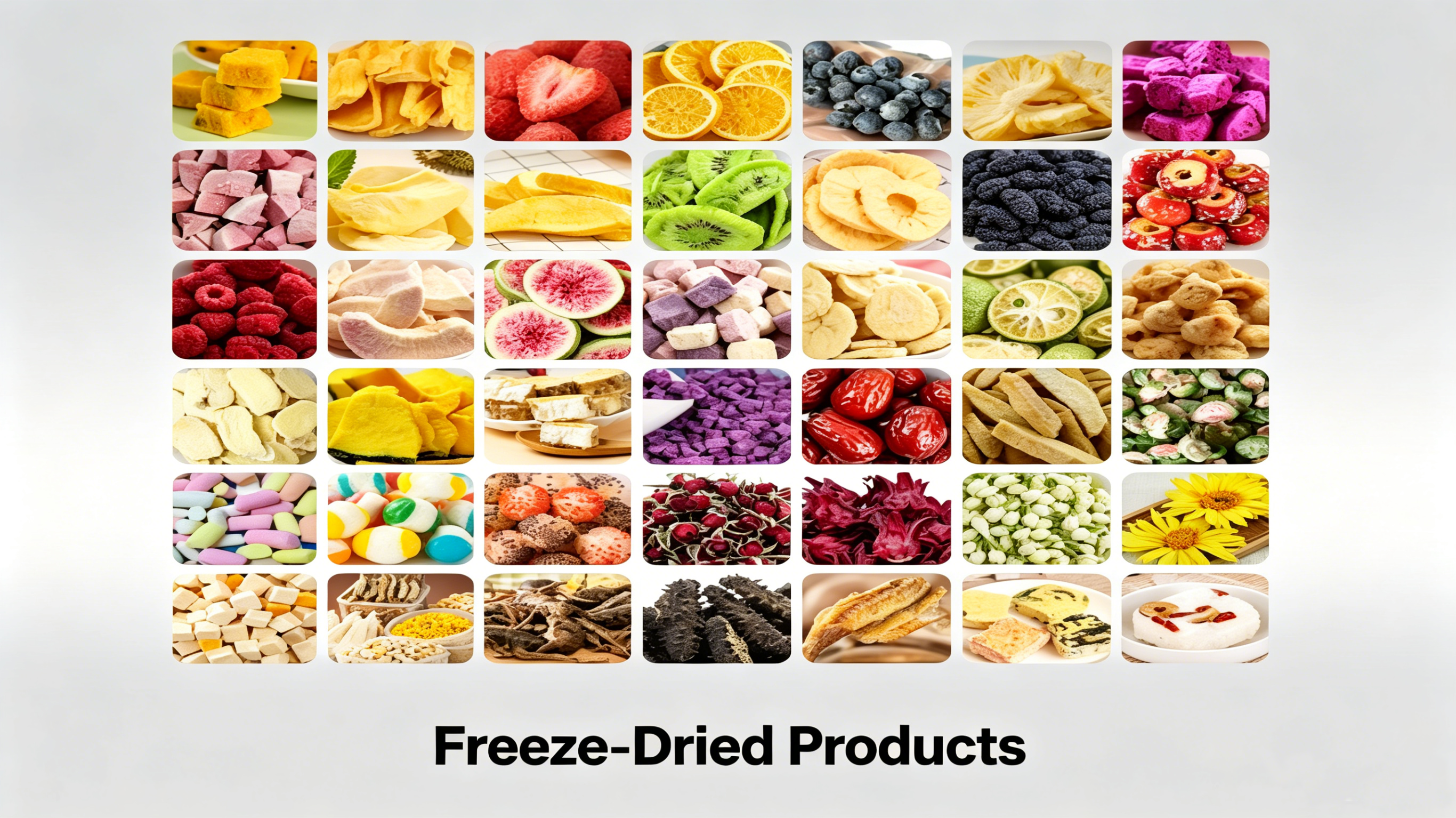
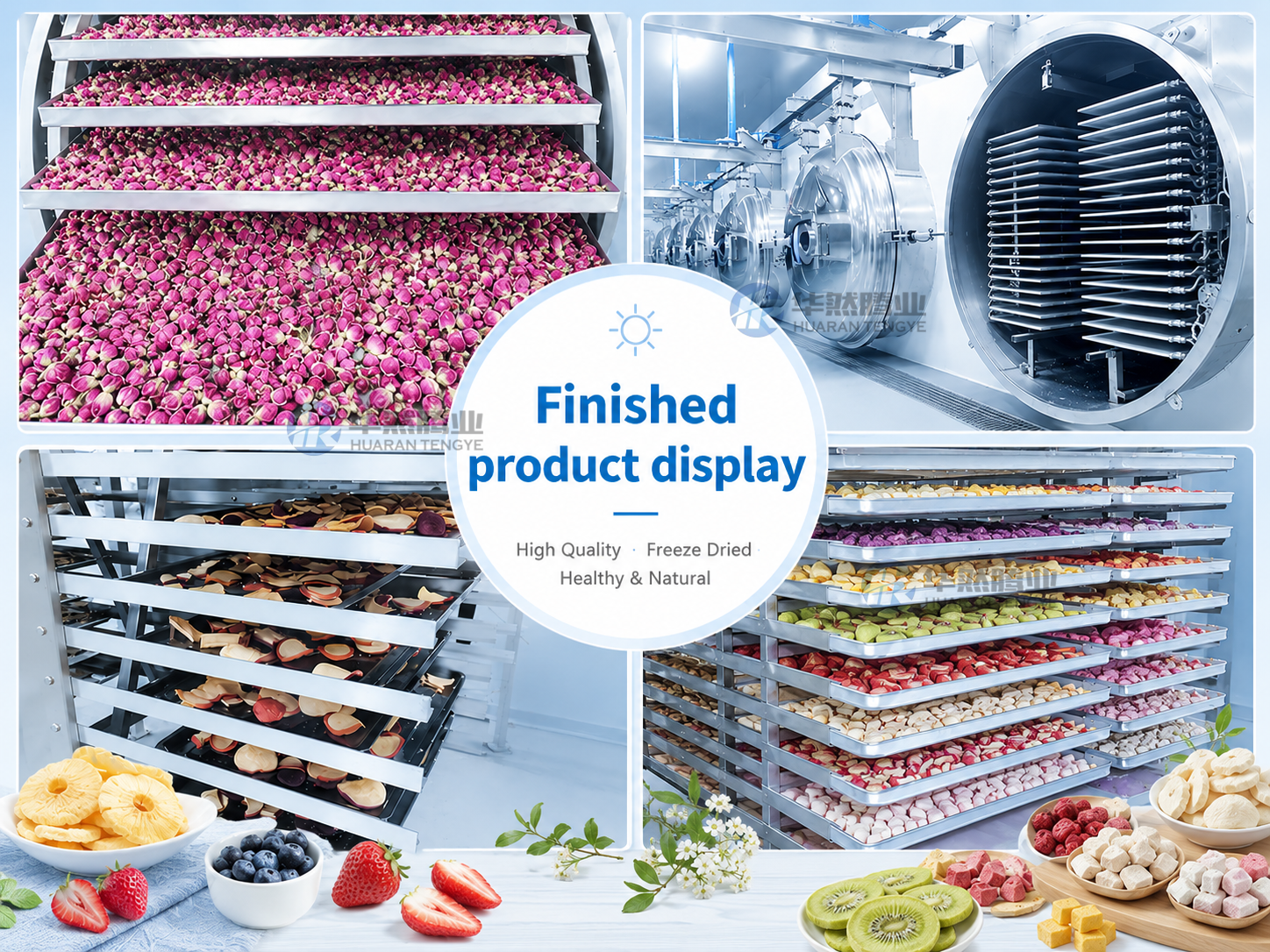
Vegetable freeze-drying is very different from fruit freeze-drying.
In the plant tissue, there are huge variations in the cellular structure, e.g., the sponge-like mesophyll of leafy vegetables and the starch-filled parenchyma of the roots, making the removal of water highly irregular. The outer surface will get dried out quite rapidly, whereas the thick inner parts will retain the water much longer.
Many vegetables contain a high level of natural waters which is mostly over 90%, so during the freezing stage, large ice crystals have to be formed, which may even break the cell walls if the rate of cooling per tissue type is inaccurately changed. If a mistake is made at this point, for example, under-pre-freezing or a vacuum increase poorly matched to the pre-freezing, you will end up with shrivelled, leathery pieces that are not crispy, and at least 10–15% of the batch will be rejected due to the fact that they are unsellable. The product will finally look like one with browned edges and the internal structure collapsed on itself, with the properties of water absorption being unpredictable and the texture totally inferior to the premium dried vegetable standard. It is not only the various kinds of vegetables themselves but the different ways in which they are prepared that also contribute to the overall complexity.
Each vegetable type, such as broccoli florets, carrot rounds, green beans, and bell pepper strips, has very different fundamental aspects of porosity, sugar/starch ratio, and wall thickness. Furthermore, with a diversity of cuts including 3 mm fine shreds, 8 mm slices, and 12 mm chunks, each combination of vegetable-cut requires a unique freezing schedule matched with a corresponding sublimation curve. Without the ability to recall or repeat stored recipes, a technician spends whole workdays running trial processes for different produce, which not only clogs the workflow but also decreases overall productivity.
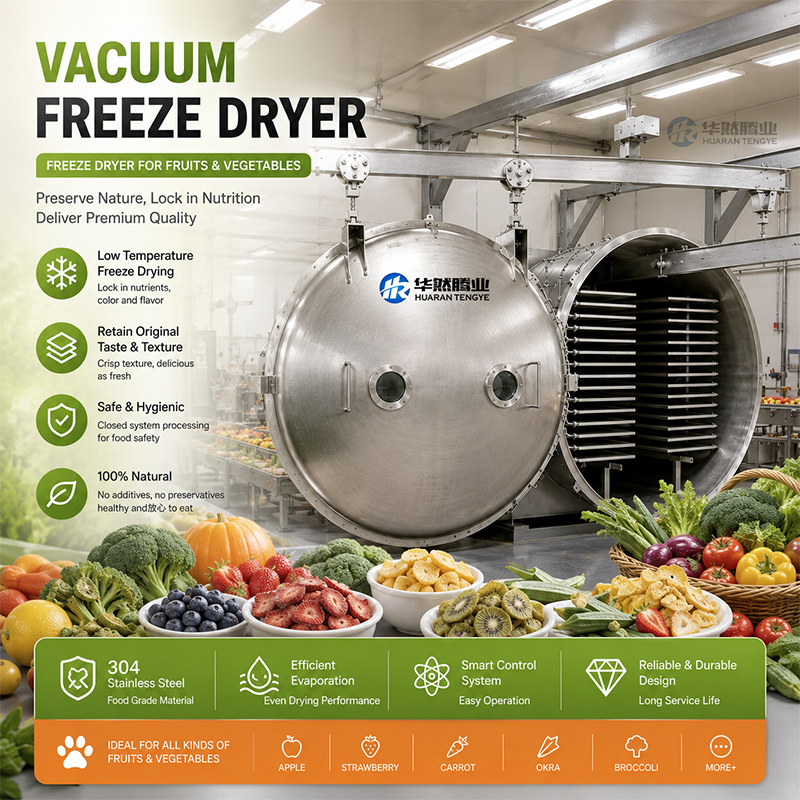
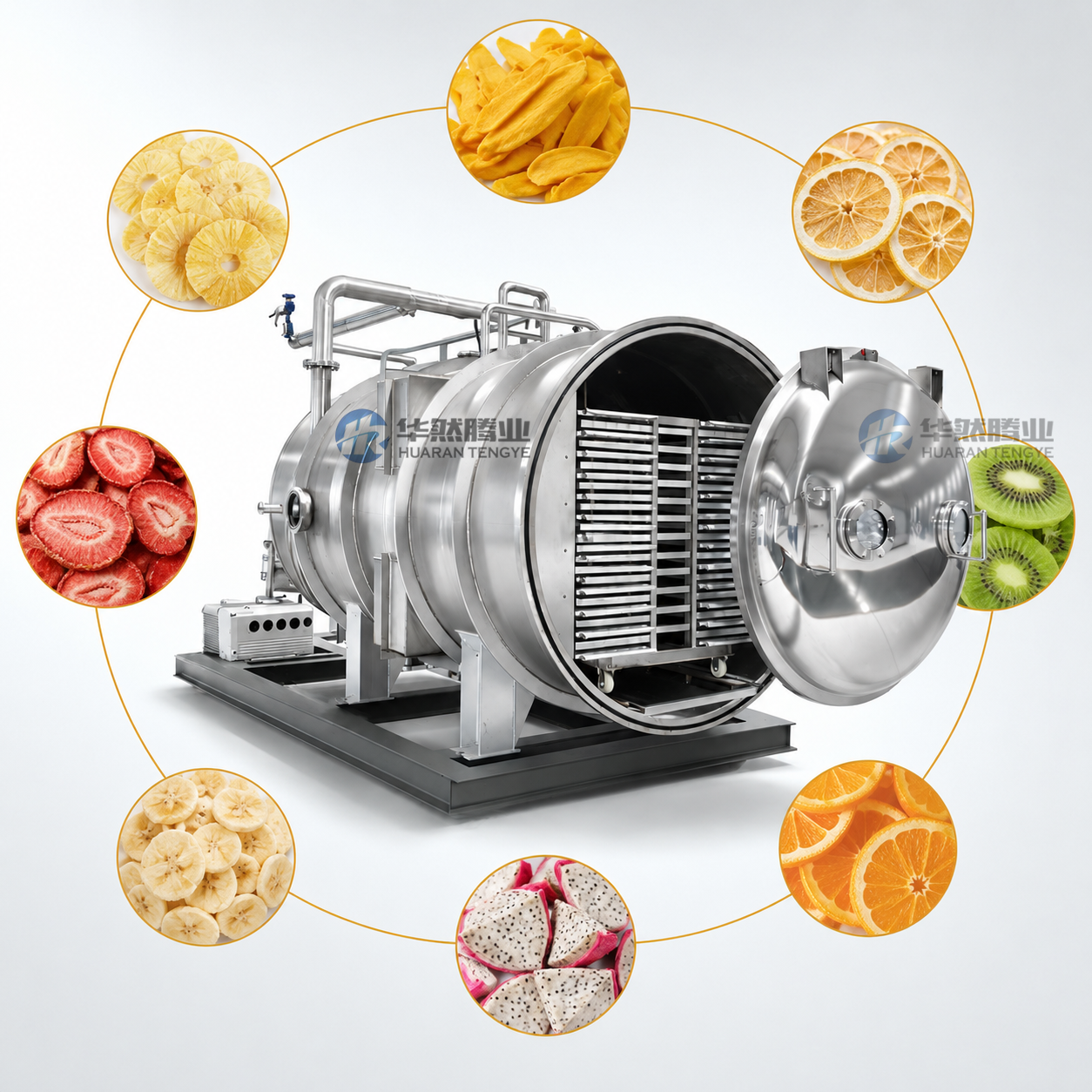
The FDG Series has been uniquely developed for lyophilizing vegetables at production scale repeatably and reliably – NOT as a replacement fruit dryer.
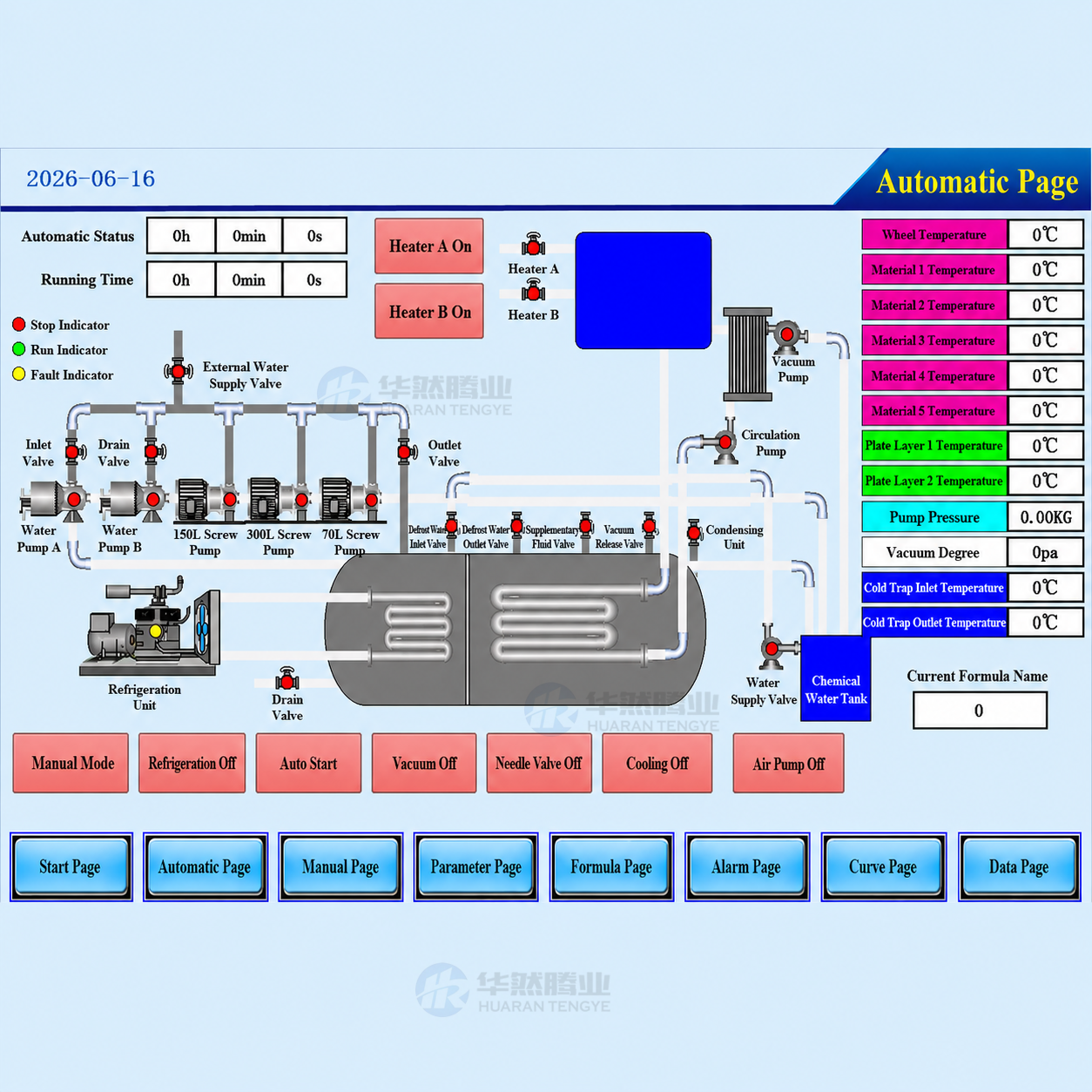
The PLC stores 100 different drying recipes for vegetables - each one having been checked during actual production on the most common vegetable varieties, cutting methods, and dryness levels desired.
Variety change from broccoli florets to carrot dices can be operated by the technician within minutes, and the resulting product preserves the original vivid color and has a crisp, consistent bite.
Differential PID control over each shelf height eliminates variation in temperature between the trays, and variable vacuum setting balances vapor removal between the outer rapidly-drying skin and the dense core of each vegetable piece, thus preventing surface burn, brown-edge browning, and the batch-wide inconsistency typical of generic equipment.
This is what mass production delivers if the program is going to be executed in a closed-loop control manner:
Predictable yield of the finished product: ≥95%
Cycle period of batch (8 mm carrot slices): 16 to 24 h
Residual moisture of the drying end-point: ≤3%
Moisture balance in the trays: ±0\.5%
Fast switching between different vegetable types and vegetable cut styles, and almost full automation, lead directly to higher daily output, low man-hours, and fast equipment investment return.
All figures are design-stage engineering target results only. The final product will vary depending on feedstock characteristics, loading setup, and operating parameters.
Here's a bit of a different arrangement of that:Leafy and root vegetables with a high water content (~88-95%) set a baseline for throughput values.
Maximum practical drying batch weights depend mainly on factors like crop tissue structure, shape, and the positioning of containers within the drying cabinet.Special hardware and supports for non-standard requirements are available.
Combining a rotary vane primary stage and a Roots-type stage pump, the pump assembly is formed. This is a two-stage operating principle with a one-to-one ratio because the first pump stage is oil-free. Supplier options are Leybold / Edwards / premium domestic equivalent. Ultimate chamber vacuum: ≤5 Pa. Leak rate (manufacture-verifies): ≤10 Pa·L/s
Main control unit: Siemens S7-1200 PLC. Operator panel: 10-inch color touchscreen (Siemens / WEINVIEW). Data logging: Temperatures, vacuum pressure, and different phases of the operation cycle are recorded continuously; one can export the data for further use using a USB drive or even via LAN. Operating modes: Full recipe-driven Automation / manual override
VACUUM CHAMBER:The vessel is made from food-grade stainless steel (SUS304).
The internal surface is polished to a mirror finish (Ra ≤0.8 μm), making it impossible for starch and plant residues to stick, while at the same time, this type of surface makes the washing of the equipment after use extremely quick.
The external surface can be brushed or coated (as per order).
Swing-out doors are equipped with silicone vacuum-sealing seals.
The FDG series plant vegetable freeze- drying can be divided into three processing phases:
① Freezing: The ramping begins at the start temperature that varies to a great extent, and progresses slowly from 0.5°C to 1.5°C per minute until the core of the product gets very cold, to −38°C−45°C, the supercooling.
Slow chilling helps the material to cool down gradually.
When this happens, it creates fine ice crystal of practically the same size, which don't impact the structure of the cells and hence keep the plant’s features intact, be it a leaf, stem, or the part of a root that is eaten. A freeze cycle is usually around 3 to 8 hours long.
Its duration depends on piece thickness, type of porosity (whether open or closed cell structure tissue), and the weight of trays.Sublimation (main drying)②: After the material attains a state such that its temperature is equal to −38°C, the internal pressure of the chamber is gradually raised to 10-60 Pa.
Simultaneously, the heating element located on the trays starts working, aiming at achieving a temperature of −5°C and, for that, it uses a number of stages with a PID-type heater.
Ice goes directly into vapor form and is trapped by the condenser, which is cooled to −55°C to −70°C. Time duration is from 12 to 22 hours depending on the vegetable's internal structure and cutting dimension.
Desorption (secondary drying)③: First, shelf temperature is maintained constant at 45-55°C, during which the vacuum is kept below 10 Pa by lowering air pressure and driving out the adsorbed moisture hidden in the matrix of the vegetable plant tissue.
The allowable amount of moisture residue is 3% or less.
This stage usually takes between 3 and 8 hours. That means it prevents food from browning or colors from fading to an extent but, at the same time, it is not too long as to lose the natural color of vegetables.
Entire cycle duration (standard): 16–24 hours for sliced vegetables (e.g., 8 mm carrot rounds); 20–28 hours for diced or thick-cut vegetables (e.g., 12 mm chunks).
About Us
Founded: 2006 (with 19 years in the industry)
Factory area: 18,000 m²
R&D team: 22 engineers
Production lines: 4 assembly lines
Annual capacity: 120+ units/year
Certifications: ISO 9001, ISO 14001, CE, ASME
Component cooperation: Bitzer, Leybold/Edwards, Siemens, Emerson
Export countries: over 40, e.g., USA, Germany, Japan, South Korea, Australia, and Brazil
Equipment delivery since 2010: more than 800
Design Customization Options Examples of engineering modifications helpful in vegetable processing are:
Additional shelf space for handling different types of cuts – whole florets, cross-cut rounds, strips, and large-format dices.
A built-in cleaning-in-place (CIP) spray system to remove fibrous plant residue and starch after completion of batch operation.
The possibility of nitrogen backfilling to keep vegetables’ natural color and avoid oxidation-driven browning when vegetables are being exposed to ambient air.
Compliant GMP Hygienic Finish, ensuring food safety for sites operating under internationally recognized certification schemes.
Explosion-proof electrical arrangement for processes involving addition of seasonings or misting of oil which can lead to airborne volatiles.
Drill holes on trays facilitating release of vapor from dense or thick-cut vegetables by increasing air flow from product bed.
Please provide the following details to get a quotation:
Kind of vegetable, cut style, and size of pieces.
Bench scale batch volume (Kgs per batch)
Material preparation (e.g. peeled, trimmed)
Utilities of facilities that will be used (phase/voltage, chilled water tempreature, etc.)
If the technical specification has been finalized, quotes valid for 30 days if given.
FAQ
Q1: Can one machine harvest all different kinds of vegetables?
Yes.The PLC remembers the most elaborate ways how to deal with all sorts of vegetables, as long as there are no more than 100. Change your recipe for cutting, say, broccoli florets into slices of zucchini without losing quality and still getting perfect results, every time.
Q2: What stops browning while drying?
The PID-controlled shelf heating ensures that throughout the secondary drying, the temperatures are kept below the browning thresholds. The extra-capacity cold trap constantly removes vapor, maintaining the safest temperatures for the tissues under consideration as well as carrying off the remaining moisture.
Q3: When will I get my equipment?
Delivery time for standard models (FDG-0.5 to FDG-50) is 45 working days; delivery time for large models (FDG-75 plus) is 45–60 working days. Please note that the shipping time is not included.